

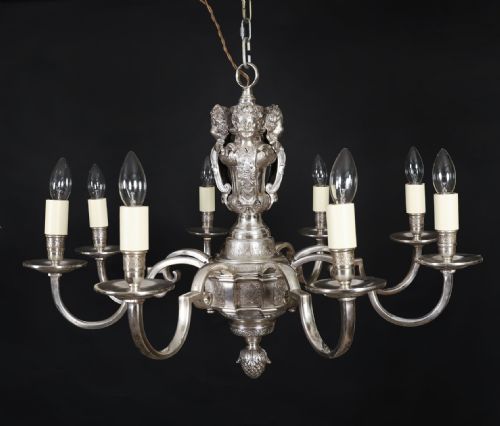


Cherub Ceiling Fixture
These cherub ceiling fixture examples bring sculptural figural charm to a room, cast in bronze, brass, and gilt metal.
Cherub Ceiling Fixture
A cherub ceiling fixture combines lighting functionality with sculptural putti or winged figures, taking the form of multi-arm chandeliers and ceiling light fittings. When searching for a cherub ceiling fixture, buyers encounter pieces spanning from the mid nineteenth century through the Edwardian era and into the nineteen thirties.
The most common versions on this page are cast metal chandeliers featuring gilt metal, brass, or bronze, often enhanced with cut glass, crystal spikes, or glass arms. Styles range from French Rococo Revival and Neo-Classical to Victorian and Edwardian interpretations.
These lighting fixtures serve as striking central room ornaments, suspending multiple lamp holders or candle fittings supported by figural bronze putti and cherub arms. The selection includes both English and French examples in various sizes and arm configurations.
How they were made
Metalworking techniques form the basis of these fixtures, utilising cast bronze, brass, spelter, and silver-plated metals to shape the structural arms and central bodies. Gilding is frequently applied to bronze and metal surfaces to create rich decorative finishes.
Lighting components are integrated with decorative glass elements, incorporating cut glass and crystal spikes that catch and refract the illumination. Figures of putti and cherubs are cast in relief or full round, attached as supporting arms or decorative motifs on the central fixture.
Cherub Ceiling Fixture Retail Price Guide 2026
Typical asking prices for cherub ceiling fixture among the pieces listed under this phrase on Sellingantiques today, from the lower quarter to the upper quarter. They describe what is for sale here now, not the wider market.
Materials across the listings include brass, gilt metal, cut glass, silver plate, gilt bronze, bronze, spelter, and crystal.
What varies in quality
The choice of base metal dictates much of the visual weight and durability, with cast bronze and gilded bronze offering finer detail and longevity compared to spelter alternatives. Crispness in the casting of the cherub figures and putti distinguishes standard production from finer sculptural work.
Integration of high-grade glass elements, such as hand-cut crystal spikes and quality glass arms, elevates the overall execution of the chandelier. Surface finishes, including the preservation of original gilding and silver plating, play a definitive role in the character of each piece.
The Cherub Ceiling Fixture Glossary
- Putti
- Plural of putto, representing plump, naked male infants often winged, frequently used interchangeably with cherubs in these decorative lighting designs.
- Spelter
- A zinc alloy commonly utilised as a cost-effective substitute for bronze in decorative metalwork and figural castings.
- Gilt Bronze
- Bronze metal that has been coated with a thin layer of gold, also known as ormolu, providing a durable golden finish.
- Crystal Spike
- A pointed, cut glass embellishment attached to chandeliers to enhance light refraction and visual sparkle.
- Rococo Revival
- A nineteenth century design movement reviving the asymmetrical scrolls, natural motifs, and ornate flourishes of the original eighteenth century French style.
Cherub Ceiling Fixture: Frequently Asked Questions
What periods do these fixtures come from?
The available selection spans from the mid nineteenth century through the Edwardian period and into the nineteen thirties.
Production dates cover Victorian and Edwardian eras, alongside early twentieth century twentieth century manufacturing.
What materials are used in these lights?
Makers utilised a variety of metals including brass, bronze, gilt bronze, silver plate, and spelter.
Many examples incorporate cut glass and crystal spikes to complement the metal frames.
How do French and English styles differ?
French examples often lean towards Rococo Revival and gilded bronze constructions with elaborate figural detailing.
English pieces tend to feature brass or silver-plated fittings with structured multi-arm arrangements.
What configuration of lights is typical?
Fixtures range from four-arm brass chandeliers to larger eight-light gilded bronze designs and three-lamp ceiling lights.
Some early configurations were originally designed for candles before later adaptations.