



Cherub Candleholders
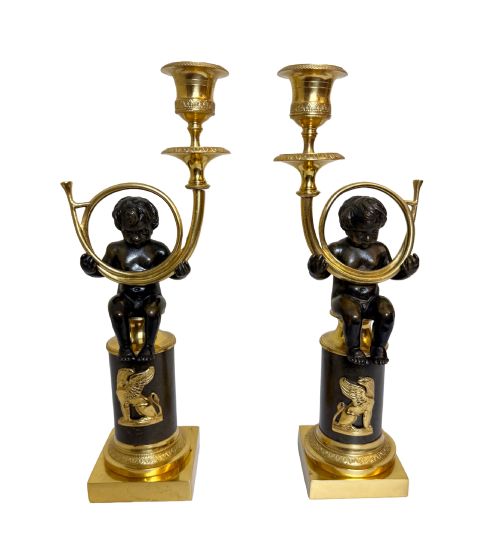
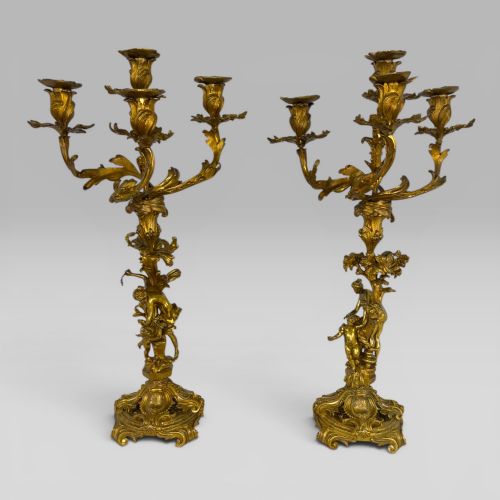
Cherub candleholders bring sculptural presence to a room, cast in bronze or shaped in porcelain with figures holding aloft branches for tapers.
Cherub Candleholders
These cherub candleholders encompass figural works from the nineteenth century, taking the form of single candlesticks and multi-light candelabra. The design pairs winged figures, often described as putti, with drip pans and sockets configured for one, two, three, or five lights.
French production dominates the selection, frequently channelled through Rococo Revival, Louis XVI, and Empire styles. Alongside metalwork pairs, porcelain figures from factories such as Meissen appear, placing the cherub motif directly into ceramic bodies.
The materials balance heavy metals against stone bases, combining gilt bronze, patinated bronze, or ormolu with marble and porphyry. These combinations create sturdy foundations for the upward reach of the candle branches.
Materials and construction
Foundry work relies on casting bronze components, which then receive either a dark patination, gilding, or ormolu treatments. Many of these metal pieces incorporate shaped marble or porphyry bases, anchoring the weight of the figural composition.
Ceramic examples employ porcelain bodies shaped through moulding and hand-finishing, sometimes accented with enamel and gold leaf. Metal fittings are integrated to secure the candle sockets to the porcelain figures.
Cherub Candleholders Retail Price Guide 2026
Typical asking prices for cherub candleholders among the pieces listed under this phrase on Sellingantiques today, from the lower quarter to the upper quarter. They describe what is for sale here now, not the wider market.
Listings feature nineteenth-century pieces spanning the Victorian era, utilising gilt bronze, marble, porcelain, and silver plating.
Assessing quality and execution
The integration of materials also sets pieces apart, particularly where bronze mounts meet marble or porphyry bases with precision. Superior porcelain examples show crisp modelling and controlled enamel application without blurring at the edges.
Minton·Meissen·Triebner ENS and Eckert Volkstedt·Claude Clodion
The Cherub Candleholders Glossary
- Ormolu
- A technique of applying finely ground high-carat gold to a bronze object using a mercury amalgam. This creates a rich, lasting metallic finish seen on French decorative pieces.
- Porphyry
- An igneous rock with large crystals embedded in a fine-grained groundmass, typically deep purple or red. It provides a dense, decorative base for bronze sculptures.
- Putto
- A figure of a small child, frequently winged, appearing in classical and revival art. They serve as the central figural element in these candleholders.
- Candelabra
- A branched candlestick holding multiple lights on a single base. These often feature two, three, or five light configurations.
- Go-to-Bed
- A small nineteenth-century chamberstick designed for carrying to a bedroom. These diminutive pieces held a single short taper.
Cherub Candleholders: Frequently Asked Questions
How do I clean bronze cherub candleholders?
Dust metal surfaces gently with a soft, dry brush to prevent accumulation in recessed areas. Avoid abrasive polishes that can strip the original patination or ormolu finish.
Keep moisture away from the metal and any stone bases to prevent staining or corrosion. Professional conservation is advised if the surface requires deeper intervention.
How do I distinguish nineteenth-century pieces from later copies?
Examine the construction methods, noting hand-chasing on the bronze components and the natural ageing of the metal surfaces. Nineteenth-century castings often show individual assembly marks and consistent patination wear.
Check the base materials, as period pieces frequently utilise genuine marble or porphyry rather than synthetic substitutes. Maker marks and factory stamps on porcelain examples provide further verification of age.
Where should I place these candleholders in a room?
Position heavier bronze and marble candelabra on sturdy mantelpieces, sideboards, or console tables where their weight is fully supported. Their sculptural forms suit formal reception spaces and dining settings.
Keep them away from direct sunlight and strong heat sources to protect finishes and any applied gilding. Ensuring adequate clearance around the arms prevents accidental knocks.