
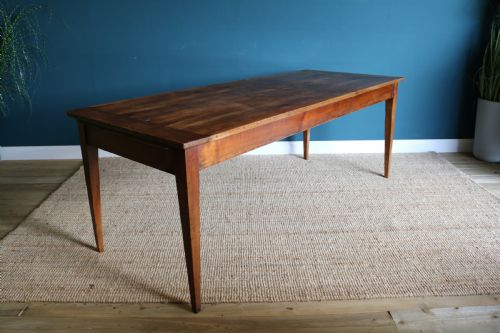

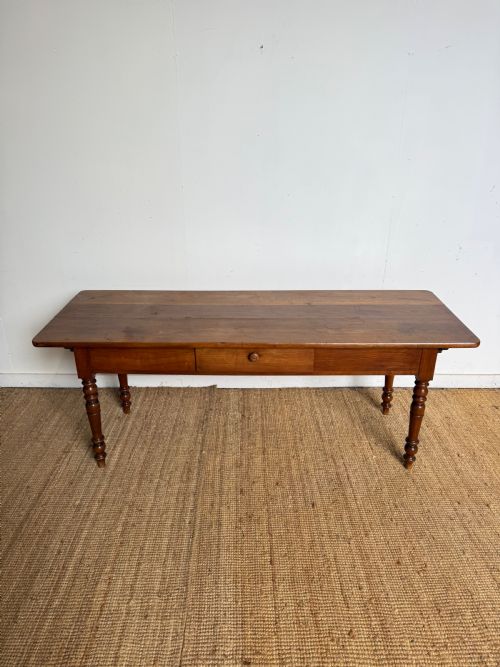


Cherry Wood Table
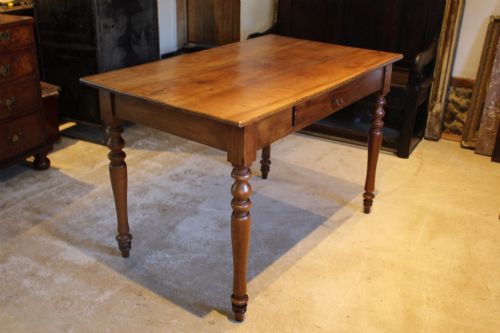
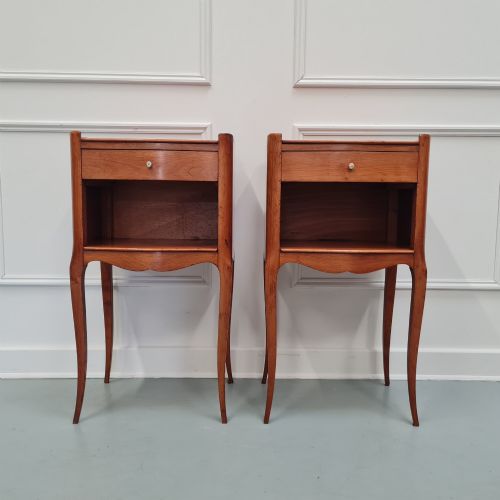
A cherry wood table brings a warm, distinct grain and honest utilitarian character to a room, ranging from robust French provincial dining boards to delicate bedside cabinets.
Cherry Wood Table
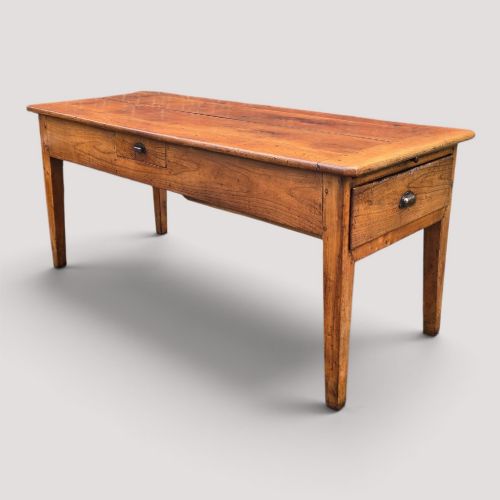
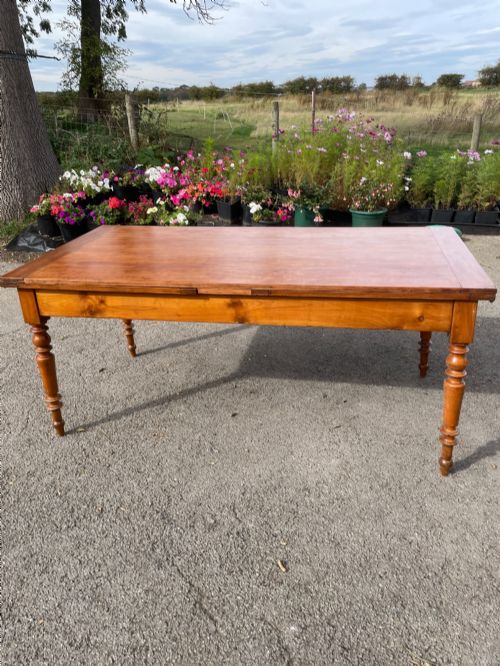
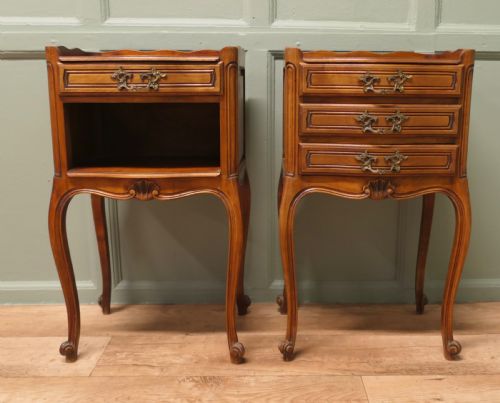
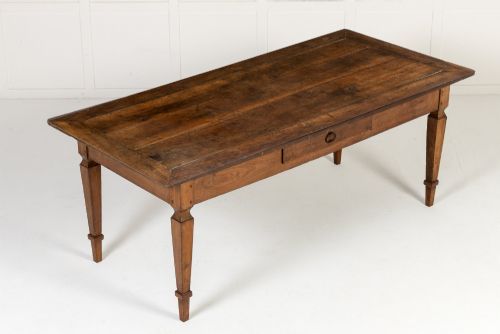
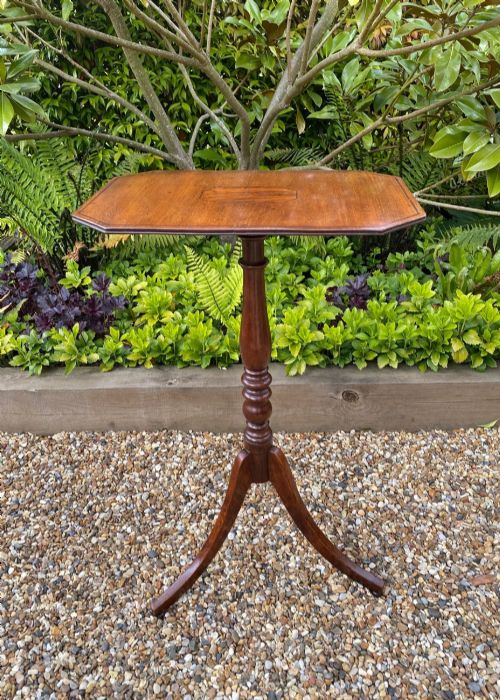
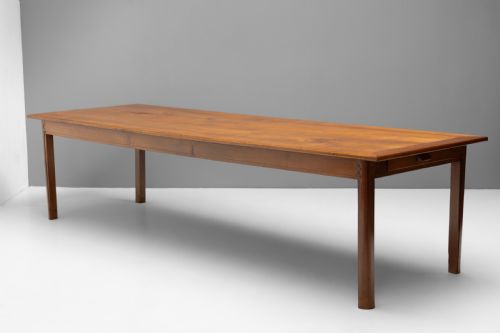
A cherry wood table encompasses a wide variety of domestic and provincial forms, with French farmhouse tables and extending dining boards dominating the pieces available. Buyers seeking a cherry wood table will encounter large refectory tables alongside smaller occasional pieces like lowboys, bedside chevets, and wine stands dating from the eighteenth century through to the twentieth century.
Dating ranges from mid-eighteenth century American lowboys to early nineteenth century refectory boards and later twentieth century vintage bedside cabinets. The consistent thread across these diverse objects is the use of cherry, celebrated for its rich warmth and smooth texture as the timber matures over generations of use.
Defining factors of quality
Quality in these pieces rests upon the integrity of the timber selection, the crispness of hand-turned or carved cabriole legs, and the proportion of the frame. Superior examples display boards of substantial width with minimal distortion, tight joinery, and original operational elements like sliding bread boards and fitted drawers.
Lesser examples often show uninspired proportions or replacement sections of timber that disrupt the unified colour and patina of the piece. The distinction between a standard utility table and a finer provincial manor house table lies in the deliberate attention paid to the grain orientation and the enduring stability of the structural underframe.
Listings span multiple centuries, incorporating eighteenth century American lowboys alongside nineteenth century French refectory boards and twentieth century bedside tables.
The Cherry Wood Table Glossary
- Lowboy
- A small colonial or eighteenth-century dressing table or side table featuring one or more drawers and cabriole or turned legs. These pieces typically stood in bedrooms or parlours for personal grooming or storage.
- Refectory table
- A long, narrow dining table originally built for monastic dining halls and later adapted for large country kitchens. They frequently include stretcher bases for added stability.
- Bread slide
- A pull-out wooden board integrated beneath the top of a French provincial kitchen table. Historically, bakers used this surface to cool loaves or prepare dough.
- Chevet
- A French term for a small bedside table, locker, or cabinet. These compact units often include a small drawer or candle shelf for night-time essentials.
- Cabriole leg
- A furniture leg that curves outward in a convex arc at the knee and tapers inward in a concave arc at the ankle, ending in a pad or foot. This stylistic element derives from animal limbs and defines much eighteenth-century design.
Cherry Wood Table: Frequently Asked Questions
Where should I place a lowboy?
A lowboy works exceptionally well in an entryway or hallway as a slim surface for keys and correspondence. Its compact proportions also make it suitable as a dressing table in a bedroom or a small writing desk.
Position it against a focal wall where its turned legs and drawer configuration can be appreciated without obstructing household traffic.
How do I date a French farmhouse table?
Examine the construction methods underneath the top, looking for hand-cut joints, pegged tenons, and the tool marks left by early carpenters. Timber shrinkage, hand-wrought iron nails, and deep natural patination around the drawer pulls indicate considerable age.
Compare the leg style, such as heavy turned posts versus finer cabriole shaping, against documented regional vernacular furniture from the eighteenth and nineteenth centuries.
Can I use a farmhouse table for daily dining?
These tables were originally built for rigorous kitchen and dining use, making them exceptionally sturdy for modern family meals. Their robust construction and durable cherry timber easily accommodate the demands of daily life.
Embrace any minor marks or historical bumps as part of the ongoing story and character of the furniture.