

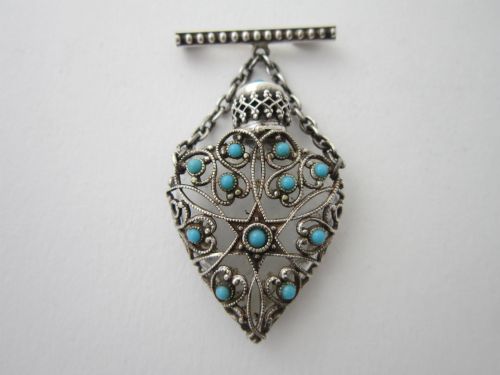
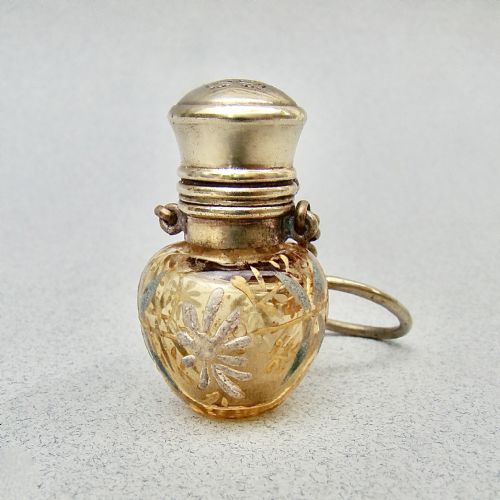


Chatelaine Scent Flask
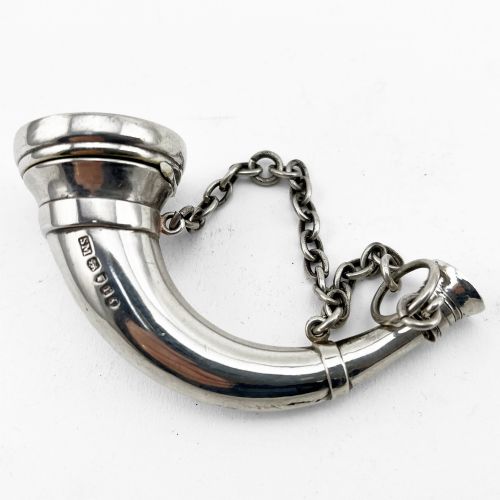
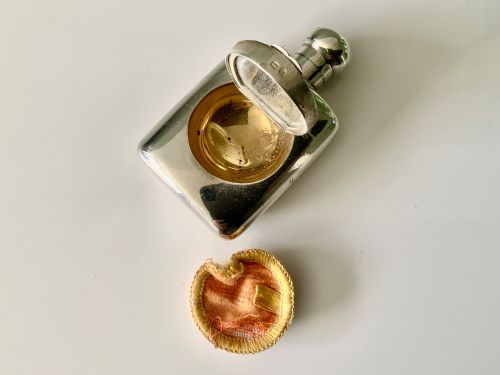
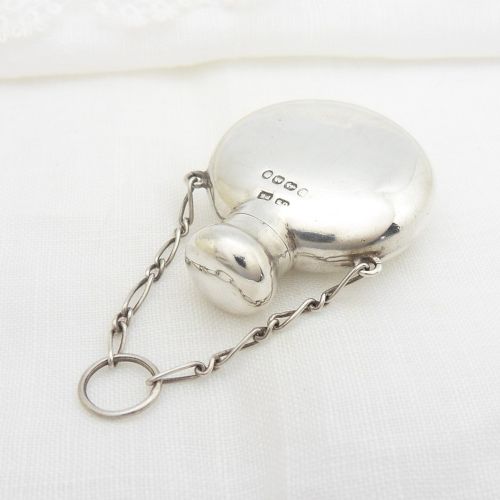
These chatelaine scent flask examples are miniature silver, glass and enamel vessels designed to hang from a belt, combining personal fragrance with daily utility.
Chatelaine Scent Flask
A chatelaine scent flask is a small container made to suspend from a traditional waist hook, holding liquid perfume close at hand during the day. You will find these items primarily originating from the nineteenth century, including Victorian English and French examples.
The forms span miniature silver flasks alongside glass bottles mounted in precious metals. Many feature specific hanging loops or chains intended to secure the piece to a chatelaine hook worn at the waist.
How they were made
Maker workshops utilised sterling silver, continental silver and gilded metal to form protective mounts, hinged caps and decorative frames around delicate glass bodies. These metallic housings required precise metalworking to ensure a tight seal for the stopper.
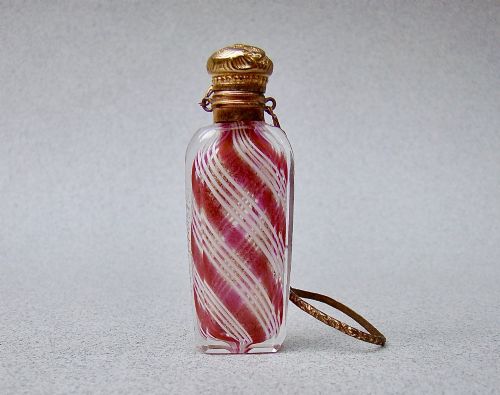
Glass techniques include opaline, satin, cranberry and triple overlay glass, sometimes enhanced with polychrome enamel work or inset turquoise and opal stones. Artisans combined cast metal elements with blown glass inserts to produce durable yet decorative personal accessories.
Chatelaine Scent Flask Retail Price Guide 2026
Typical asking prices for chatelaine scent flask among the pieces listed under this phrase on Sellingantiques today, from the lower quarter to the upper quarter. They describe what is for sale here now, not the wider market.
Listings for this phrase focus heavily on nineteenth-century production, spanning Victorian English makers and French glass houses.
What varies in quality
Quality rests upon the crispness of the metal chasing, particularly around figural repoussé work like cherubs or angels, and the complexity of the glass body. Simpler plain mounts differ significantly from pieces featuring multi-layered glass overlays or detailed enamel painting.
Maker attribution and London or Birmingham assay marks distinguish standard production wares from pieces by notable silversmiths. The preservation of the original interior stopper and the clean execution of subsidiary decorative stones further separate examples.
Saunders & Shepherd·S. Morden & Co
The Chatelaine Scent Flask Glossary
- Chatelaine
- A decorative belt hook from which everyday household and personal items were suspended. It served both a practical and ornamental function for Victorian women.
- Opaline glass
- An opaque or translucent glass produced in various pale shades, often utilised for nineteenth-century vanity items. This material provided a smooth, milky canvas for mounts.
- Repoussé
- A metalworking technique where the artisan hammers the design from the reverse side to form raised relief on the front. This method creates the dimensional figures seen on silver mounts.
- Triple overlay glass
- Layers of different coloured glass fused together before being cut back to reveal contrasting hues. This complex layering adds depth to miniature perfume bottles.
Chatelaine Scent Flask: Frequently Asked Questions
What is a chatelaine scent flask?
A chatelaine scent flask is a small perfume container designed with a ring or chain to hang securely from a belt hook. These miniature vessels allowed the owner to carry liquid fragrance throughout the day.
Most surviving examples date from the nineteenth century, reflecting the Victorian preference for scented personal accessories that combined utility with ornamental metalwork and coloured glass.
How were they worn?
They were suspended from a chatelaine, which was a decorative belt clip or hook worn at the waist. Chains attached the flask directly to this main fixture alongside other small tools.
This method of carriage kept the bottle accessible while freeing the hands, though the weight of the metal and glass required sturdy clothing support.
How do I date a silver flask?
Dating relies upon hallmarks stamped into the metal mounts, which indicate the assay office, metal standard and year of production. English pieces often feature specific date letters corresponding to cities like London or Birmingham.
Stylistic cues such as overlay glass colours and decorative motifs like cherubs also help narrow the production window within the nineteenth century.
What glass types are common?
Common varieties include opaline glass, satin glass, cranberry glass and triple overlay glass. French makers frequently employed layered and coloured techniques to achieve rich visual depth in small formats.
These glass bodies were usually blown by hand before being fitted into custom metal sleeves or secured with hinged silver caps.