



Chased Sterling Silver Container
These chased sterling silver containers range from Georgian tea caddies to Victorian snuff boxes, offering tactile history and functional elegance for daily use.
Chased Sterling Silver Container
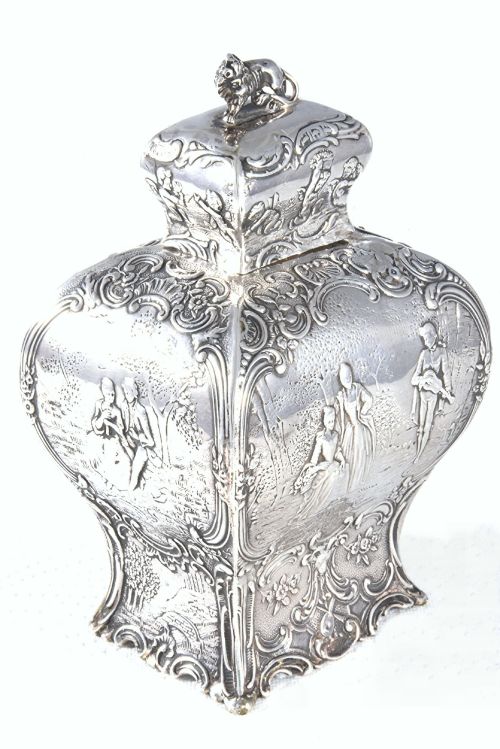
A chased sterling silver container represents a category of metalwork designed to hold dry goods, small valuables, or desk accessories. When searching for a chased sterling silver container, buyers encounter pieces spanning the Georgian, Victorian, and Edwardian periods.
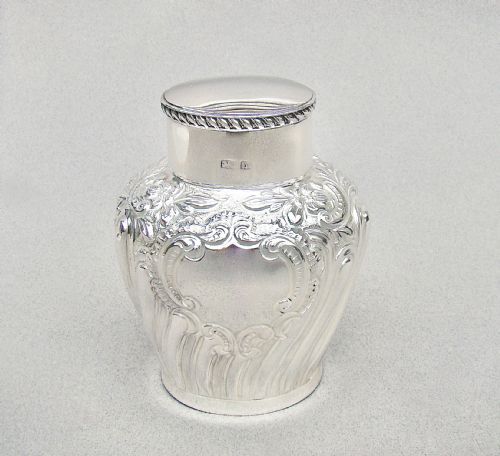
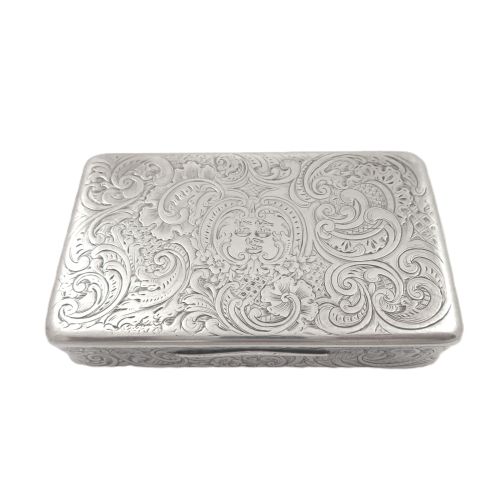
The most frequent forms met on this page include tea caddies, snuff boxes, trinket boxes, and condiment pots. These items combine utility with decorative metalwork characteristic of their respective eras.
Origins stretch from the mid-eighteenth century through to the early twentieth century. Styles encompass Victorian Rococo Revival, George III Rococo, and Georgian Revival alongside straightforward period pieces.
Materials and technique
Objects in this category are fashioned primarily from sterling silver and solid silver. Artisans worked these precious metals into forms such as tea caddies, desk accessories, and jewellery caskets.
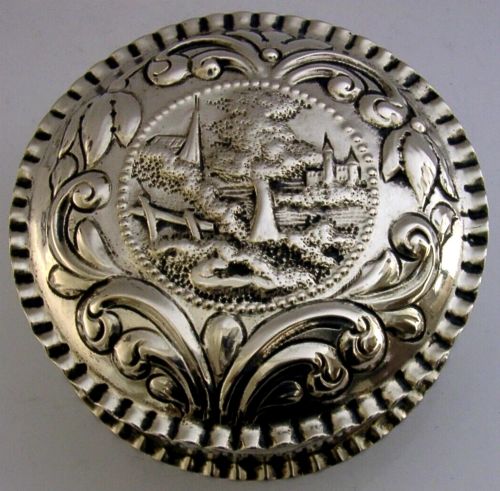
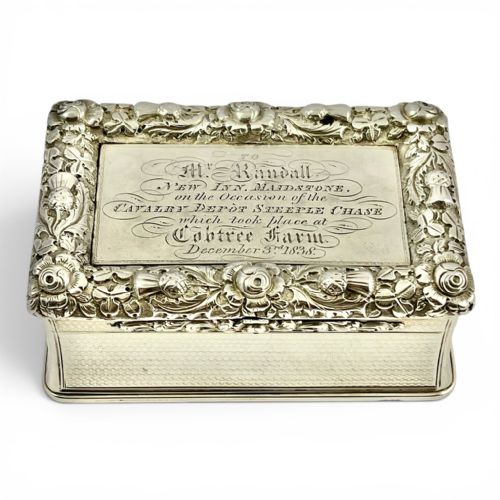
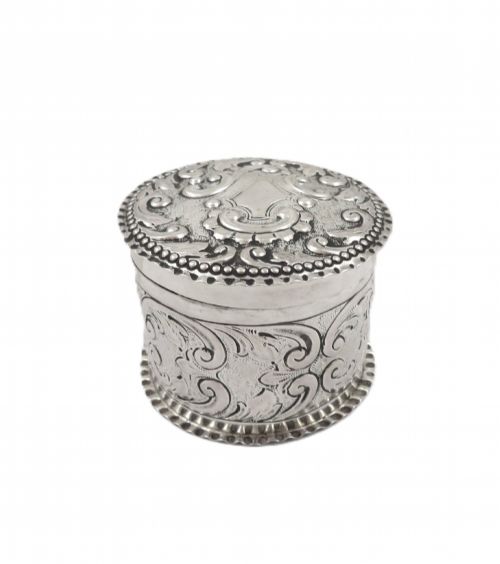
Decoration relies on chasing, where the metal is worked from the front with hammers and punches to sink the background and raise the design. This technique allows for intricate surface patterns including pictorial castle tops and bird motifs.
Chased Sterling Silver Container Retail Price Guide 2026
Typical asking prices for chased sterling silver container among the pieces listed under this phrase on Sellingantiques today, from the lower quarter to the upper quarter. They describe what is for sale here now, not the wider market.
Squirrels and birds pop up unexpectedly on sugar boxes and snuff boxes, proving that nineteenth century silversmiths loved woodland wildlife.
Understanding quality in silver containers
Quality rests in the crispness and depth of the chased ornamentation across the surface. Superior examples maintain sharp relief in decorative scenes without flattening from excessive polishing over generations.
Substantial gauge metal provides structural integrity to items like table boxes and sugar boxes. Maker participation and specific period attributes also separate standard production from exceptional pieces.
Thomas Hayes·Nathaniel Mills
The Chased Sterling Silver Container Glossary
- Chasing
- The technique of ornamenting metal by indenting its surface with punches from the front. This process displaces metal rather than removing it, creating low relief designs.
- Sterling silver
- A standard alloy consisting of ninety-two point five percent silver by mass and seven point five percent other metals, usually copper. It provides durability while maintaining a bright lustre.
- Tea caddy
- A vessel designed to store dry tea leaves, often fitted with a lid or pull off cover. In earlier periods, these were kept locked in wooden tea chests.
- Snuff box
- A small hinged container used to hold dry powdered tobacco for inhalation. These portable items often featured elaborate pictorial lids.
- Castle top
- A style of decorative metalwork featuring a detailed architectural engraving or casting of a specific building or castle on the lid. This motif appears frequently on table boxes from the nineteenth century.
Chased Sterling Silver Container: Frequently Asked Questions
What were chased sterling silver containers used for?
These containers served specific domestic and personal functions in historic households. Tea caddies preserved expensive tea leaves, while snuff boxes held tobacco for social use.
Other forms acted as vanity pots, mustard pots, card cases, or jewellery caskets. Their ornamental surfaces reflected the owner's status and taste.
How do I date a silver container?
Dating relies heavily on hallmarks stamped into the metal by official assay offices. These marks typically indicate the maker, the town of assay, and a date letter corresponding to a specific year.
Stylistic cues also help determine age, such as the curved bombe form of the late nineteenth century or the rococo revival scrolls popular in earlier decades.
How should I clean a silver container?
Maintenance requires gentle cleaning to preserve the chased details and dark recesses created by the maker. Harsh abrasive pastes can wear away the raised edges of the ornamentation over time.
Regular dusting with a soft cloth is usually sufficient for display pieces. Professional silver dips should be avoided on chased work to retain natural patination.
Can I use an antique tea caddy today?
Many tea caddies and trinket boxes remain entirely suitable for contemporary use. Lidded vessels function well on desks or dressing tables for storing small modern items.
Care should be taken with delicate hinges on older snuff boxes and card cases. Ensuring proper closure protects the internal contents during handling.