

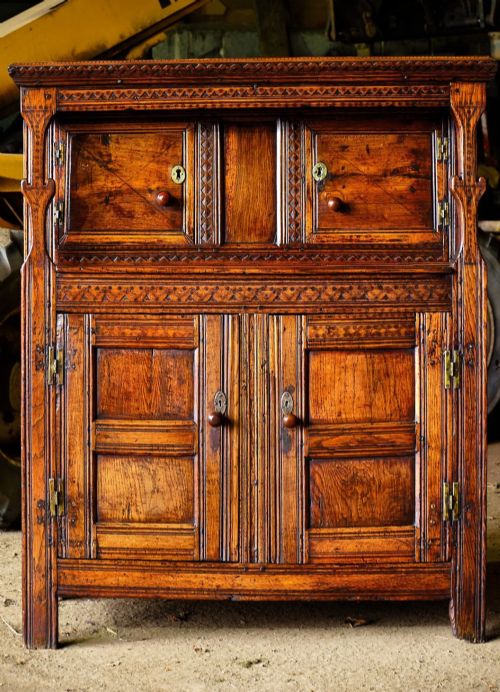
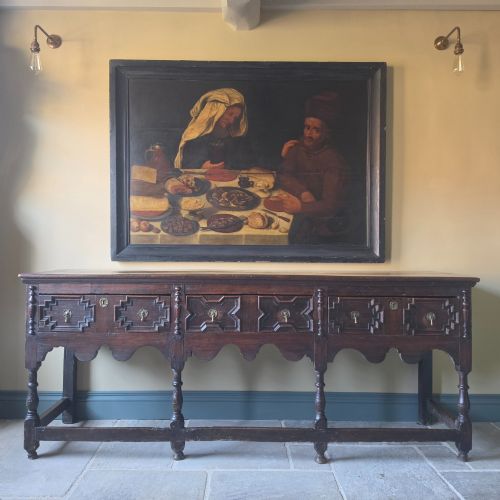


Charles II Oak Sideboard
These charles ii oak sideboard examples span seventeenth century vernacular forms and later revival pieces, bringing genuine timber weight and period presence to a room.
Charles II Oak Sideboard
A charles ii oak sideboard search covers heavy timber storage furniture primarily originating from the seventeenth century alongside later revival interpretations. These items include low dressers, dresser bases, court cupboards, buffet cupboards, and hutches designed for domestic storage and display.
The pieces appearing on this page range from late seventeenth century examples to an eighteen eighty Charles II revival sideboard. Regional origins span the West Country, Lancashire, and Wales, reflecting distinct local cabinet-making traditions of the period.
Buyers encounter substantial forms built around low dressers and enclosed cupboards rather than slender modern sideboards. The structural emphasis rests firmly on utility and solid timber construction suited to historic interiors.
Materials and construction
Construction relies fundamentally on solid oak, frequently augmented with fruitwood inlay for decorative contrast on panelled surfaces. Master joiners utilised traditional framing and panel techniques to accommodate the natural movement of unyielding native timber.
Hardware elements incorporate wrought brass and iron fittings, including functional hinges, latches, and drop handles appropriate to the period. These metal components secure heavy doors and drawers while adding structural rigidity to the primary oak carcases.
Charles II Oak Sideboard Retail Price Guide 2026
Typical asking prices for charles ii oak sideboard among the pieces listed under this phrase on Sellingantiques today, from the lower quarter to the upper quarter. They describe what is for sale here now, not the wider market.
Listings incorporate oak, brass, iron, and fruitwood inlay across seventeenth century and eighteen eighty revival periods.
Assessing quality in early timber furniture
Quality differentiates itself through the crispness of carved ornamentation and the architectural ambition of court cupboards and dresser bases. Finer examples display meticulous fruitwood inlay and well-proportioned regional detailing that distinguishes bespoke regional joinery from utilitarian workshop output.
The integrity of the timber surfaces and the survival of original brass or iron hardware heavily influence the standing of each piece. Later nineteenth century revival items separate themselves from period originals through deliberate stylistic interpretation rather than seventeenth century construction methods.
The Charles II Oak Sideboard Glossary
- Court cupboard
- A heavy enclosed storage piece with an upper and lower section, characteristic of seventeenth century domestic interiors. These items frequently feature carved panels and recessed upper stages.
- Dresser base
- A long low wooden table fitted with drawers across the front, designed for kitchen or dining room utility. Later additions include upper shelving tiers to form a complete dresser hutch.
- Jacobean
- The stylistic period spanning the reign of James I and subsequent seventeenth century design traditions. This aesthetic employs geometric panelling, strapwork carving, and robust structural proportions.
- Fruitwood inlay
- The practice of inserting contrasting light and dark fruitwood timbers into recessed channels on oak surfaces. This technique creates decorative patterns across cupboard doors and drawer fronts.
- Carolean
- The artistic and decorative style associated with the reign of Charles II. It introduces more exuberant carving and lighter proportions compared to earlier Jacobean work.
Charles II Oak Sideboard: Frequently Asked Questions
What is a court cupboard?
A court cupboard is an enclosed seventeenth century storage unit featuring upper and lower compartments designed for displaying plate and storing household provisions.
These substantial items anchor dining rooms and halls with heavy timber framing and carved decorative panels.
How do I date an oak dresser?
Dating relies on examining construction marks, timber shrinkage, joinery methods, and regional design characteristics associated with seventeenth century vernacular cabinet-making.
Revival pieces from later centuries often reveal standardised fixings and machine-cut elements that distinguish them from period originals.
Where were these cupboards made?
Surviving examples originate from various British regions including Wales, Lancashire, and the West Country, each displaying local workshop preferences.
Regional differences appear in the choice of carving motifs, hardware placement, and overall structural proportions.
How do I care for antique oak furniture?
Maintain antique oak by placing pieces away from direct heat sources and sudden humidity changes to prevent timber splitting.
Apply traditional wax sparingly and polish with a soft cloth to preserve the natural finish of the old wood.