
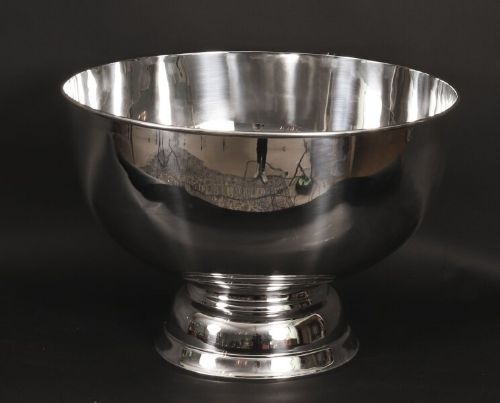


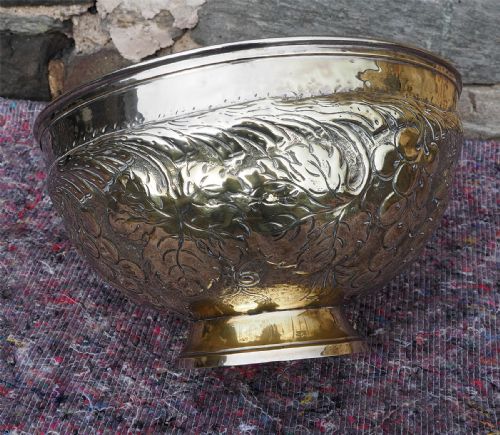


Champagne Cooler Bowl
A champagne cooler bowl is a heavy vessel designed to chill bottles in ice, appearing here in silver plate, copper, brass and pewter across periods from the nineteenth century to the mid twentieth century.
Champagne Cooler Bowl
A champagne cooler bowl serves as a capacious receptacle for ice and wine bottles, combining practical utility with formal entertaining. When you search for champagne cooler bowl, you encounter substantial vessels designed to hold multiple bottles at social gatherings.
The examples gathered here span from the nineteenth century through the Edwardian era and Art Deco period to mid century pieces. Forms range from dedicated wine coolers and punch bowls to presentation bowls and repurposed restaurant vessels.
Origins stretch across English workshops, Scottish clans and French bistros, reflecting diverse social uses from grand dining rooms to Parisian establishments. These vessels frequently cross over in function, serving equally as ice buckets or decorative planters.
How they were made
Makers utilised base metals such as copper, brass, pewter and tin, often applying a layer of silver plate to achieve a polished finish. Silver on copper techniques allowed workshops to combine the durability of copper with the bright appearance of silver.
One unusual pewter champagne bowl arrived directly from a bustling Paris restaurant.
What varies in quality
Substance and weight separate robust vessels from lighter alternatives, particularly in the thickness of the metal used for the body and base. Substantial gauge silver plate and heavy copper or brass ensure the vessel withstands the weight of ice and bottles.
The crispness of cast decoration and the integrity of applied mounts distinguish standard production from finer workshop output. Maker attribution, such as pieces bearing marks from established firms, influences the standing of an individual bowl.
Mappin & Webb·Barker Ellis·Barnards
The Champagne Cooler Bowl Glossary
- Silver plate
- A thin layer of silver bonded to a base metal such as copper or nickel brass. This technique provided the appearance of solid silver at a lower cost.
- Art Deco
- A design style prominent in the 1920s and 1930s characterised by geometric shapes, stylised motifs and sleek lines. It succeeds Edwardian and Victorian ornamentation.
- Pewter
- A malleable metal alloy historically composed chiefly of tin with copper and antimony. It offers a dull grey lustre suited to utilitarian vessels.
- Arts and Crafts
- A movement valuing traditional craftsmanship and visible hand working over mass production. It often employs plain copper and brass with minimal ornamentation.
Champagne Cooler Bowl: Frequently Asked Questions
How do I clean a silver plated champagne bowl?
Clean silver plate gently using a specialised non abrasive polish and a soft cloth to preserve the thin silver layer over the base metal. Avoid harsh scouring pads that can wear away the plating and expose the underlying copper or brass.
Wash pewter and copper vessels with mild soapy water and dry them thoroughly with a soft towel to prevent water spots. Regular gentle maintenance keeps the metal surfaces bright without harming historical patination.
Can I use these bowls for everyday dining?
These vessels were built for practical hospitality, making them suitable for holding ice and chilling bottles at modern dinner parties. Their robust construction in silver plate, copper and brass handles regular use.
Ensure you dry the interior thoroughly after holding melting ice to prevent moisture spotting or corrosion on vulnerable base metals. Using a liner can also protect antique interiors from prolonged contact with water and wine.
How do I date an antique champagne cooler?
Examine the style of the vessel, comparing revival motifs like Rococo or Neoclassical details against the cleaner geometric lines typical of the Art Deco period. Maker marks, hallmarks and stamps stamped onto the base provide direct evidence of the workshop and production era.
Consider the materials used, as heavy silver plate on copper and arts and crafts hammered copper point distinctly to nineteenth and early twentieth century manufacturing methods.
What is the difference between a punch bowl and a wine cooler?
Punch bowls typically feature a wide, open bowl shape designed for ladling mixed drinks during large gatherings rather than chilling standing bottles. Wine coolers and champagne bowls often incorporate deeper proportions or specialised rims to hold bottles upright in ice.
Many large bowls served multiple purposes across their history, functioning interchangeably for punch, wine, champagne or even decorative floral arrangements depending on the occasion.