
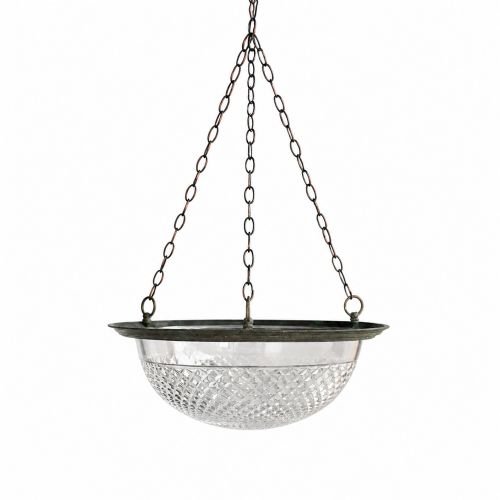
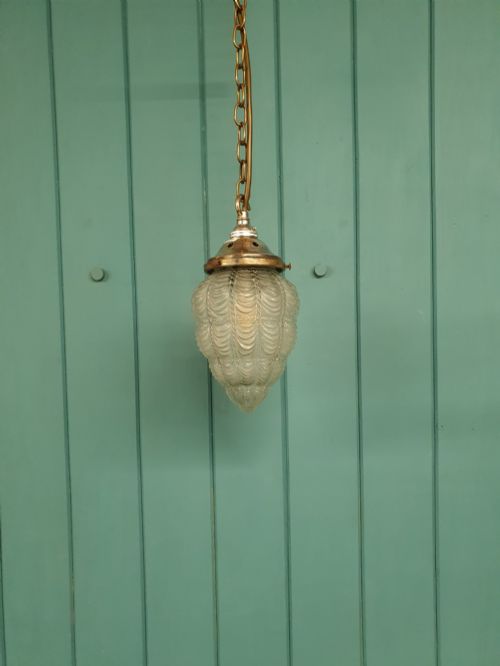


Chain Hanging Glass Pendant
These chain hanging glass pendant fixtures bring genuine period character to a hall or ceiling.
Chain Hanging Glass Pendant
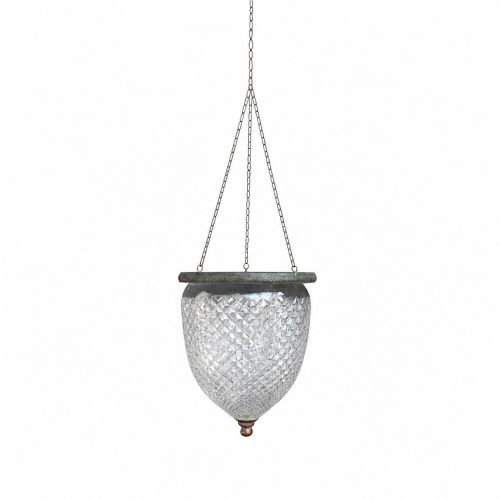
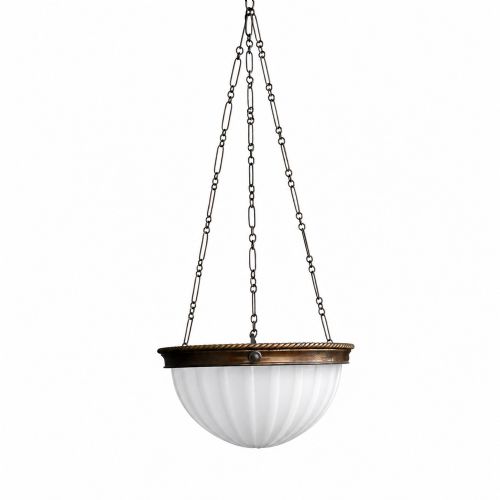
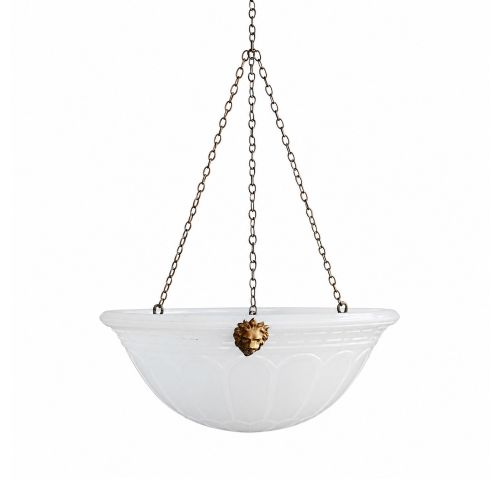
When you search for a chain hanging glass pendant, you are looking at ceiling lighting suspended by links, ranging from Victorian brass lanterns to Art Deco opalescent bowls. The pieces on this page span the Victorian, Edwardian, and mid twentieth century periods, taking forms such as plafonniers, hall lanterns, and conical shades.
You will most frequently meet early twentieth century English and French examples, often fashioned from moonstone, opaline, or cut glass. These fittings serve as practical overhead illumination while holding distinct stylistic traits from the Arts and Crafts, Neo-classical, and Art Deco movements.
Materials and construction
Makers constructed these fixtures using brass, bronze, and lead to form the structural frames, lanterns, and suspension hardware. Glass components were then mouth-blown, moulded, or cut to create shades with frosted, opalescent, or stained finishes.
The combination of metalwork and specialised glass techniques allowed for durable ceiling lights that diffused light evenly across hallways and porches. Rivets, soldered lead cames, and patinated metal mounts secured the heavy glass bowls and shades safely to their chains.
Periods represented on this page range from the Victorian era and Edwardian period through to the 1920s, 1930s, and mid-century modern.
Variations in quality
The distinction between standard utility lighting and finer examples lies in the depth of the glass moulding and the weight of the metal framework. Superior pieces feature heavy cut crystal, hand-painted details, or thick opalescent and moonstone glass that retains a rich lustre when lit.
Metal components also indicate craftsmanship, with solid brass castings and intricate mounts like rams heads showing greater attention to design than simple pressed metal parts. The precision of the glass cutting and the integrity of the leaded stained panels separate ordinary production from superior workshop output.
The Chain Hanging Glass Pendant Glossary
- Plafonnier
- A ceiling-mounted or closely suspended light fixture featuring a bowl-shaped glass shade. These fittings sit close to the ceiling and direct illumination downward.
- Holophane
- A brand of prismatic glass designed to efficiently diffuse light while reducing glare. The characteristic ribbed pattern directs illumination evenly across a room.
- Moonstone glass
- A type of translucent milky glass that resembles the soft glow of the moon. It creates a diffused, ambient light popular in early twentieth century interiors.
- Opaline glass
- An opaque or semi-translucent glass that gained popularity for its smooth pastel appearance. It was frequently blown into conical or spherical pendant shapes.
- Lead came
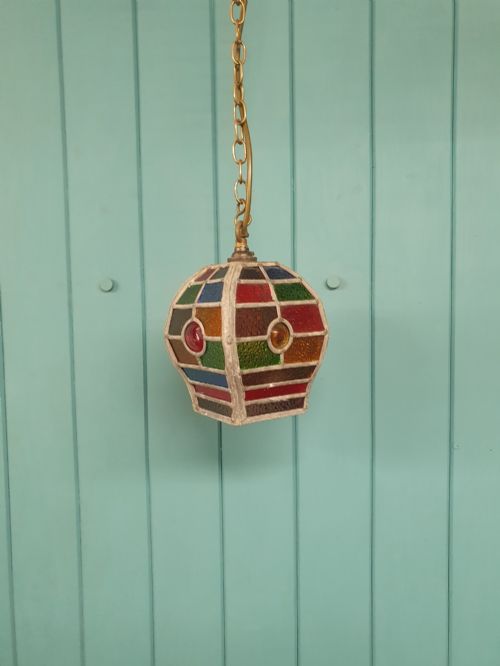
- The grooved lead strips used to hold pieces of stained or coloured glass together in a mosaic pattern. This technique underpins traditional porch lanterns and decorative shades.
Chain Hanging Glass Pendant: Frequently Asked Questions
Where should I hang these lights?
These pendant fixtures suit hallways, porches, and rooms with adequate ceiling height. Their dropped chain design allows them to sit comfortably above eye level while illuminating entryways.
Smaller glass shades work well in compact corridors, whereas larger bowls and lanterns provide a focal point in high-ceilinged reception spaces.
How do I clean the glass?
Remove the glass shade from the metal frame if it is secured with screws or clips. Wash it gently in lukewarm soapy water using a soft cloth to avoid scratching opalescent or frosted surfaces.
Dry the glass thoroughly before reattaching it to the brass or bronze suspension hardware. Polish the metal parts separately with an appropriate cleaner depending on the patination.
Are these pendants wired for modern use?
Antique light fittings generally require inspection and rewiring by a qualified electrician to meet current safety standards. Original brass lampholders can often be retained while updating the internal wiring.
Check the gallery and suspension loop dimensions to ensure modern electrical cable and ceiling hooks are compatible with the antique hardware.
How do I date a glass pendant?
Examine the materials, manufacturing techniques, and stylistic motifs present in both the glass shade and the metal frame. Edwardian and Victorian pieces often feature heavy brass work and cut crystal, while Art Deco items lean towards opalescent glass and geometric shapes.
fasteners, screw threads, and the composition of the metal give further clues regarding the era of production.