



Ceramic Taper Holders
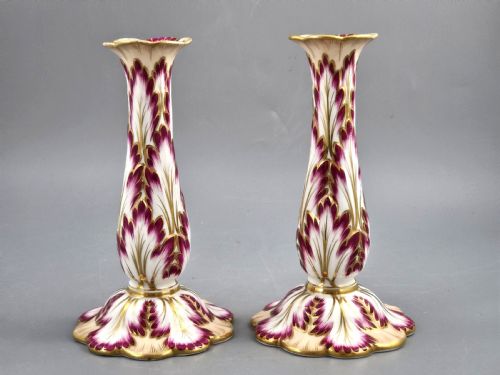
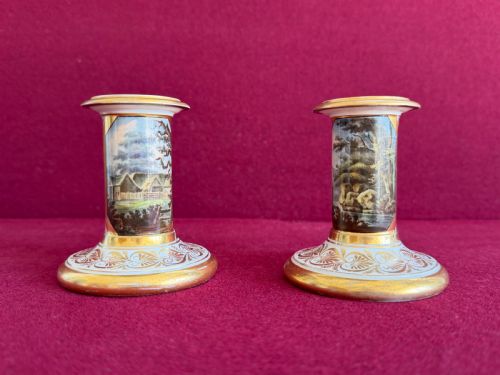
These ceramic taper holders bring small-scale candlelight to a table with the crisp detail of porcelain, ironstone, and stoneware.
Ceramic Taper Holders
Ceramic taper holders encompass antique candlesticks shaped from porcelain, ironstone, stoneware, and glazed earthenware across periods ranging from the eighteenth century to the twentieth century. These pieces were designed to support thin taper candles in domestic rooms, often taking the form of pairs for mantelpieces or dining tables.
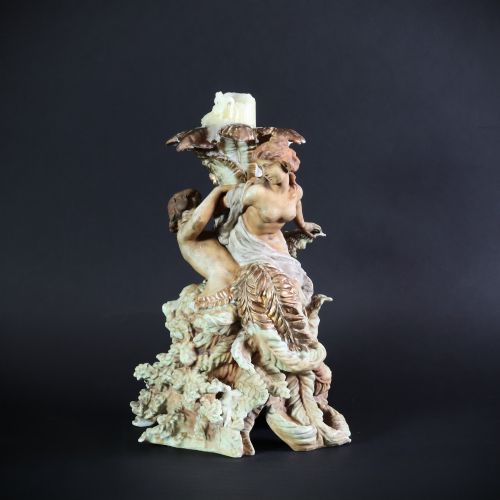
Buyers browsing this selection most frequently encounter nineteenth-century examples, including sturdy ironstone pieces finished with transfer-printed patterns and delicate porcelain pairs shaped in Regency or Victorian styles. Forms vary from straightforward column candlesticks to figural designs such as elephants and hunting scenes.
Materials and manufacture
Maker's workshops shaped these pieces from refined ceramic bodies, using porcelain for translucent, crisp profiles and ironstone for dense, durable utility. Artisans applied lead glazes to seal the porous clay bodies before firing them in kilns.
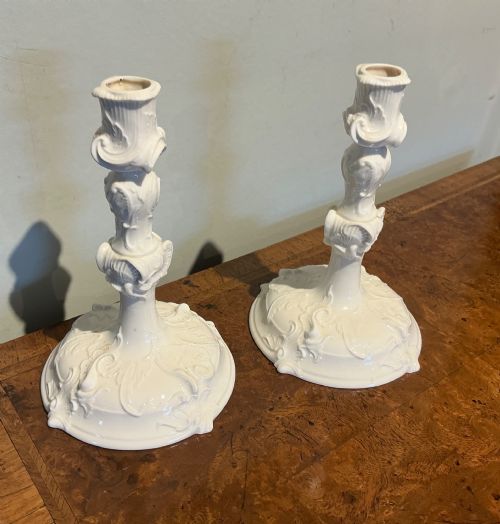
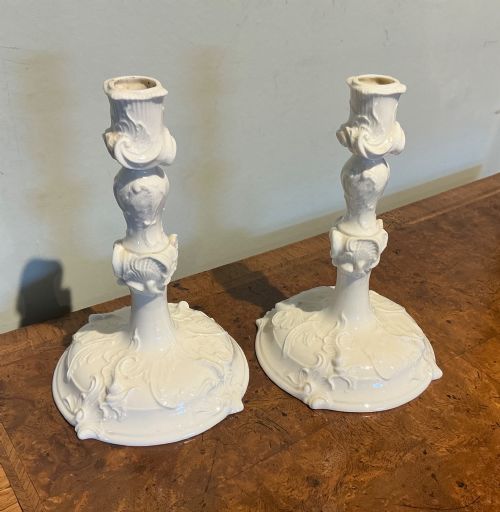
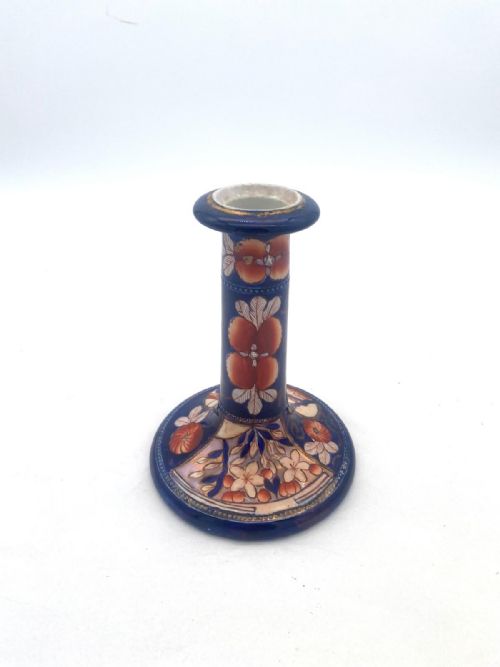
Decoration relied on hand-painting, enamel colours, and transfer printing, sometimes accented with gilding or gold leaf. Moulding techniques allowed workshops to produce elaborate Rococo scrolls, Neoclassical columns, and textured foliage patterns.
Ceramic Taper Holders Retail Price Guide 2026
Typical asking prices for ceramic taper holders among the pieces listed under this phrase on Sellingantiques today, from the lower quarter to the upper quarter. They describe what is for sale here now, not the wider market.
One determined pair of hunting foxes stands ready to illuminate the room.
Assessing quality
Quality rests in the crispness of the moulding and the precision of the hand-painted or transfer-printed decoration. Finer examples retain sharp relief details in the ceramic body and clean application of enamel colours without blurring.
The sophistication of the form distinguishes standard utility pieces from high-style factory output. Pairs matched from the outset and finished with careful gilding or specialised glazes sit at the upper end of the range.
Nymphenburg·Masons Ironstone·Barr Flight and Barr·Doulton Lambeth·Wedgwood·Royal Bayreuth
The Ceramic Taper Holders Glossary
- Ironstone
- A dense, heavy ceramic developed in the nineteenth century to imitate porcelain while offering greater durability. It resists chipping and provides a reliable base for colourful transfer-printed patterns.
- Jasperware
- A fine-grained, unglazed stoneware pioneered by Wedgwood, typically featuring white neoclassical relief applied against a coloured background. The tactile surface requires precise firing control.
- Porcelain
- A vitrified ceramic material fired at high temperatures until non-porous and translucent. It allows for delicate modelling and smooth glaze retention.
- Regency
- A British design style spanning the early nineteenth century, characterised by classical restraint, scrollwork, and clean lines. Pieces from this era often echo ancient Greek and Roman motifs.
Ceramic Taper Holders: Frequently Asked Questions
What size candles fit these?
These holders were made for narrow taper candles rather than standard thick household pillars. Most sockets accommodate slender candles traditionally used for chamber lighting or formal dining tables.
Buyers should measure the socket diameter before sourcing candles to ensure a stable fit without excess trimming.
How do I clean glazed ceramic?
Wash glazed porcelain and ironstone gently in warm water using mild soap and a soft cloth. Avoid abrasive pads or harsh chemicals that can damage hand-painted enamels or delicate gold leaf.
Dry thoroughly with a lint-free cloth to protect any exposed ceramic body at the base rim.
Were they made in pairs?
Many of these pieces were produced as matching pairs to balance mantelpieces, sideboards, or dining tables. Symmetrical arrangements were central to interior displays in Georgian and Victorian homes.
Single survivors also appear, having been separated over generations of use.
How do I date an antique candlestick?
Dating relies on stylistic clues, ceramic bodies, and any factory marks stamped or painted on the base. Neoclassical motifs and soft paste porcelain point towards earlier periods, while transfer-printed ironstone typically indicates the nineteenth century.
Comparing glaze characteristics and potting techniques helps narrow the decade of production.