




Ceramic Spaniel Statues
These ceramic spaniel statues are the quintessential mantelpiece companions that bring character and historic charm to any traditional room.
Ceramic Spaniel Statues
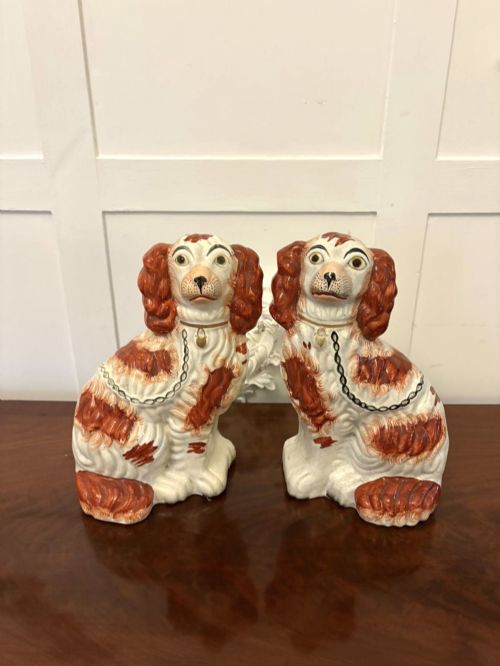
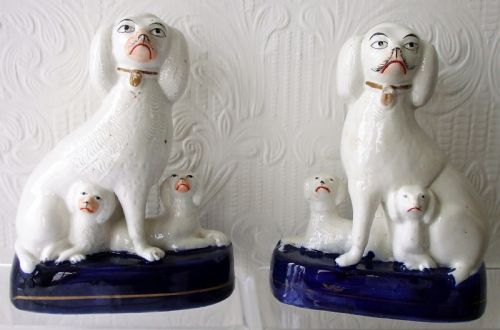
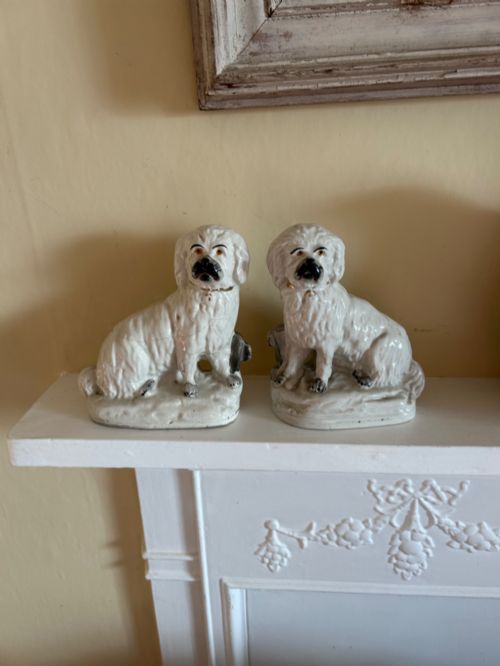
Ceramic spaniel statues encompass the iconic earthenware mantel dogs that populated nineteenth-century parlours and hearths. Buyers searching for ceramic spaniel statues typically encounter pairs of seated figures decorated in rich enamel paints and gilt highlights.
The selections span from robust Victorian earthenware models to earlier Chinese porcelain interpretations. Most examples on this page date from the nineteenth century, reflecting the peak of domestic mantelpiece ornamentation.
Moulded figures appear in various colorways, including traditional white and gilt finishes as well as black and white varieties. Some pieces incorporate charming details such as blue cushions and applied encrusting.
How they were made
Potters shaped these earthenware figures using press moulds before applying liquid glaze to seal the ceramic body. Kiln firing prepared the porous clay base to receive subsequent layers of decoration.
Ceramic Spaniel Statues Retail Price Guide 2026
Typical asking prices for ceramic spaniel statues among the pieces listed under this phrase on Sellingantiques today, from the lower quarter to the upper quarter. They describe what is for sale here now, not the wider market.
Listings feature Victorian earthenware and nineteenth-century glazed ceramics alongside earlier Chinese export porcelain.
What varies in quality
The finesse of the hand-painted enamel and the preservation of the gilt highlights set superior pieces apart. Skilled brushwork brings life to the eyes and muzzle, whereas hasty decoration appears flat.
Beswick
The Ceramic Spaniel Statues Glossary
- Earthenware
- A porous ceramic body fired at lower temperatures, commonly used for nineteenth-century mantel figures. It requires an impermeable glaze to hold liquids and colours.
- Gilt
- A thin layer of gold or gold-colored material applied to highlights such as chains, lockets, and collars. This decorative touch catches the candlelight on a mantelpiece.
- Enamel
- Vitreous coloured paints fused onto the glazed ceramic surface during a secondary firing. It provides the characteristic patches and facial markings seen on these dogs.
- Encrusting
- Applied ceramic clay particles or slip shaped to resemble texture, flowers, or foliage on cushions and bases. It adds a tactile dimension to the decorative figurine.
Ceramic Spaniel Statues: Frequently Asked Questions
Are these spaniel statues always found in pairs?
Most nineteenth-century mantel dogs were produced and displayed as matching pairs to flank a fireplace or mirror. Single figures do appear occasionally, but pairs remain the traditional standard for collectors.
Arranging them facing inward toward each other is the customary way to display them on a shelf or mantel.
How do I identify a Victorian Staffordshire dog?
Victorian examples typically feature heavy earthenware bodies with hand-painted enamel markings and characteristic gilt chains. They often show vent holes on the underside from the manufacturing process.
Examining the glaze crazing and the weight of the ceramic helps distinguish genuine nineteenth-century pieces from later reproductions.
What do the different colorways signify?
Colorways range from plain white and gilt to stark black and white or rich rust patches. These variations often reflect the specific pottery traditions or the tastes of different decades within the Victorian era.
White and gilt models were particularly popular for formal parlours, while copper lustre and patched versions suited country cottages.
How should I display them at home?
These decorative figures sit naturally on mantelpieces, bookshelves, or side tables where their height and posture can be appreciated. Positioning them symmetrically maintains the traditional aesthetic of period interiors.
Keep them away from direct heat sources and strong sunlight to preserve the delicate enamel paint and gilt details.