



Ceramic Poodle Pair
Ceramic poodle pair figures are delightful Victorian mantel ornaments that bring charm and character to any traditional interior setting.
Ceramic Poodle Pair
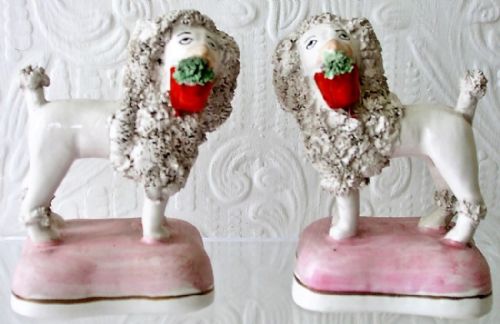
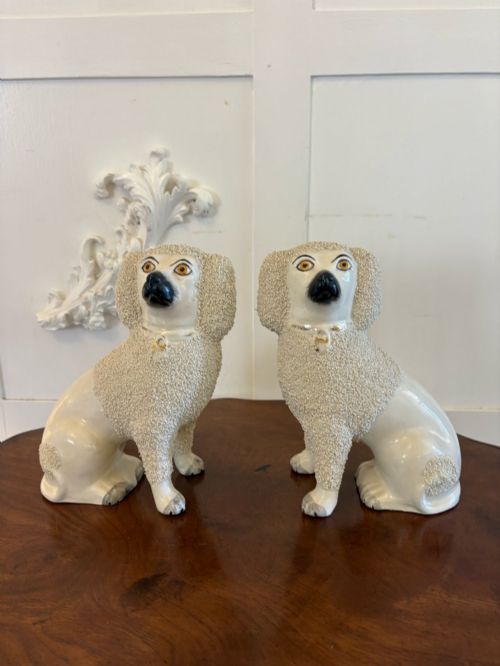
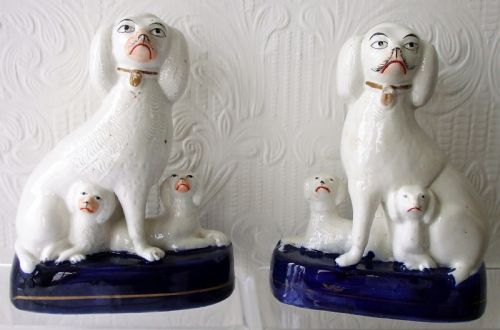
A ceramic poodle pair represents decorative canine figures modeled in matching or opposing postures, typically shown standing with textured coats or accompanied by small pups. When searching for a ceramic poodle pair, buyers encounter Victorian earthenware examples originating from nineteenth-century English potteries.
How they were made
Textured coats were sometimes achieved through applied clay work or specialised granular coatings, creating the characteristic woolly appearance seen on nineteenth-century Staffordshire examples.
Ceramic Poodle Pair Retail Price Guide 2026
Typical asking prices for ceramic poodle pair among the pieces listed under this phrase on Sellingantiques today, from the lower quarter to the upper quarter. They describe what is for sale here now, not the wider market.
Listings feature earthenware materials and lead glazes across nineteenth century Victorian objects.
What varies in quality
Quality in these figures depends upon the crispness of the moulding and the delicacy of the painted details, particularly around the eyes and facial expression. Finer examples retain their original enamel decoration and gold leaf accents with minimal rubbing.
The modelling of accompanying pups and the intricacy of the textured coat differentiate standard production pieces from finer Staffordshire works. Proportion and balance between the two figures in the pair further distinguish superior craftsmanship.
James Dudson
The Ceramic Poodle Pair Glossary
- Staffordshire
- Pottery produced in the Staffordshire region of England, known historically for its prolific output of animal figurines and decorative earthenware. This term encompasses numerous local potteries operating during the nineteenth century.
- Earthenware
- A type of pottery fired at lower temperatures, resulting in a porous body that requires a protective glaze to hold liquids. Most Victorian decorative figures utilise this material.
- Lead glaze
- A glossy coating containing lead oxide applied to pottery before firing to provide a smooth, waterproof finish. It gives antique earthenware its characteristic shine.
- Enamel
- Opaque glass-like paint applied over the fired glaze and subjected to a low second firing to fuse it to the surface. It provides the bright colours on Victorian animal figures.
Ceramic Poodle Pair: Frequently Asked Questions
How were these figures displayed originally?
Victorian households typically arranged ceramic dog pairs symmetrically on mantelpieces, flanking a clock or central ornament. They sat in parlours and drawing rooms as fashionable expressions of domestic taste.
Over time, collectors moved these figures into cabinet displays or curated shelf arrangements to protect the fragile earthenware and delicate enamel work.
How do I care for antique ceramic figures?
Dusting gently with a soft, dry brush is the safest method for maintaining glazed earthenware. Avoid using water or chemical cleaners, which can damage aged enamel paint and delicate gold leaf highlights.
Keep the figures away from direct sunlight and areas prone to heavy temperature fluctuations to preserve the glaze and ceramic body.
How do I identify nineteenth century pieces?
Nineteenth-century Staffordshire figures typically feature heavy earthenware bodies, hand-applied enamel colours, and characteristic crazing within the glaze layer. Examining the modelling style and base helps establish the period of production.
Marked pieces are uncommon among these popular animals, so stylistic comparison with documented nineteenth-century examples remains the primary method of identification.