




Ceramic Hunting Hounds
Ceramic hunting hounds capture the spirit of the chase in enduring earthenware and porcelain, offering a characterful focal point for any traditional mantelpiece.
Ceramic Hunting Hounds
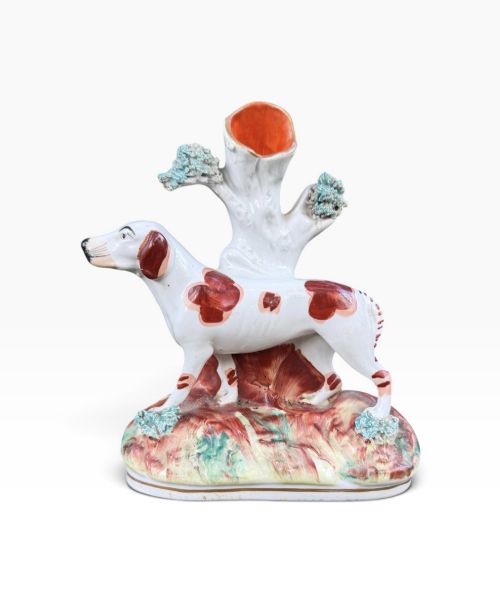
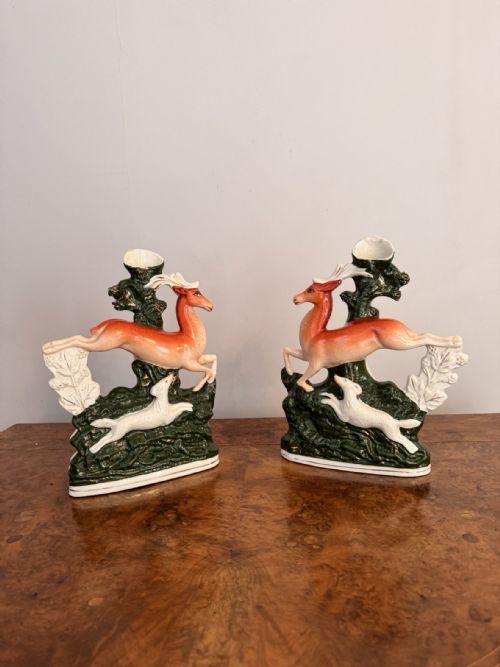
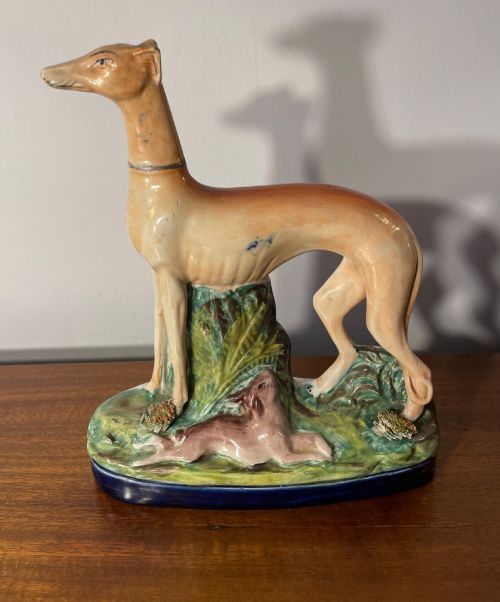
When you search for ceramic hunting hounds, you are looking at figures and vessels depicting sporting dogs such as pointers, setters, greyhounds, and hounds paired with hares, stags, or game. The pieces on this page span the nineteenth and early twentieth centuries, drawing heavily on Staffordshire pottery traditions and European porcelain factories.
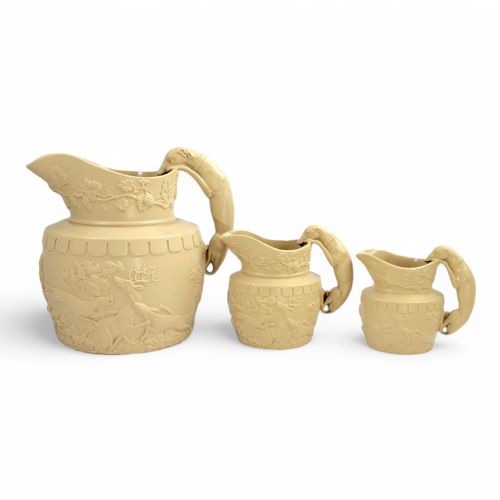
The forms range from utilitarian pitchers with hound handles to decorative spill vases and freestanding figurines. Staffordshire figures dominate the selections, alongside continental porcelain works and yellow ware.
Most examples originate from the Victorian era and the early nineteenth century, reflecting a period deeply enamoured with field sports and animal sculpture.
Materials and methods
These figures and vessels utilise earthenware and porcelain as their primary bodies, shaped through moulding and hand-finishing techniques. Potters applied rich lead glazes and enamel paint to render the markings of the dogs and the details of their quarry.
Pitchers and spill vases combined functional forms with sculptural elements, such as hound-shaped handles moulded directly onto yellow ware bodies. Porcelain pieces from continental factories employed finer clay bodies and precise enamel painting to achieve a smoother, more refined finish.
Ceramic Hunting Hounds Retail Price Guide 2026
Typical asking prices for ceramic hunting hounds among the pieces listed under this phrase on Sellingantiques today, from the lower quarter to the upper quarter. They describe what is for sale here now, not the wider market.
Listings feature earthenware and porcelain materials, encompassing Victorian Staffordshire figures and Edwardian continental porcelain.
Judging quality
Quality in these ceramics rests upon the crispness of the moulding and the expressiveness of the hand-painting on the hound's coat and face. Finer pieces demonstrate careful attention to anatomical detail in the musculature of the dogs and the naturalism of the terrain beneath them.
The application of glaze and enamel also separates standard production from superior work. A well-fired lead glaze enhances the depth of the pottery, whereas hasty painting results in flat, uniform surfaces that obscure the underlying character of the piece.
Thomas Parr factory·Phillips and Bagster·Enoch Wood factory·Royal Dux
The Ceramic Hunting Hounds Glossary
- Earthenware
- Porous pottery fired at lower temperatures, commonly used for nineteenth-century Staffordshire figures. It requires a glaze to become impermeable to liquids.
- Spill vase
- A hollow ceramic figure incorporating a small vase designed to hold wooden spills for lighting candles or fires. These vessels sit behind or beside the main animal subject.
- Lead glaze
- A glossy coating containing lead oxide applied to pottery before firing. It produces a lustrous finish that deepens the appearance of the underlying clay and colours.
- Yellow ware
- A type of heavy earthenware made from clay that fires to a yellow or buff colour. It frequently appears in utilitarian kitchen vessels and pitchers.
- Enamel paint
- Vitreous pigments applied over the fired glaze and subjected to a second, lower-temperature firing to fuse the colours to the ceramic surface.
Ceramic Hunting Hounds: Frequently Asked Questions
What are ceramic hunting hounds?
These pieces are decorative pottery and porcelain figures, spill vases, and pitchers depicting sporting dogs in pursuit of game. They capture Victorian and Edwardian enthusiasm for field sports through skilled animalier sculpture.
Potters across Staffordshire and Europe produced them in various sizes to adorn mantlepieces and sideboards. They remain popular with collectors of nineteenth-century ceramics and animal figures.
How were hunting hound pitchers used?
Pitchers featuring hound handles served practical functions for pouring liquids at the dining table while incorporating sporting motifs. The handle itself formed the body of the hunting dog gripping the rim.
Such vessels combined utility with fashionable country pursuits, appealing to households engaged in hunting culture. Today they are displayed as decorative objects rather than used for serving.
How do I date an antique hound figure?
Dating relies on examining the clay body, the style of the base, and the characteristics of the glaze and enamel painting. Nineteenth-century Staffordshire pieces typically feature heavy earthenware bodies and hand-painted details unique to specific potteries.
Factory marks, where present, help narrow the origin, though many early figures remain unmarked. Comparing the modelling style to documented works from makers like Thomas Parr or Enoch Wood provides further guidance.
How should I display ceramic hunting hounds?
These figures suit traditional settings such as wooden sideboards, mantelpieces, or dedicated display cabinets alongside other nineteenth-century pottery. Their sculptural forms benefit from placement at eye level where the painted details and glazes catch the light.
Keeping them away from direct sunlight preserves the enamel colours. Stable shelving protects the protruding ears and tails of the hounds from accidental knocks.