





Ceramic Gardener Figures
Ceramic gardener figures are characterful sculptural works depicting figures tending plots, bringing pastoral charm and historical artistry directly into a room.
Ceramic Gardener Figures
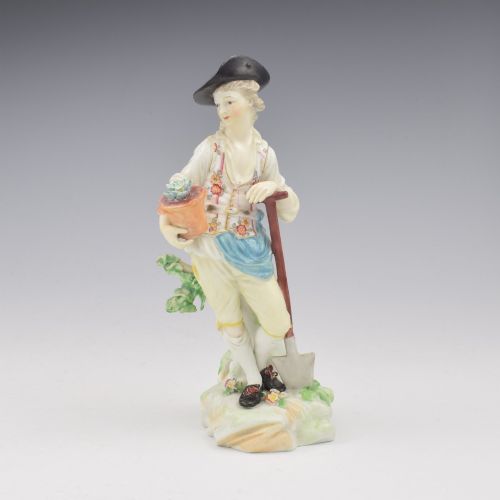
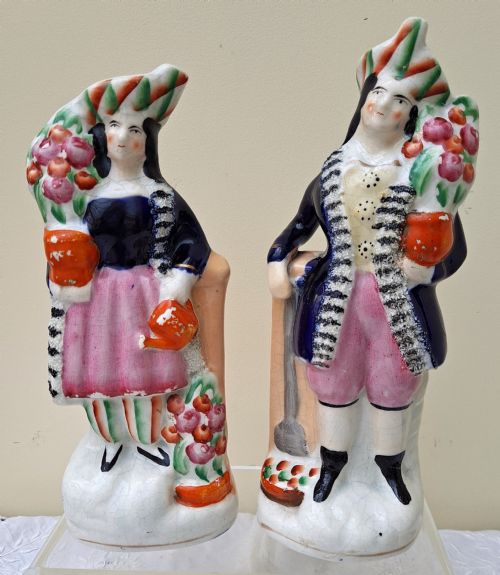
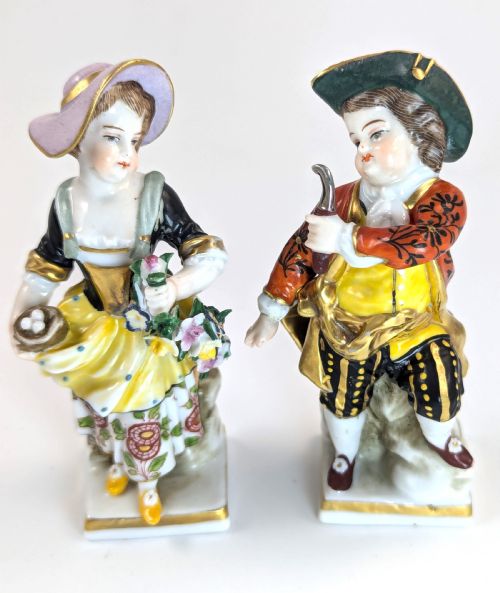
Ceramic gardener figures encompass sculptural representations produced across European kilns, capturing pastoral subjects in porcelain and earthenware. These charming pieces frequently appear in pairs, portraying figures with baskets, flowers, or garden implements.
The versions most commonly met on this page span the eighteenth and nineteenth centuries, originating from English potteries like Staffordshire, Derby, and Minton, alongside continental European factories such as Meissen, Sitzendorf, and Limbach. Forms range from freestanding decorative figurines to elaborate figural candlesticks set upon floral bases.
Materials and manufacture
Makers utilised a variety of fine ceramic bodies, including hard-paste porcelain, biscuit porcelain, parian porcelain, and earthenware. These materials allowed artisans to achieve both the crisp detail of glazed porcelain and the matte texture of unglazed biscuit.
Decoration relied on hand-applied enamel colours, glaze, and occasional gold leaf accents. Figures were frequently modelled as pairs, reflecting the popular aesthetic of the Georgian and Victorian eras.
Ceramic Gardener Figures Retail Price Guide 2026
Typical asking prices for ceramic gardener figures among the pieces listed under this phrase on Sellingantiques today, from the lower quarter to the upper quarter. They describe what is for sale here now, not the wider market.
Several gardeners tend to their plots while sporting surprisingly formal eighteenth-century waistcoats.
Assessing quality and modelling
The consistency of the glaze and the precision of the enamel work separate standard production pieces from finer sculptural outputs. Later nineteenth-century interpretations retain decorative appeal whilst exhibiting different potting techniques and stylistic influences.
Meissen Porcelain·Minton·Sitzendorf·Gotthelf Greiner Limbach Thuringia·Derby
The Ceramic Gardener Figures Glossary
- Biscuit Porcelain
- Unfired or unglazed porcelain that has been fired once, presenting a smooth, matte finish resembling marble. This body was favoured for nineteenth-century figures to highlight sculptural detail.
- Parian Porcelain
- A fine white bisque porcelain developed in the nineteenth century to imitate carved marble. It takes its name from the Greek island of Paros.
- Hard-Paste Porcelain
- A true porcelain composed of kaolin and petuntse, fired at very high temperatures. It produces a durable, vitrified body typical of eighteenth-century continental factories.
- Earthenware
- A porous pottery body fired at lower temperatures than porcelain. Staffordshire makers utilised earthenware for robustly modelled figures.
Ceramic Gardener Figures: Frequently Asked Questions
What periods do ceramic gardener figures come from?
The pieces span the eighteenth and nineteenth centuries, encompassing the Georgian era, the Victorian period, and later revival styles. Eighteenth-century examples often originate from continental factories, whilst nineteenth-century pieces frequently hail from English potteries.
Production methods and materials evolved across these decades, shifting from hard-paste porcelain in early European works to parian and Staffordshire earthenware in the Victorian period.
How were ceramic gardener figures used historically?
These figures served primarily as decorative ornaments for interior display on mantelpieces, side tables, and cabinets. Some specialised examples were incorporated into figural candlesticks.
Owners appreciated them for bringing pastoral themes and domestic elegance into urban homes, reflecting a cultural fascination with idealized rural life.
Are these figures usually found individually or in pairs?
Many examples survive as matched pairs depicting a male and female gardener, often holding baskets or flowers. Single figures also appear, representing either the farmer or the gardener independently.
Pairs were designed to balance mantelpieces or console tables symmetrically, making the matched sets particularly sought after by collectors.
How can one identify different porcelain types?
Biscuit porcelain is distinguished by its unglazed, matte surface that resembles carved marble. Hard-paste porcelain presents a bright, vitrified body with a smooth glaze.
Earthenware used by Staffordshire potteries feels heavier and more opaque than porcelain, reflecting the lower firing temperatures of local clay bodies.