





Ceramic Foo Lions
These ceramic foo lions are guardian figures modelled in porcelain, earthenware and stoneware, offering protective presence and traditional ornament for interiors.
Ceramic Foo Lions
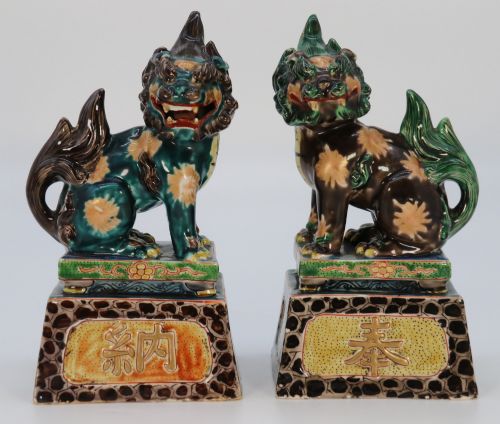
These ceramic foo lions encompass traditional guardian figures, pairs of Buddhist lions, and guardian lion dogs spanning the seventeenth century to the early twentieth century. Buyers encounter forms ranging from large decorative pairs to smaller Kutani models, Bizen figures and Hirado porcelain pieces.
Originating as temple guardians, these ceramic foo lions serve primarily as decorative objects and sculptures in domestic spaces today. The pieces on this page demonstrate the enduring appeal of traditional East Asian guardian imagery across multiple centuries of ceramic production.
How they were made
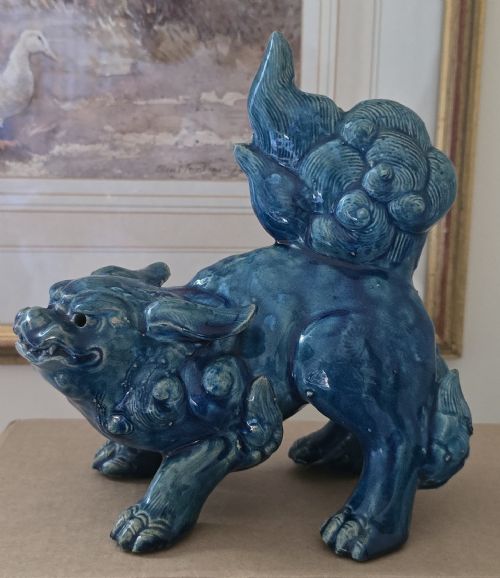
Maker-potters utilised materials such as porcelain, stoneware, earthenware and pottery, shaping the guardian figures by hand or in moulds before firing. Surface decoration relied heavily on glazes and enamels, including cobalt glaze, turquoise glaze, pale green glaze and sancai colour palettes.
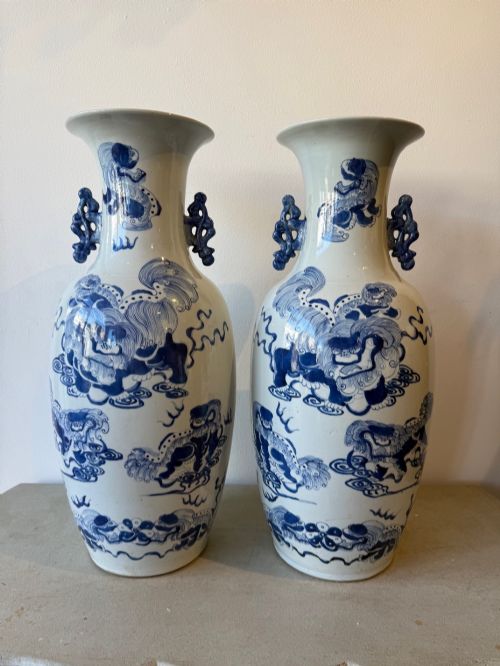
Firing techniques varied from high-fired stoneware and Hirado porcelain to lower-fired earthenware, each interacting differently with the applied pigments. Enamelled pieces often combined underglaze blue with overglaze iron red and green enamels, as seen on transitional jars and Qing Dynasty models.
Ceramic Foo Lions Retail Price Guide 2026
Typical asking prices for ceramic foo lions among the pieces listed under this phrase on Sellingantiques today, from the lower quarter to the upper quarter. They describe what is for sale here now, not the wider market.
Listings feature ceramics spanning the seventeenth century to the early twentieth century, utilising porcelain, stoneware and earthenware.
What varies in quality
The standard of modelling distinguishes superior figures, where facial expressions, musculature and decorative fur rendering display sharper definition and greater anatomical energy. Softer modelling and hurried finishing typically indicate more commercial production.
Glaze application and enamel control also divide the range, with precise brushwork and even colour distribution marking the more accomplished pieces. Depth of tone in cobalt blue or clarity in turquoise and sancai glazes reveals the skill of the original kiln workshop.
The Ceramic Foo Lions Glossary
- Shishi
- A Japanese term for a guardian lion or dog, often depicted with an expressive face and curly mane. These figures derive from Chinese Buddhist traditions.
- Sancai
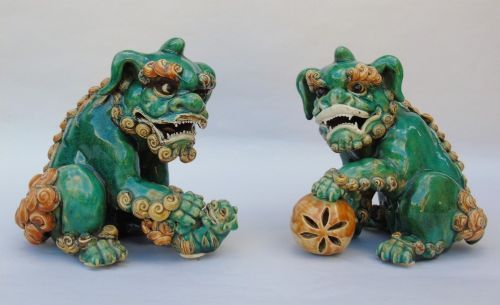
- A traditional three-colour lead glaze technique originating in China, commonly utilising amber, green, and creamy white or yellow tones. It appears on various figures from the nineteenth century.
- Wucai
- A Chinese ceramic style meaning five colours, typically combining underglaze blue with overglaze enamels such as iron red and green. This technique decorates jars and vessels featuring Buddhistic lions.
- Hirado porcelain
- A fine, white Japanese porcelain known for its delicate body and subtle glaze, often produced during the Edo and Meiji periods.
Ceramic Foo Lions: Frequently Asked Questions
What is the difference between a foo lion and a foo dog?
Both terms refer to the same traditional guardian creature, known formally as a Buddhist lion or Shishi. The term dog arose colloquially among Westerners who thought the muscular, curly-maned animals resembled dogs.
In Asian art and iconography, these figures represent sacred lions charged with guarding temples and palaces. The nomenclature changes depending on whether the listing adopts Chinese or Japanese terminology.
How do I date a ceramic foo lion?
Dating relies on examining the ceramic body, glaze characteristics, and stylistic conventions associated with periods such as the Qing Dynasty or Meiji period. Material types, from transitional stoneware to Hirado porcelain, offer strong chronological indicators.
Kiln techniques and enamel palettes also shift across centuries, helping to distinguish nineteenth-century examples from earlier seventeenth-century transitional pieces.
Where should I display ceramic foo lions at home?
These guardian figures work well as mantelpiece ornaments, table sculptures, or paired accents on sideboards and consoles. Their strong sculptural presence allows them to anchor a room as standalone decorative objects.
Traditionally placed in pairs to guard entryways or important spaces, they can be displayed symmetrically or integrated individually among books and other ceramics.
Are ceramic foo lions always found in pairs?
While many traditional guardian figures are created as pairs representing male and female counterparts, individual pieces and single sculptures also appear. Pairs often show subtle differences, with one animal holding a ball and the other a cub.
Listings on this page include both matched pairs and solo models, depending on what survived from the original workshop output.