

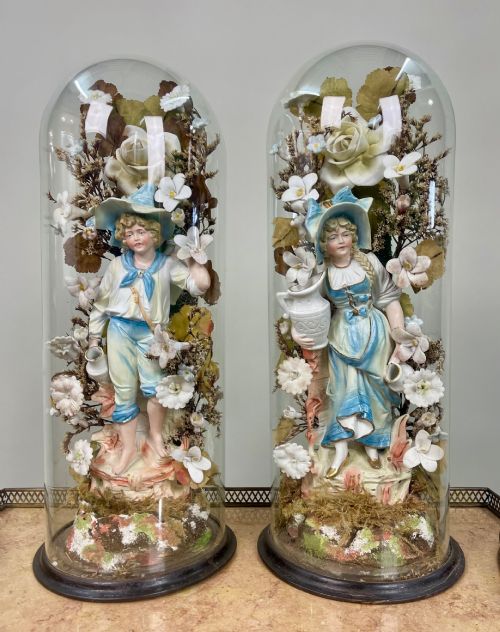


Ceramic Display Figurine
These ceramic display figurine pieces bring colour and character to a room, ranging from small watch holders to large continental figures under glass.
Ceramic Display Figurine
A ceramic display figurine encompasses small decorative sculptures, watch holders, hatpin holders and figures made for interior display across the nineteenth and twentieth centuries.
You are most likely to meet Staffordshire earthenware and porcelain pieces from the Victorian era, alongside continental porcelain groups and figures from makers in Bohemia, Germany and England.
The forms vary from utilitarian watch holders and hatpin holders to sculptural groups like the Medici Lion or The Three Graces, reflecting changing decorative tastes.
Materials and methods
These figures utilise materials such as porcelain, earthenware and pearlware, shaped into sculptural forms and finished with glazes, lead glazes and enamel details.
Ceramic Display Figurine Retail Price Guide 2026
Typical asking prices for ceramic display figurine among the pieces listed under this phrase on Sellingantiques today, from the lower quarter to the upper quarter. They describe what is for sale here now, not the wider market.
Materials recorded across these items include porcelain, earthenware, pearlware, lead glaze, enamel and gilt.
Assessing the work
The standard of modelling and hand-painted enamel work separates ordinary production from finer salon porcelain and sculptural groups.
Completeness of original elements, such as retaining glass domes or matching pairs, distinguishes superior examples from isolated survivors.
Royal Dux·Volkstedt Porcelain·Meissen·Royal Doulton
The Ceramic Display Figurine Glossary
- Pearlware
- A refined earthenware developed in the eighteenth century, featuring a bluish glaze that pools in recesses. It provides the smooth white surface seen on early Staffordshire figures.
- Lead glaze
- A glossy coating containing lead oxide applied to earthenware before firing. This technique gives the surface a vitreous sheen and waterproofs the clay body.
- Hatpin holder
- A small ceramic vessel designed to hold long hatpins on a dressing table. These often take the form of miniature figures or decorative busts.
- Watch holder
- A Victorian desk or mantel ornament incorporating a small hook or recess to hang a pocket watch. Figures are arranged around the timepiece to frame it.
Ceramic Display Figurine: Frequently Asked Questions
What is a ceramic watch holder?
A watch holder is a Victorian desk or mantel ornament designed to display a pocket watch safely. The timepiece hangs from a small hook built into the ceramic sculpture.
These pieces combined utility with decorative storytelling, often depicting classical figures, animals or pastoral scenes that framed the watch.
How do I date a ceramic figure?
Dating relies on stylistic clues, paste composition and manufacturer marks where present. Victorian pieces often show heavy enamel work and pearlware bodies, while Edwardian and later works reflect Art Nouveau or Art Deco lines.
Comparing the modelling style to known period pieces helps narrow down the decade of production.
What were hatpin holders used for?
Hatpin holders served as desktop or dressing table vessels to store long, decorative hatpins used in Edwardian and later fashion. They kept fragile pins organised and upright.
These small ceramic vessels frequently took the form of figures, such as flapper girls or busts, matching the dressing accessories of the period.
Are glass domes original to these figures?
Some nineteenth-century continental figures survive with their original glass domes. These domes protected delicate painted surfaces and gilt details from dust and damage in the home.
Finding a piece with its original dome intact is less common, as the glass was fragile and prone to breakage over generations.