



Century Stick Barometer
A century stick barometer brings precise atmospheric measurement into domestic spaces through refined wooden cases and delicate silvered scales.
Century Stick Barometer
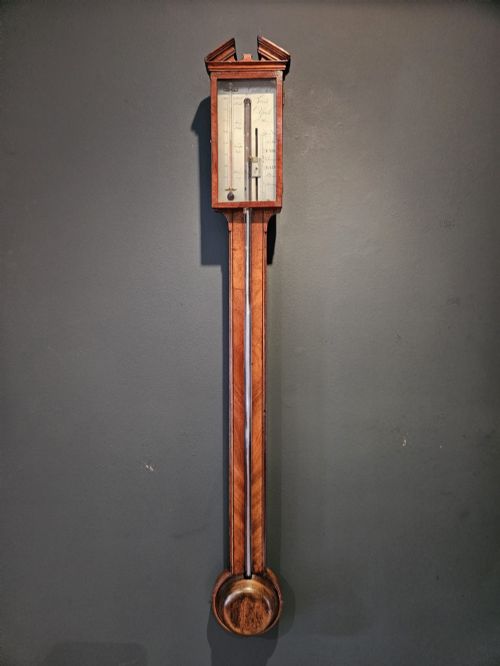
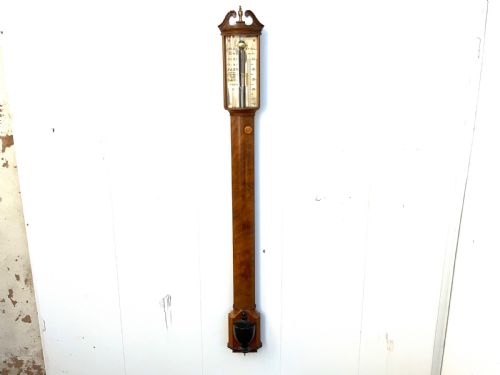
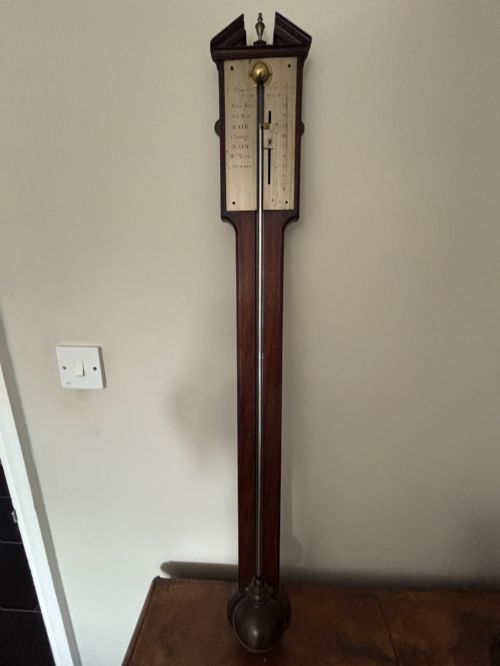
A century stick barometer is a vertical weather-measuring instrument housed in a tall, slender wooden case designed to hang securely upon a wall. When exploring this phrase, buyers encounter vertical wall-hanging examples spanning from the eighteenth century through the Victorian era.
Mahogany remains the dominant wood for these domestic weather glasses, often shaped with bow-fronts or straight trunks. Walnut and oak alternatives also appear, alongside decorative versions enriched with inlay and mother-of-pearl.
London workshops produced a significant proportion of these instruments, though makers working in provincial towns and Scottish cities are regularly encountered. Examples range from plain domestic models to sophisticated instruments incorporating thermometers.
The vertical layout allows gravity to act upon the mercury column within a sealed glass tube, exposing atmospheric pressure fluctuations. These instruments served both practical forecasting functions and ornamental roles in period interiors.
Materials and construction methods
Cabinetmakers constructed the slender trunk using dense timbers such as mahogany, rosewood, and oak, frequently selecting veneers with pronounced grain patterns like curl mahogany or bird's eye maple. Boxwood and ebony stringing provided sharp linear contrast on inlaid models.
The functional heart of the instrument relies upon a delicate glass tube filled with mercury, mounted alongside a silvered metal scale engraved with weather descriptions. Bone and ivory components occasionally appeared for vernier dials and subsidiary indicators.
Makers integrated brass cistern covers, bezels, and hanging rings to secure the delicate glass components within the wooden housing. Protective glass plates shielded the engraved metallic register plates from dust and tarnishing.
Century Stick Barometer Retail Price Guide 2026
Typical asking prices for century stick barometer among the pieces listed under this phrase on Sellingantiques today, from the lower quarter to the upper quarter. They describe what is for sale here now, not the wider market.
The selection spans domestic Georgian wall pieces through to ornate Victorian Gothic and architectural instruments.
Distinctions in construction and design
The sophistication of the timber selection largely dictates the visual standing of an instrument, with figured veneers, matched grain patterns, and intricate boxwood stringing marking superior examples. Plain solid woods and simple box construction sit at the simpler end of domestic production.
Engraving finesse upon the silvered metal scale separates standard workshop output from exceptional commissions by renowned scientific instrument makers. Crisp, deep lettering and elaborate floral or architectural brasswork indicate high-status manufacturing.
The integrity of the original case design, including surviving architectural pediments, cistern covers, and matching thermometer boxes, determines the preservation standard of the piece.
George Adams London·Blunt·JB Bergna·Gilbert London·Bate·Ciresa of Milan·S. P. Cohen·Tarone Gally Co·Corti of Exeter·Malacrida of Dublin·Keen and Frodsham·Matthew Berge·Charles Baker·Tagliaue and Torre·Girolimo of London·Nairne London·Charles Lincoln·Thomas Heath·Henry Pyefinch·Dolland·J and J Gardner·Lehours·Somalvico of London
The Century Stick Barometer Glossary
- Stick barometer
- A vertical meteorological instrument measuring atmospheric pressure through a mercury column enclosed in a glass tube. This form provides a direct visual reading of pressure changes.
- Vernier
- A small sliding scale used alongside the main barometer scale to allow precise readings of atmospheric pressure. It helps measure fractions of an inch on the metallic plate.
- Cistern
- The enclosed reservoir at the base of the barometer tube holding the reserve mercury. It is often concealed behind an ornamental wooden or brass cover.
- Silvered metal
- The brass or copper dial plate treated to achieve a bright, matte silver finish. The graduations and weather inscriptions are engraved directly into this surface.
- Stringing
- Fine inlaid lines of contrasting wood, such as boxwood or ebony, used to edge panels and borders. This decorative technique appears frequently on Georgian and Regency cases.
Century Stick Barometer: Frequently Asked Questions
How do I read a stick barometer?
Read the height of the mercury column against the engraved scale, noting whether the meniscus rises or falls. Adjust the sliding vernier pointer to align with the top of the mercury for a precise measurement.
Compare this reading with the weather descriptions engraved on the silvered plate to anticipate meteorological changes. Changes in height indicate shifting atmospheric pressure over the course of the day.
Where should I hang a stick barometer?
Mount the instrument securely on an interior wall away from direct sunlight, radiators, and heavy foot traffic. Stable ambient temperatures prevent unnecessary expansion of the wooden case and internal glass.
Ensure the wall is structurally sound and capable of supporting the hanging weight of the dense timber case. Hang the barometer at eye level so the scale can be consulted easily.
Are mercury barometers safe to own?
The metallic mercury remains safely sealed within a heavy glass tube under normal domestic conditions. The enclosed design protects the contents during everyday hanging and inspection.
Handle the instrument with care if it is ever removed from the wall for transport or relocation. Keep the barometer upright at all times to prevent air entering the glass tube.