

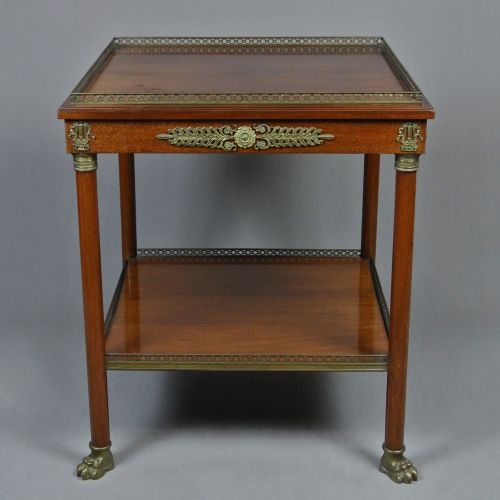
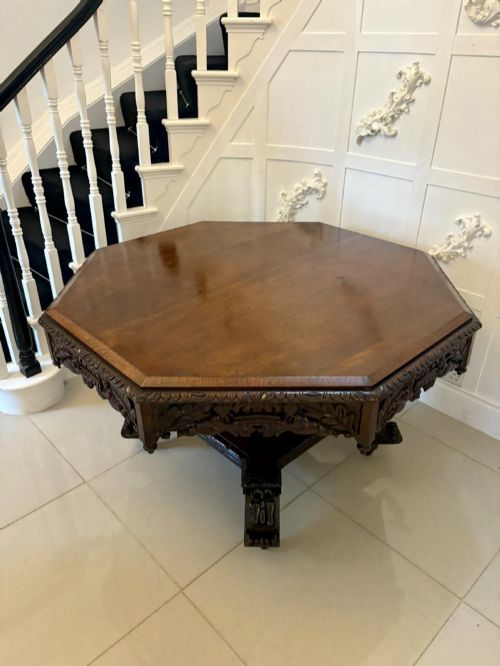
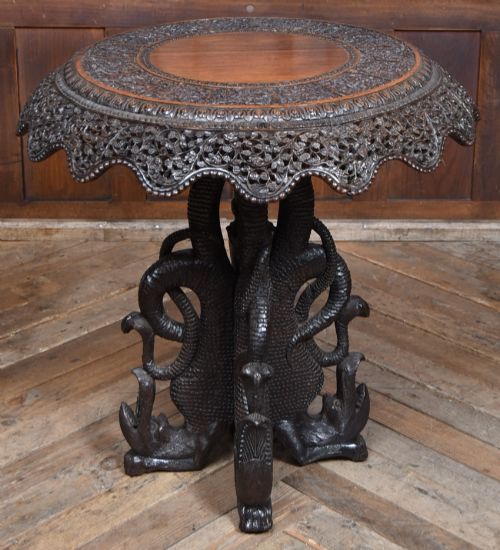
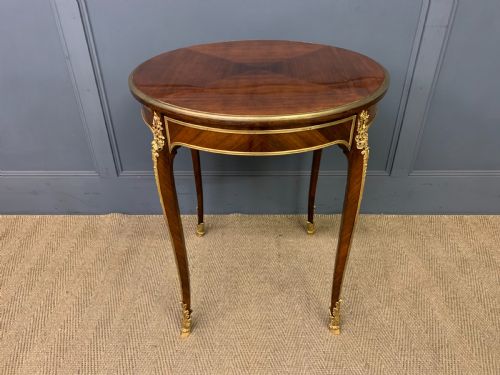
Centre Table Furniture
When you search for centre table furniture, you are looking for freestanding tables designed to sit visibly in the middle of a room.
Centre Table Furniture
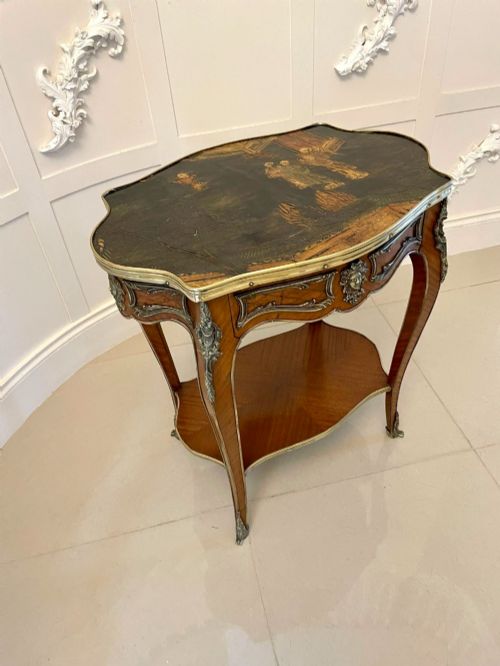
Centre table furniture encompasses freestanding pieces designed to be viewed from all sides rather than pushed against a wall. These tables serve multiple functions across the listings, operating as dining tables, library tables, writing desks, and occasional tables in various rooms.
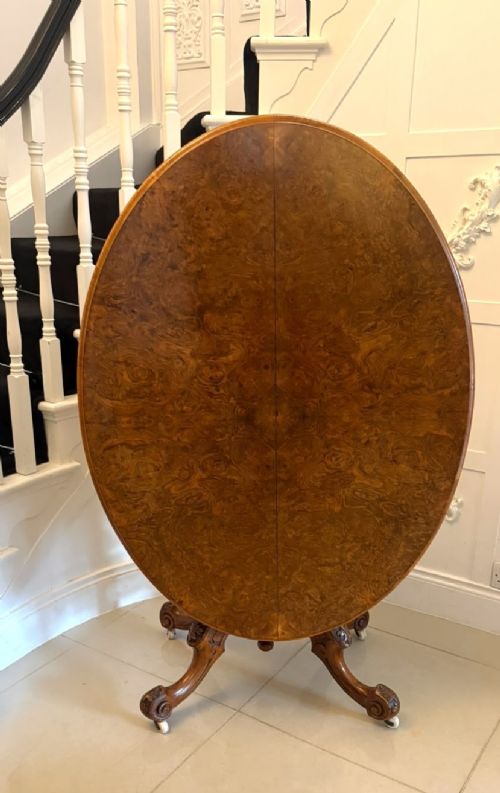
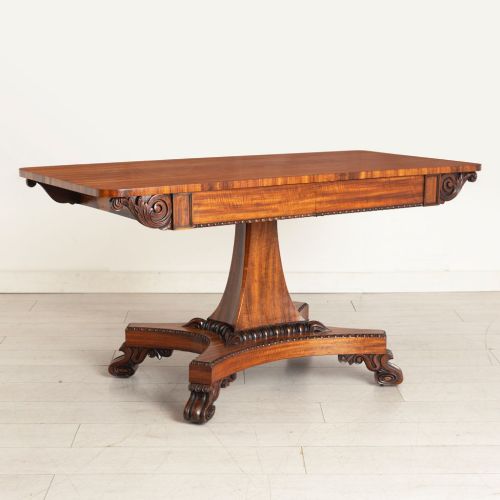
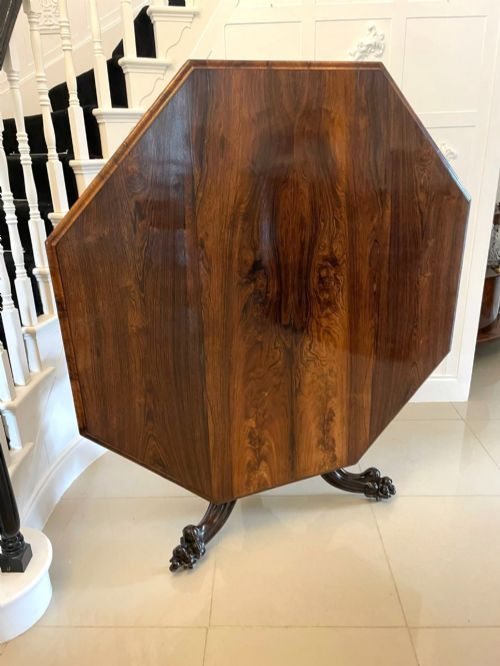
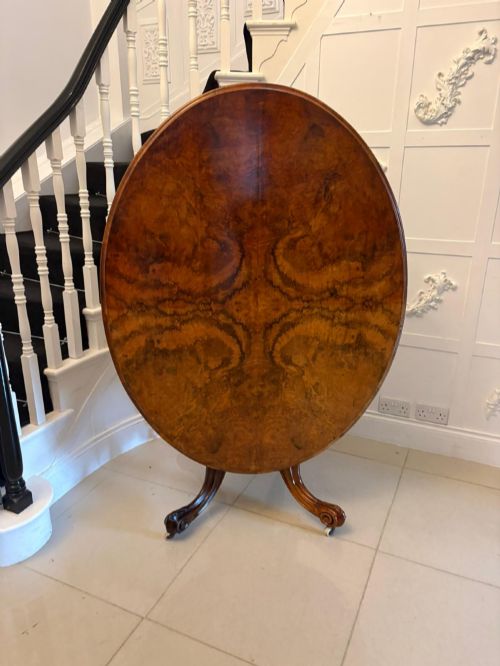
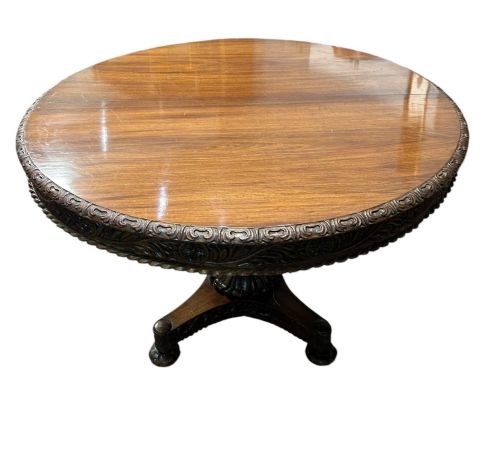
The versions you are most likely to meet on this page hail primarily from the nineteenth century, including Victorian, Regency, and William IV eras. Common timber choices among these pieces include rosewood, burr walnut, and mahogany, often shaped into circular, oval, or rectangular forms.
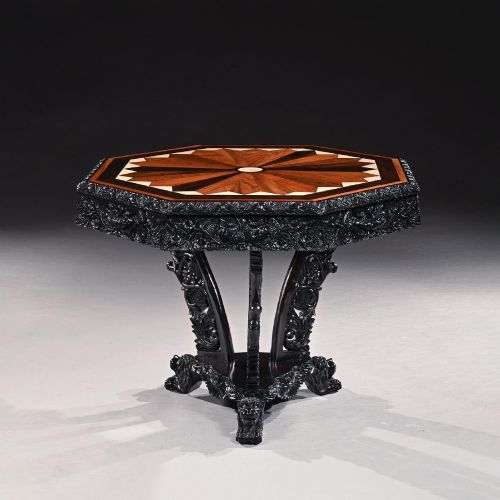
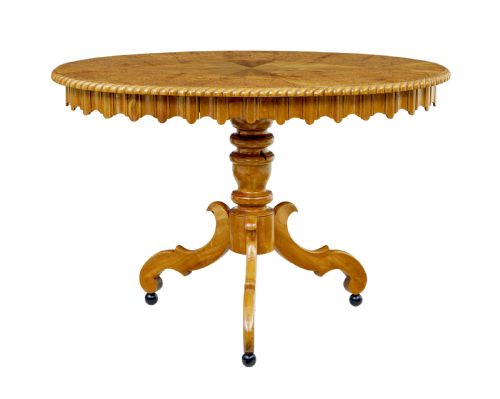
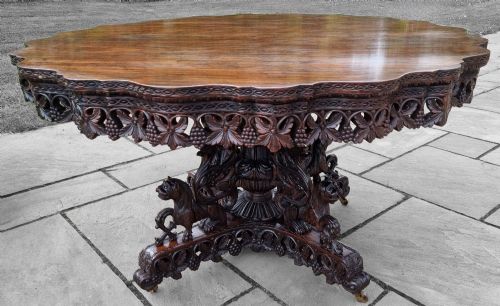
Geographic origins span widely across the evidence, ranging from English workshops to Swedish, Dutch, Italian, and colonial centres such as Ceylon, Burma, and India. Regional variations introduce distinct hardwoods, marquetry, bone inlay, and deeply carved ornamentation to the form.
How They Were Made
Cabinetmakers constructed these tables using dense hardwoods such as rosewood, mahogany, walnut, and ebony, frequently applying burr veneers to large top surfaces for dramatic grain patterns. Structural elements relied on solid timber framing, pedestals, and turned or carved legs.
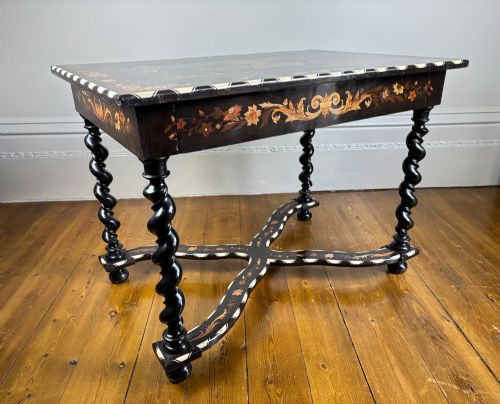
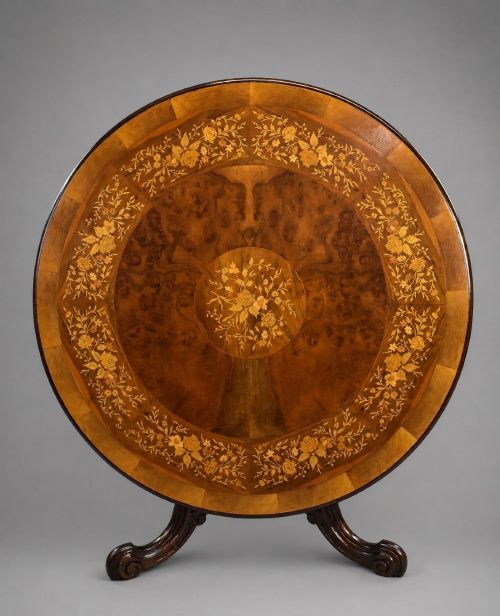
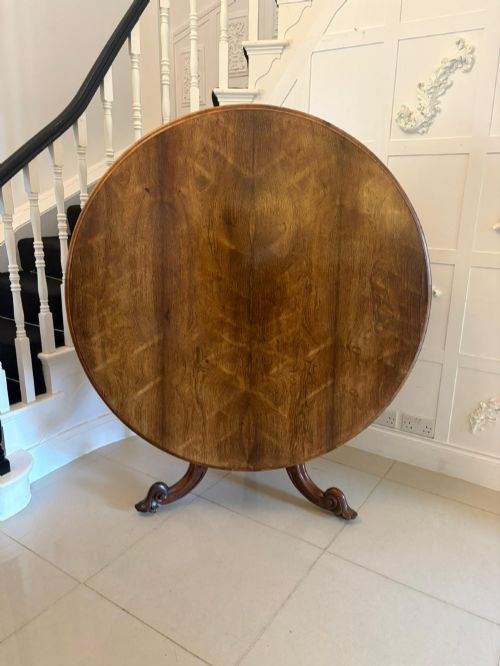
Decorative techniques recorded in the inventory include intricate marquetry, brass inlay, ormolu mounts, parcel gilt, and bone inlay. Some pieces utilise tilt-top mechanisms for storage convenience, while others incorporate secret drawers and complex turning.
Centre Table Furniture Retail Price Guide 2026
Typical asking prices for centre table furniture among the pieces listed under this phrase on Sellingantiques today, from the lower quarter to the upper quarter. They describe what is for sale here now, not the wider market.
Listings feature 19th-century pieces predominantly, alongside select 18th-century and 1920s examples reflecting various revival styles.
What Varies in Quality
The selection of timber sets the baseline for quality, distinguishing standard cabinet timbers from exotic tropical hardwoods and richly figured burr veneers. Superior pieces display carefully matched grain patterns across expansive table tops.
Execution of decorative details separates standard production from exceptional examples, seen in the precision of marquetry, the crispness of hand-carved ornament, and the integration of cast ormolu mounts. Maker attribution to known firms often aligns with higher standards of internal construction and joinery.
Proportion and stability define the structural calibre of these freestanding forms, particularly on large dining and library tables requiring robust pedestals or solid pillar supports.
Gillows·Edwards And Roberts·Amleto Bertoni·Williams and Gibton
The Centre Table Furniture Glossary
- Tilt-top
- A table mechanism allowing the top to pivot to a vertical position when not in use. This design saved floor space in period drawing rooms.
- Marquetry
- Decorative patterns formed by fitting together small pieces of wood veneer, bone, or shell onto a solid core. It creates detailed pictorial or geometric designs across table tops.
- Ormolu
- Gilded bronze mounts applied to furniture for decorative effect. It gained popularity during revival periods mimicking French court taste.
- Pedestal
- A central columnar support resting on a stable base or feet, frequently found on circular and oval centre tables.
- Burr walnut
- Wood taken from the gnarled growths of a walnut tree, yielding highly twisted and complex grain patterns. It was sliced into veneers for statement furniture.
Centre Table Furniture: Frequently Asked Questions
What is a centre table used for?
Centre tables serve as focal points in large rooms, designed to stand clear of walls so people can walk entirely around them. Historically, they functioned as heavy library tables, breakfast tables, or formal display surfaces for books and decorative objects.
In modern interiors, buyers often utilise these versatile pieces as large coffee tables, spacious writing desks, or dining tables in open-plan spaces.
How do I identify a Regency centre table?
Regency tables, produced in the early nineteenth century, frequently feature dark mahogany or rosewood surfaces combined with classical architectural motifs. Look for brass inlay, bold circular pedestals, and sabre legs ending in brass paw castors.
Many examples from this era incorporate tilt-top mechanisms or concealed drawers built neatly into the frieze beneath the top.
Where were colonial centre tables made?
Colonial centre tables originate from nineteenth-century workshops in regions such as Ceylon, Burma, and India, often destined for European export or local administrative homes. These pieces utilise dense regional timbers like calamander, padauk, and ebony.
They frequently display distinct local craftsmanship, including profuse botanical carving and specialised specimen wood tops.
How do I care for a rosewood centre table?
Rosewood tables require stable indoor humidity away from direct heat sources and strong sunlight to prevent the timber and veneers from drying out. Routine maintenance involves dusting gently with a dry, soft cloth.
Avoid using silicone-based polishes or harsh chemical cleaners, applying traditional wax sparingly only when the wood appears dry.