

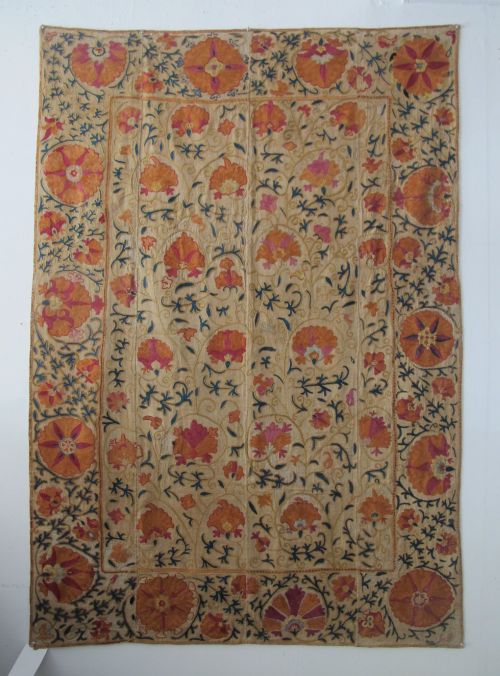


Central Asian Tribal Art
Central asian tribal art brings nomadic textiles, embroideries and wall pieces from the nineteenth and early twentieth centuries into modern interiors.
Central Asian Tribal Art
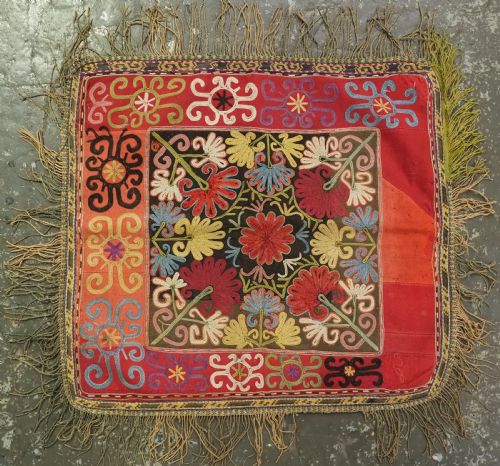
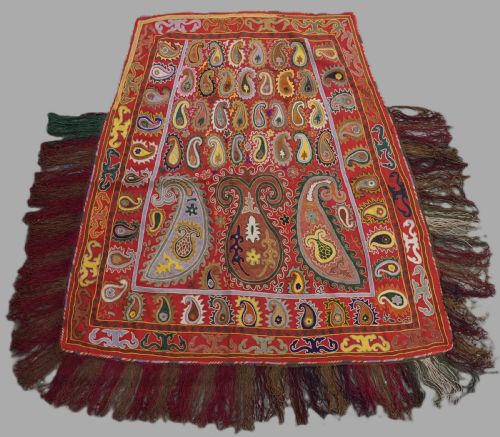
Central asian tribal art encompasses woven and embroidered objects created by nomadic and settled groups across Turkmenistan, Uzbekistan, and Kyrgyzstan during the nineteenth and early twentieth centuries. Buyers encounter functional household items, dowry pieces, and ceremonial objects repurposed as wall hangings and textile art.
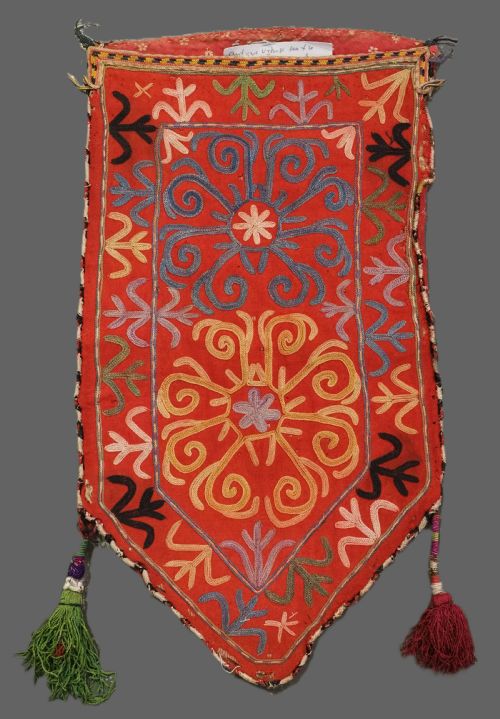
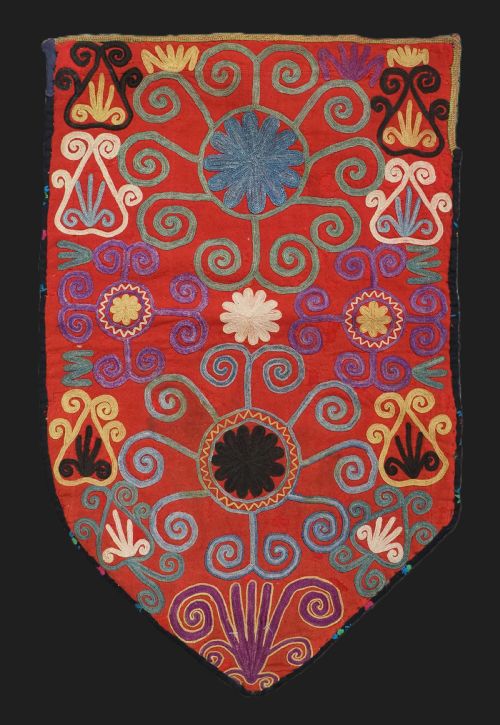
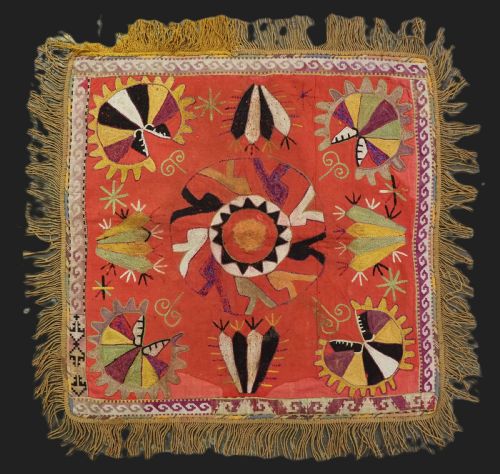
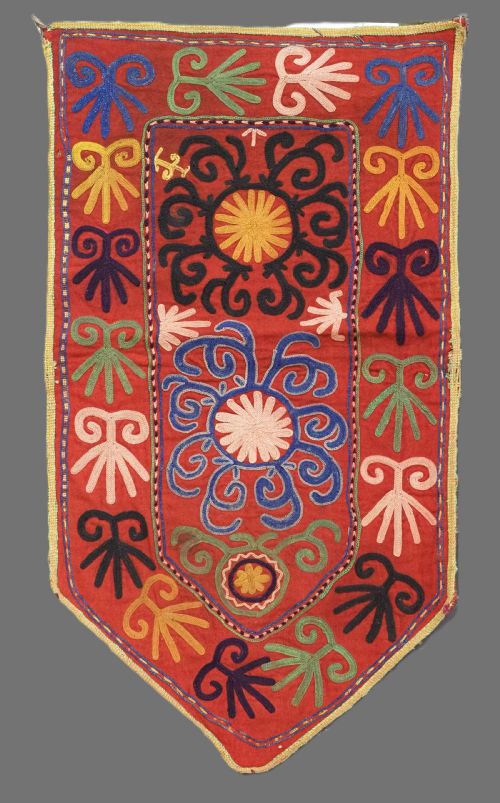
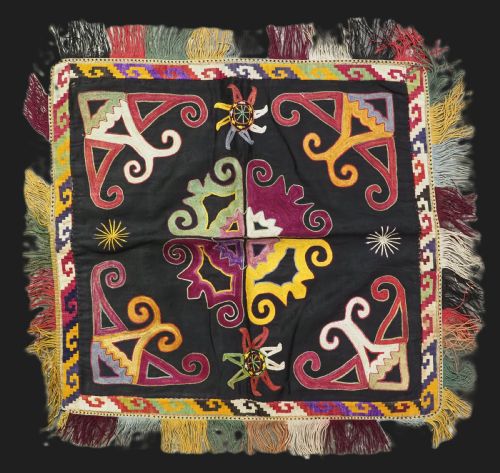
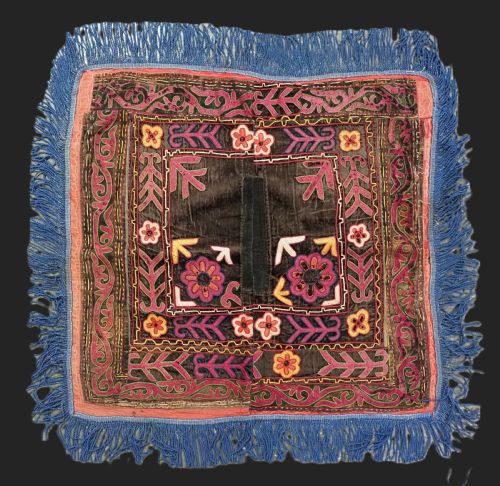
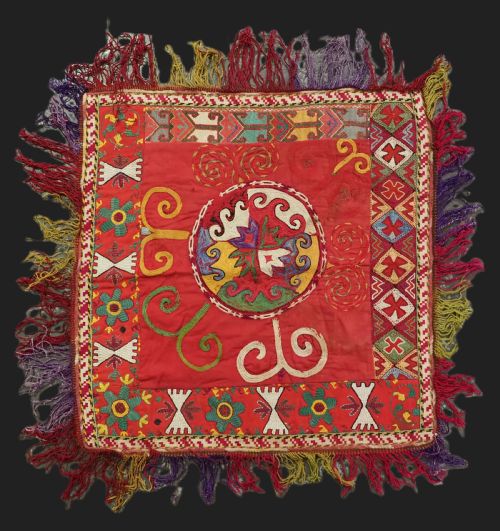
Wall hangings, yurt decorations, saddle covers, and ceremonial coats dominate the available inventory, providing bold geometric patterns and vibrant needlework suited for display. Each piece preserves the utilitarian artistry of nineteenth century tribal communities.
Materials and Construction
Artisans constructed these textiles primarily from hand-spun wool, cotton, and silk, often dyed with natural colourants to achieve deep, lasting hues. Felted wool and flatweave techniques provided durable foundations for nomad items intended for daily use in harsh environments.
Embroidery forms a major category, executed with silk or cotton threads on woven grounds of cotton or wool. Nomadic makers also integrated organic elements such as bone inlay and steel into functional items like wall pieces and weaponry.
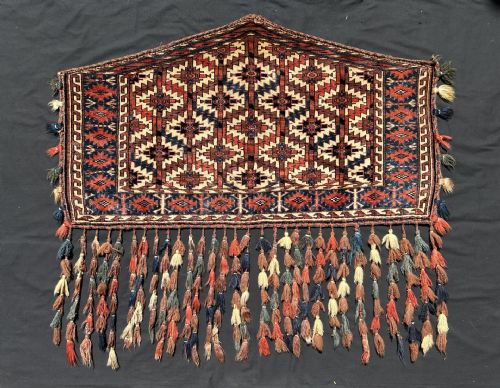
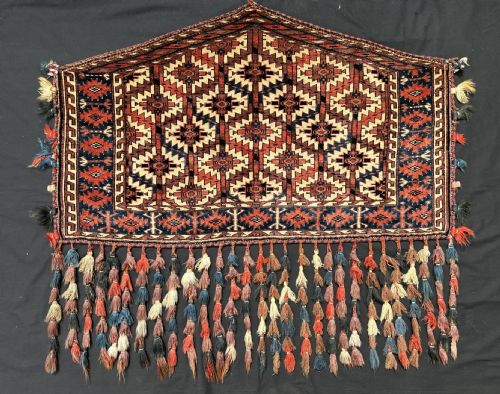
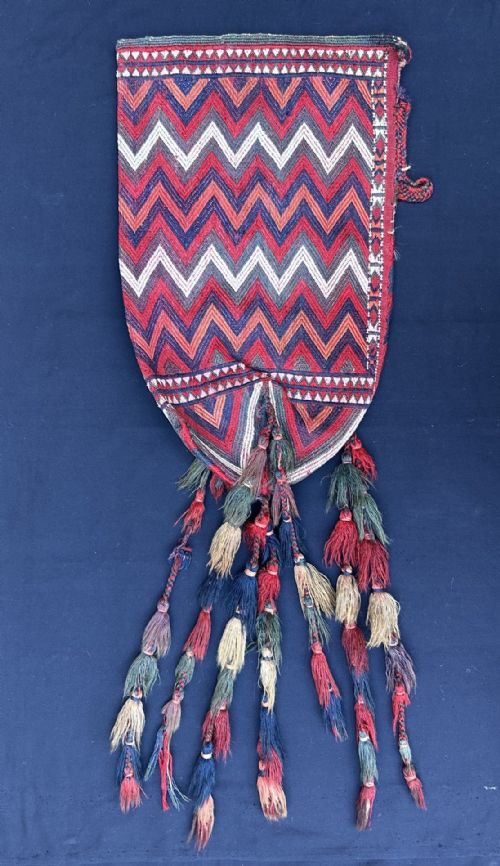
Several yurt accessories retain their original horse hair tassels, swinging gently as they did in nineteenth century Central Asian tents.
Assessing Quality and Execution
Quality rests upon the fineness of the needlework, the complexity of the design layout, and the integrity of the natural dyes used. Pieces exhibiting dense, precise stitching and well-balanced compositions represent the upper tier of tribal production.
The preservation of the ground material and the vibrancy of the silk or wool highlights determine the overall visual impact. Intact borders, original backing fabrics, and minimal structural loss elevate the standing of any textile within its type.
The Central Asian Tribal Art Glossary
- Suzani
- An embroidered silk wall hanging from Uzbekistan, traditionally stitched as part of a bride's dowry. These large textiles display bold floral and geometric motifs on cotton grounds.
- Torba
- A small storage bag produced by Turkmen tribes, often hung inside a yurt or tent. They frequently display intricate guls and banded flatweave designs.
- Asmalyk
- A ceremonial camel trapping made by Turkmen groups, particularly the Yomut tribe. These pentagonal hangings formed part of wedding processions.
- Ilgich
- An embroidered wall hanging or hanging bag produced by Uzbek Lakai communities. They utilise dynamic, abstract needlework patterns.
- Gul
- A medallion motif repeated across Turkmen carpets and torbas to identify specific tribal lineages. Each design variant corresponds to distinct nomadic groups.
- Ok Bash
- A decorative felt cap used to cover the wooden struts of a yurt framework. They often incorporate embroidery and horse hair tassels.
Central Asian Tribal Art: Frequently Asked Questions
What is a suzani used for?
Suzanis functioned primarily as dowry textiles and decorative wall coverings in Uzbek households. Families displayed them during weddings and festive gatherings.
Today, collectors mount these large silk embroideries on walls as textile art to introduce colour and historical texture to residential spaces.
How do I care for antique tribal textiles?
Keep textile art away from direct sunlight to prevent the natural dyes and silk threads from fading over time. Gentle surface cleaning by a specialist conservator maintains the stability of older wool and cotton.
Avoid hanging heavy embroideries by single points to distribute the weight evenly across the entire backing fabric.
What distinguishes Lakai embroidery?
Lakai embroidery originates from Uzbek tribal groups and is characterised by dynamic, non-linear geometric forms and heavy silk stitching. Artisans created these patterns on small household items and dowry pieces.
The resulting aesthetic differs markedly from the formal, symmetrical floral layouts found in urban suzanis.
Where were Turkmen torbas placed?
Turkmen tribes hung torbas inside cylindrical tents known as yurts to store small personal belongings and household items. Their structured formats suited daily nomadic existence.
Contemporary collectors appreciate the intricate guls and tribal iconography displayed on the faces of these bags.