



Celadon Table Lamps
Celadon table lamps bring muted sea-green porcelain into domestic spaces, prized for their subtle jade-like glazes and sculptural form.
Celadon Table Lamps
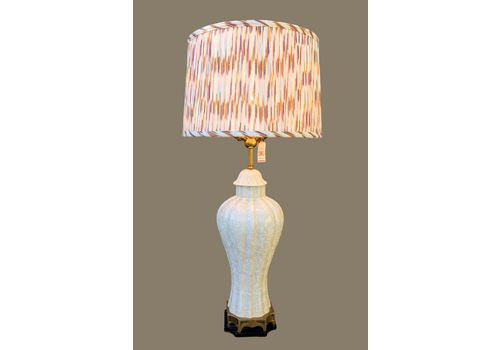
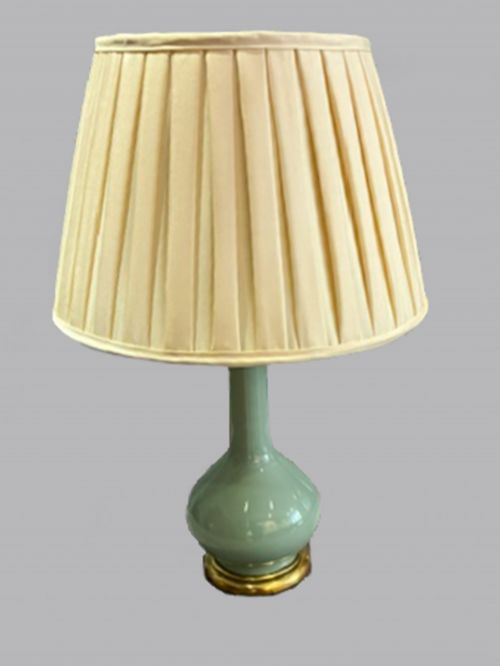
When you search for celadon table lamps, you encounter lighting created by mounting antique ceramics onto wired bases, often paired with fabric shades. These pieces span the nineteenth century, drawing primarily from Chinese export production and French nineteenth-century interpretations.
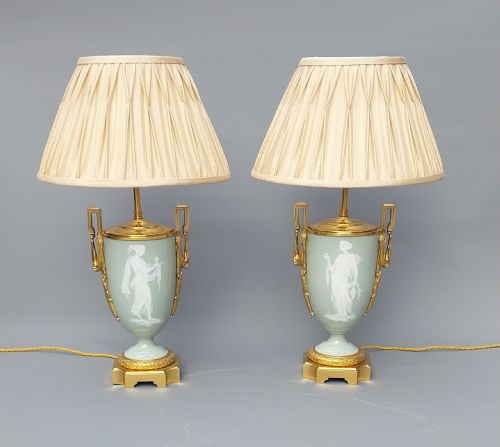
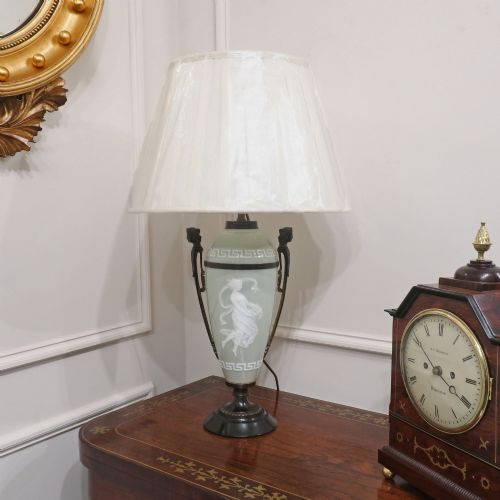
The Chinese examples utilise traditional vases, including twin-handled vessels and large decorated jars, adapted into lamps. French pieces from the same era frequently incorporate pate sur pate porcelain alongside gilt bronze or ormolu mounts.
You will see individual lamps as well as matched pairs, ranging in date from eighteen-eighty through to nineteen-thirty. The forms bridge Asian ceramic traditions and European decorative arts of the late nineteenth century.
Materials and Construction
The core material is porcelain covered in a characteristic iron-rich glaze that fires to a pale green shade. Artisans shaped these vessels by hand before glazing and firing, achieving the signature celadon surface.
Metal mounts in brass, bronze, and gilt bronze were cast and chased in France to elevate simple porcelain bodies into decorative lighting. Wiring and wooden elements were added subsequently during the conversion of vases into functional lamps.
Celadon Table Lamps Retail Price Guide 2026
Typical asking prices for celadon table lamps among the pieces listed under this phrase on Sellingantiques today, from the lower quarter to the upper quarter. They describe what is for sale here now, not the wider market.
Assessing Quality
The distinction between standard examples and superior pieces rests on the depth of the glaze and the refinement of the metal mounts. Ormolu mounts cast with intricate detail command greater attention than simple turned wooden bases.
The integrity of the porcelain body itself dictates value, as does the harmony between the original vessel and its European or domestic mountings. Pairs consistently hold more interest than single lamps due to the difficulty of matching antique ceramics.
The Celadon Table Lamps Glossary
- Celadon glaze
- A transparent green glaze containing iron oxide, fired in a reduction kiln to achieve soft grey-green tones. It mimics the appearance of jade.
- Pate sur pate
- A ceramic technique where wet white porcelain slip is built up in successive layers on a darker coloured body to create a low relief cameo effect. This method was widely used in nineteenth-century French studios.
- Ormolu
- Gilt bronze ornamentation applied to furniture and lighting, highly polished to resemble gold. It provides decorative mounts for porcelain bodies.
- Chinese export
- Porcelain manufactured in China specifically for Western markets, often featuring traditional motifs adapted to European tastes. These pieces form the basis of many converted lamp bases.
Celadon Table Lamps: Frequently Asked Questions
Are these original antique vases?
Many examples utilise genuine nineteenth-century Chinese or French porcelain vases that were subsequently drilled and fitted for electricity.
The conversion process preserves the antique ceramic body while adapting it for modern interior use.
How do I care for my lamp?
Dust the porcelain and metal mounts gently with a soft, dry cloth. Avoid chemical cleaners that might damage the antique glaze or gilt bronze surfaces.
Check the wiring periodically to ensure safe operation with modern bulbs.
Do matching pairs exist?
Several listings feature matched pairs of lamps created from complementary Chinese celadon vases or French porcelain bodies.
Pairs are particularly sought after for symmetry on sideboard tables or matching bedside lighting.
What periods are represented?
The selection spans the nineteenth century, including Chinese export pieces and French neoclassical styles from eighteen-eighty to nineteen-thirty.
Stylistic markers help distinguish between Qing dynasty vessels and later European interpretations.