

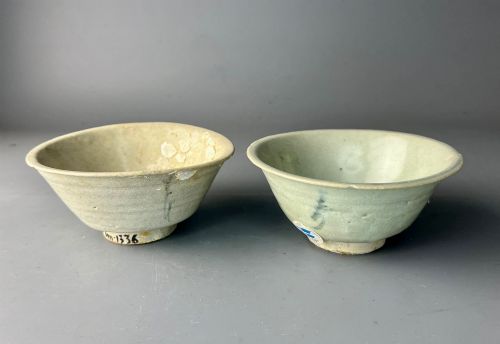


Celadon Bowl
A celadon bowl brings centuries of jade-green glaze and quiet form to a room.
Celadon Bowl
A celadon bowl is a vessel defined by its distinct green glaze, originating primarily from Asian ceramic traditions across multiple eras. When you search for a celadon bowl, you encounter forms ranging from ancient Longquan wares to later Qing dynasty interpretations.
The selection here includes functional bowls alongside related vessels such as tripod censers, dishes, and brush washers. Pieces span periods from the Song dynasty through to the nineteenth century, reflecting a long history of potting tradition.
Stoneware and porcelain form the core of these items, often displaying carved foliate rims or subtle surface crackle. Each piece carries the distinct aesthetic of its particular dynasty or period of manufacture.
How they were made
Potters shaped these bodies from stoneware or porcelain before applying a specialised iron-rich glaze that fires to shades of green. Techniques such as carving twin fish or foliate rims directly into the clay body created depth beneath the translucent glaze layer.
Firing conditions in traditional kilns produced the characteristic crackle patterns and varied depths of tone seen across the surfaces. Cobalt pigment occasionally complemented the green glaze, while jade was carved directly in related decorative items.
Celadon Bowl Retail Price Guide 2026
Typical asking prices for celadon bowl among the pieces listed under this phrase on Sellingantiques today, from the lower quarter to the upper quarter. They describe what is for sale here now, not the wider market.
Twin fish swimming endlessly beneath a pale green glaze remind us that potters enjoyed leaving playful secrets for future hands to find.
What varies in quality
Quality in these vessels rests on the purity and depth of the green glaze, alongside the crispness of any carved decoration beneath it. Superior examples show a harmonious balance between the weight of the stoneware and the smoothness of the surface finish.
The refinement of the foot ring and the control of the kiln atmosphere during firing distinguish finer pieces from simpler utilitarian wares. Age and historical period also influence the character of the crackle and the overall presence of the object.
The Celadon Bowl Glossary
- Celadon glaze
- A pale green ceramic glaze derived from iron oxide fired in a reducing kiln. It mimics the appearance of jade and varies from olive to sea-green.
- Longquan
- A famous kiln system in China known for producing thick green-glazed ceramics over many centuries. These wares are prized for their subtle colour and carved motifs.
- Song Dynasty
- An historical period in China associated with great refinement in ceramic arts. Pieces from this era often feature understated glazes and elegant proportions.
- Tripod censer
- A ritual vessel supported by three legs, frequently used for burning incense. These forms often display archaic bronze influences translated into ceramic or jade.
- Crackle-glazed
- A surface finish featuring a network of fine decorative cracks intentionally created during the cooling process. This texture adds visual depth to the monochrome glaze.
Celadon Bowl: Frequently Asked Questions
Can I use this bowl for food?
Many historical vessels are best reserved for display rather than daily dining use. Older ceramics can be porous or sensitive to thermal shock.
Consider the age and condition of the piece before serving anything wet or warm in it. Gentle handling preserves the integrity of the glaze.
What causes the crackle in the glaze?
The crackle results from a deliberate difference in thermal expansion between the ceramic body and the glaze layer. This network of lines forms as the piece cools in the kiln.
Over time, dust and handling can subtly darken these lines, adding character to the surface. It is a technical feature rather than damage.
How do I date a celadon piece?
Dating relies on examining the potting style, the tone of the green glaze, and the characteristics of the exposed foot ring. Different dynasties favored distinct forms and clay compositions.
Comparing the decorative motifs with known examples helps narrow down the period of manufacture. Expert consultation remains useful for precise attribution.