
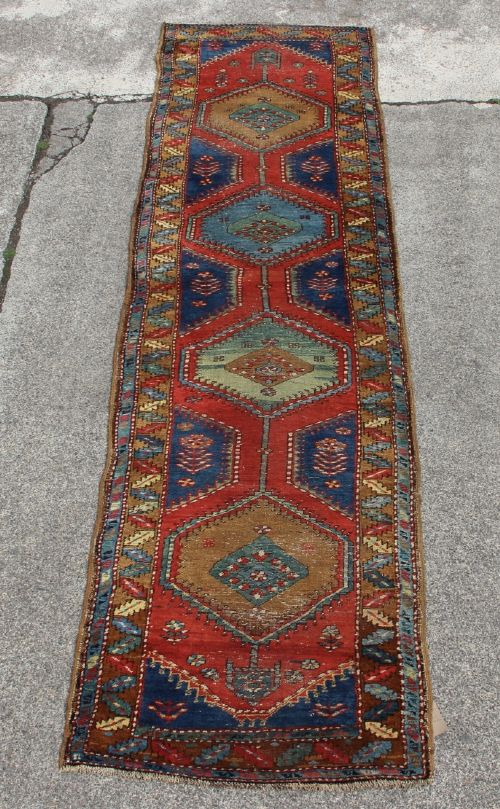
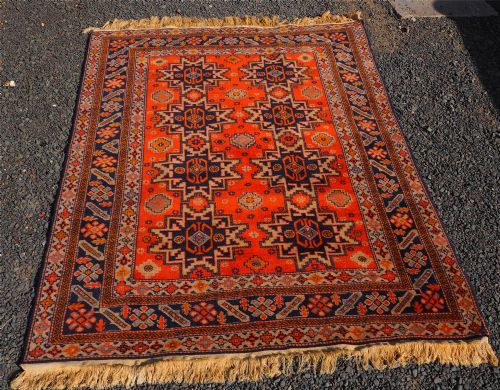
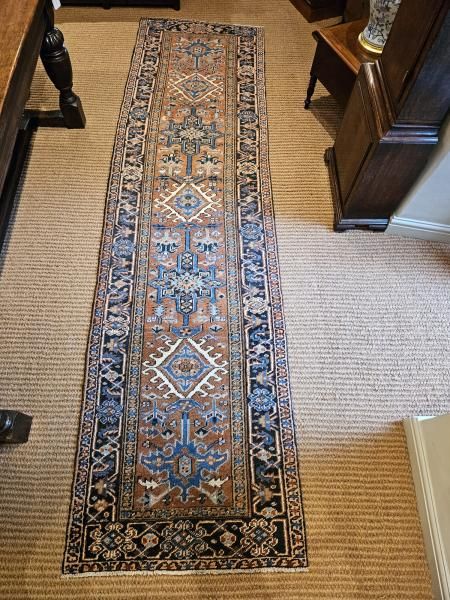
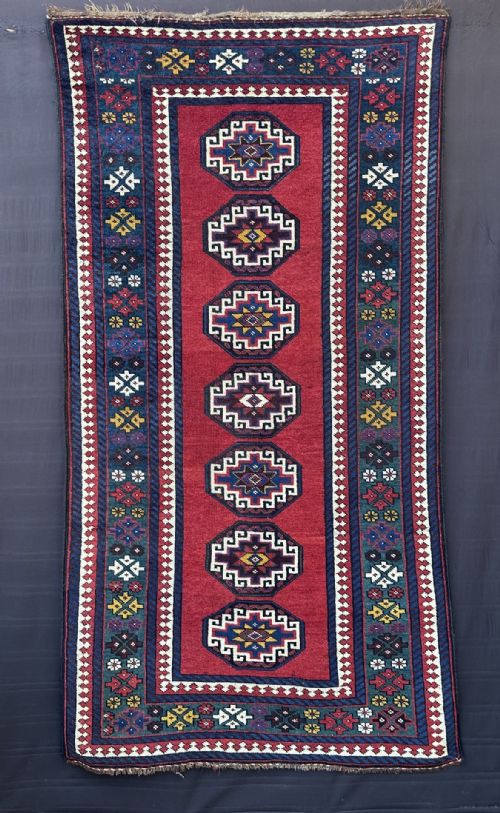



Caucasian Style Geometric Rug
A caucasian style geometric rug brings sharp angles and tribal motifs directly onto the floor.
Caucasian Style Geometric Rug
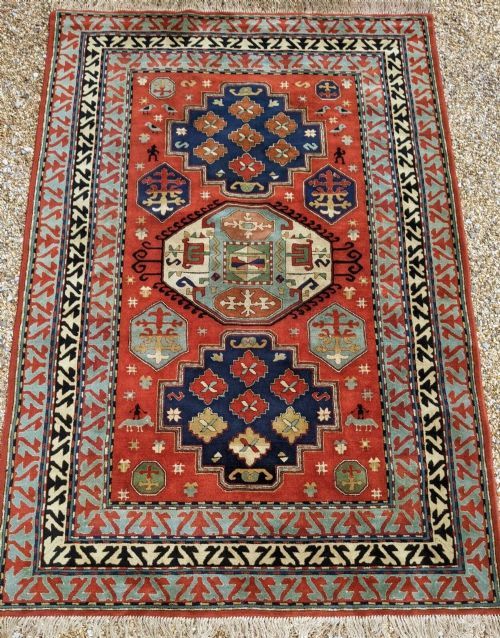
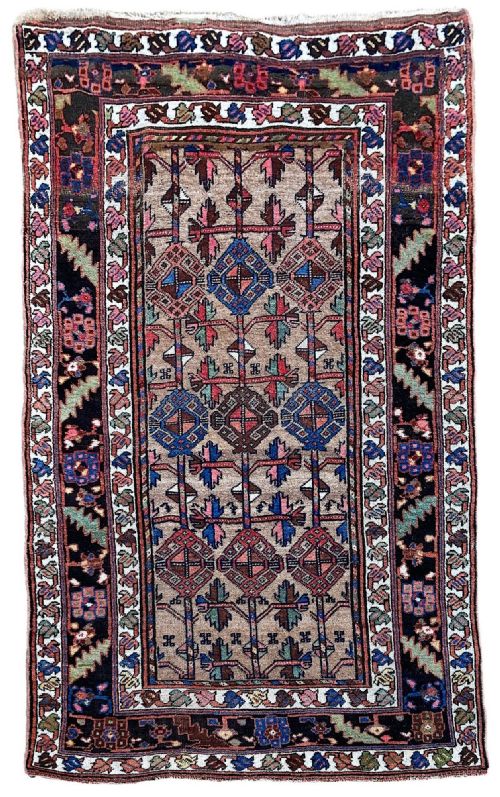
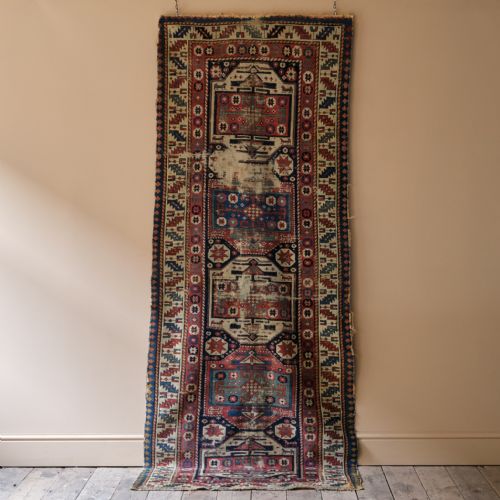
A caucasian style geometric rug groups together antique runners, carpets and village rugs from the nineteenth and early twentieth centuries. Pieces often display structured medallions, repeating crosses and linear patterns originating from tribal weaving centres in the Caucasus and North-West Persia.
Buyers meet varied formats on this page, ranging from long narrow hallway runners to square area rugs and small prayer mats. Village pieces from regions such as Karaja, Heriz and Shirvan dominate the selection, bringing distinct regional palettes and traditional layouts to domestic interiors.
Materials and construction methods
Weavers constructed these pieces using hand-spun wool and cotton foundations, often incorporating camel hair for natural tones and durability. Hand-knotting techniques secure the pile firmly to the warp and weft threads.
Natural dyestuffs provide the rich colour depth seen across the field and borders, resulting in subtle tonal variations from one end of the rug to the other.
Listings span the nineteenth century up through the 1930s, featuring wool, cotton and camel hair materials.
Distinctions in quality
Knot density and wool quality govern the structural integrity of each runner or carpet, determining how well the pile resists daily foot traffic. Tightly packed knots allow intricate geometric lines to remain sharp and distinct.
The clarity of the natural dyes and the balance of the tribal design dictate the visual success of the piece. Well-rendered motifs and harmonious colour combinations separate ordinary village weaving from exceptional examples.
The Caucasian Style Geometric Rug Glossary
- Runner
- A long, narrow carpet format designed specifically for hallways, corridors and stairs. These pieces measure significantly longer than they are wide.
- Prayer rug
- A small format rug traditionally featuring a mihrab or arch design at one end, indicating the direction of prayer. These pieces were woven for personal devotion.
- Medallion
- A central ornamental motif placed in the middle of the rug field. It anchors the geometric symmetry of the entire design.
- Warp
- The vertical foundation threads stretched tightly on the loom before knotting begins. The fringe of the rug forms from these exposed parallel threads.
- Weft
- The horizontal threads passed alternately over and under the warp strings to bind the rows of knots together. This process stabilises the structure of the woven fabric.
Caucasian Style Geometric Rug: Frequently Asked Questions
How do I care for an antique rug?
Vacuum gently without using a rotating brush roll to protect the wool pile from unnecessary pulling and fibre loss.
Rotate the rug periodically to ensure even wear patterns from sunlight exposure and foot traffic over the years.
Where were these geometric rugs made?
Weavers produced these textiles across the Caucasus region and North-West Persia, including specific village areas like Karaja, Heriz and Shirvan.
Local tribal groups passed down distinct weaving traditions, colour preferences and geometric symbolisms from generation to generation.
What materials make up these carpets?
Traditional construction relies principally on wool for the pile and cotton or wool for the foundational warp and weft threads.
Selected examples incorporate camel hair within the un-dyed sections to introduce natural brown and golden shades into the pattern.
How do I distinguish regional rug styles?
Examine the specific geometry of the central medallions, border arrangements and the interaction of background colours across the field.
Different weaving districts favoured particular palettes, such as the deep terracottas of Heriz or the crisper blues and ivories of Shirvan.