


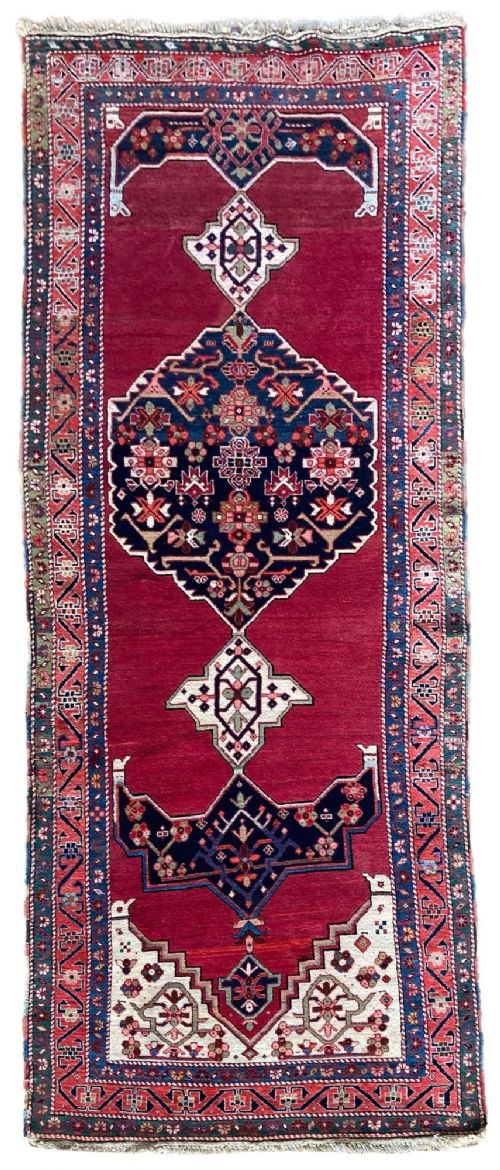


Caucasian Long Runner
When you search for a caucasian long runner, you are looking at narrow, handwoven floor coverings from the nineteenth and early twentieth centuries designed to handle heavy hallway footfall.
Caucasian Long Runner
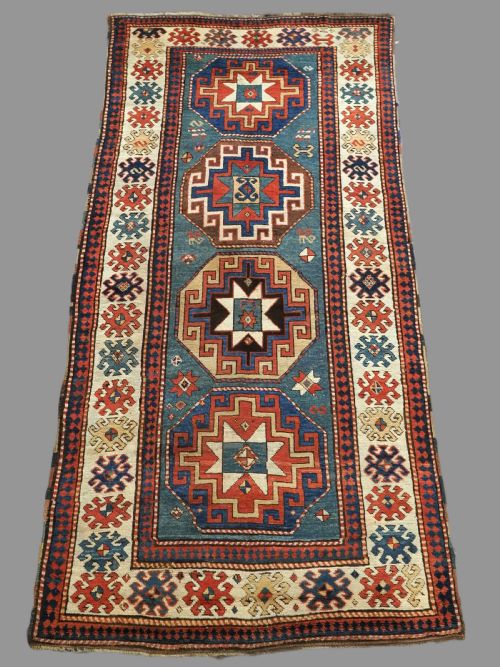
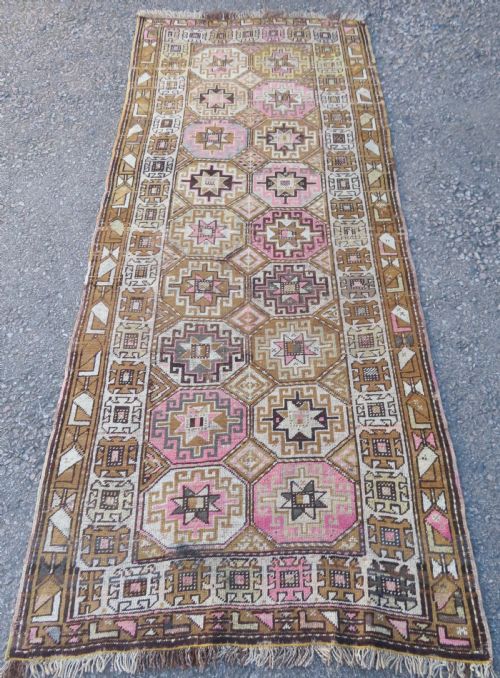
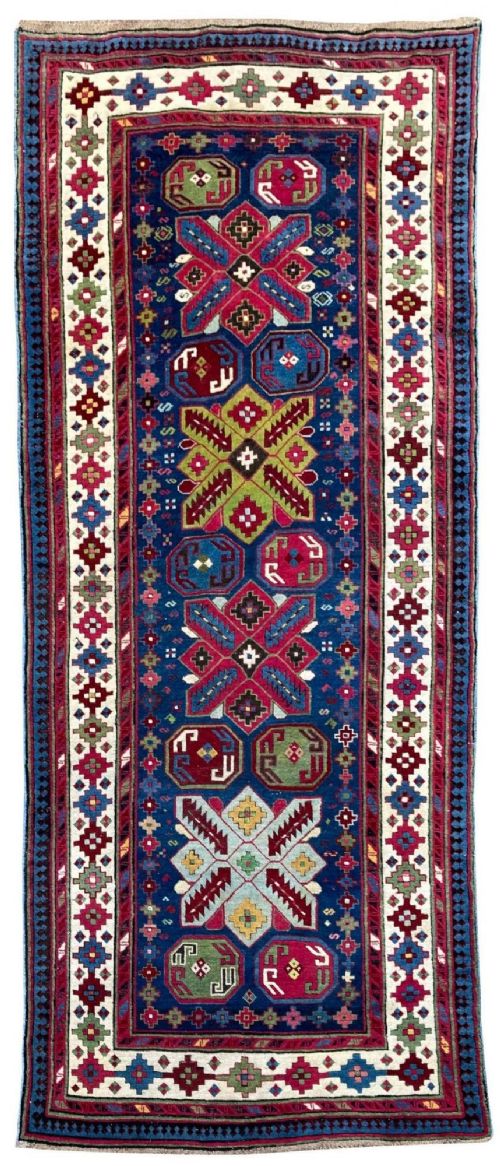
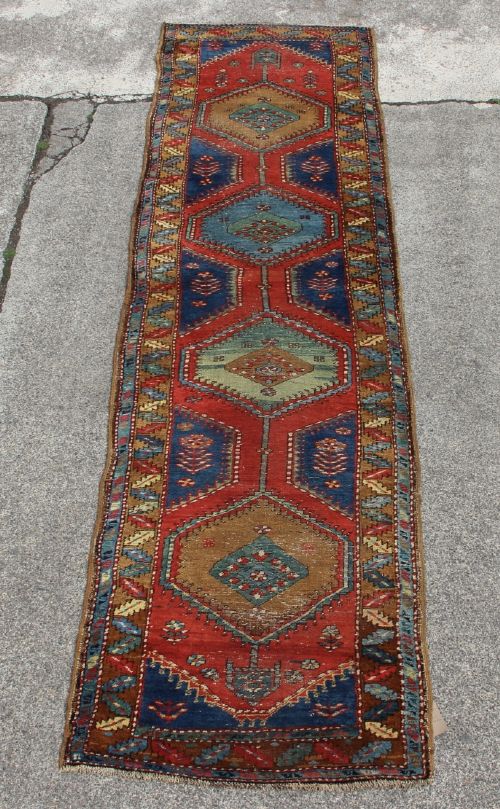
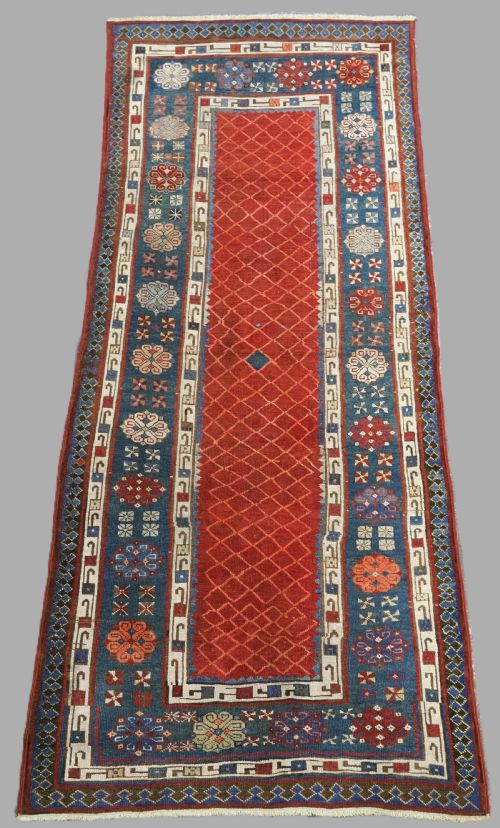
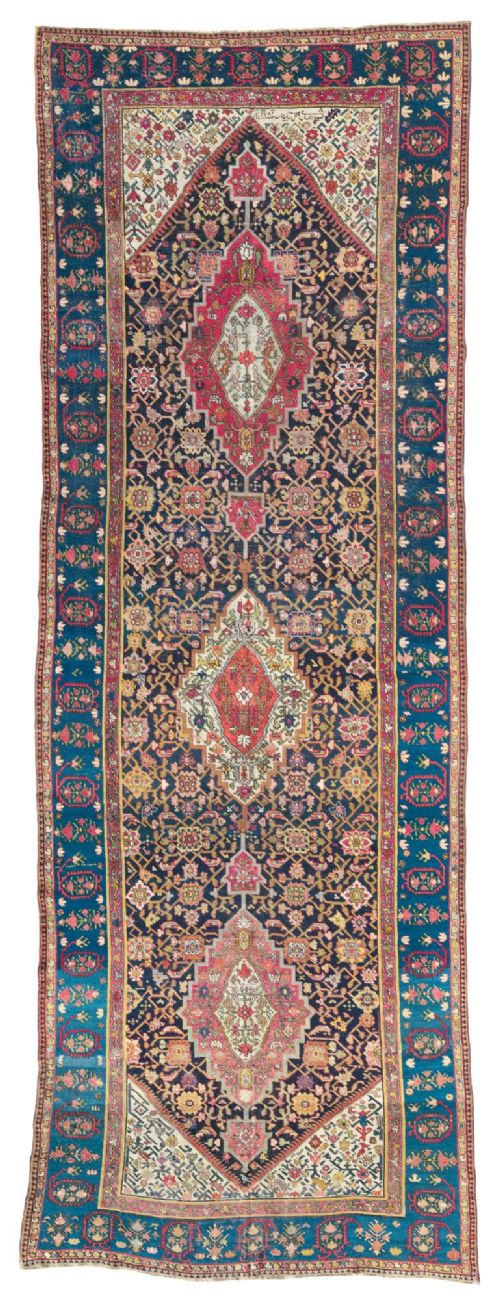
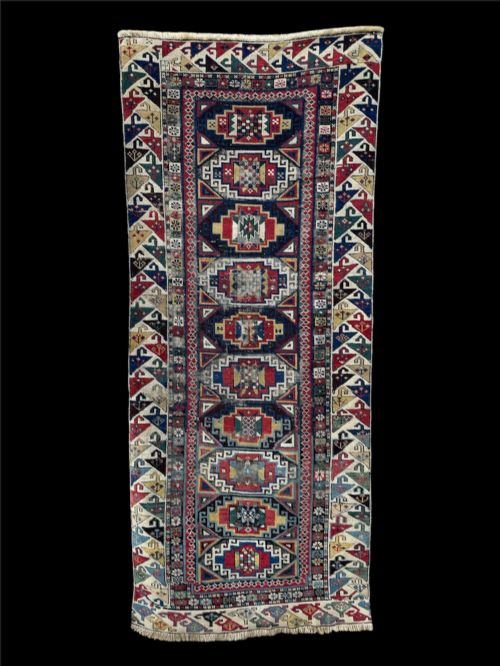
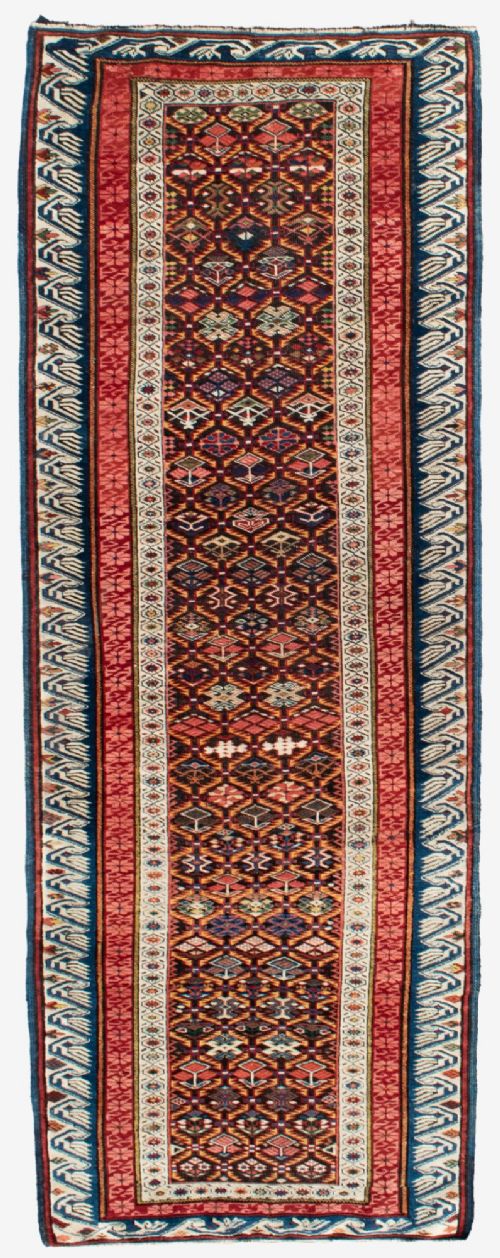
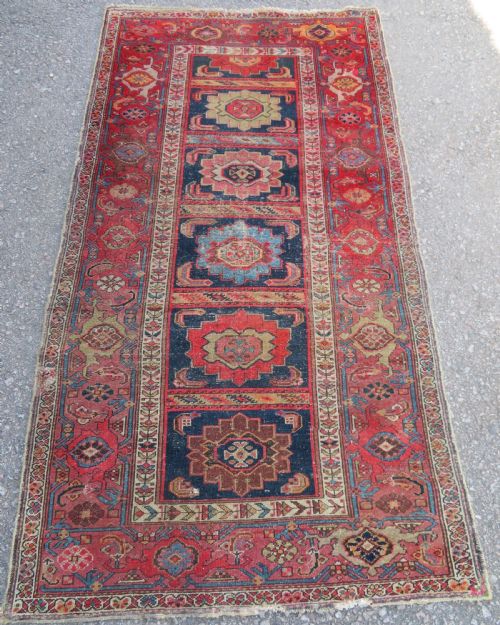
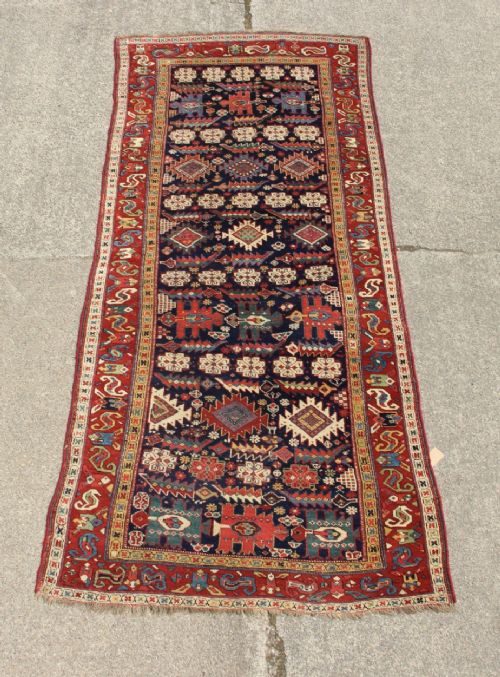
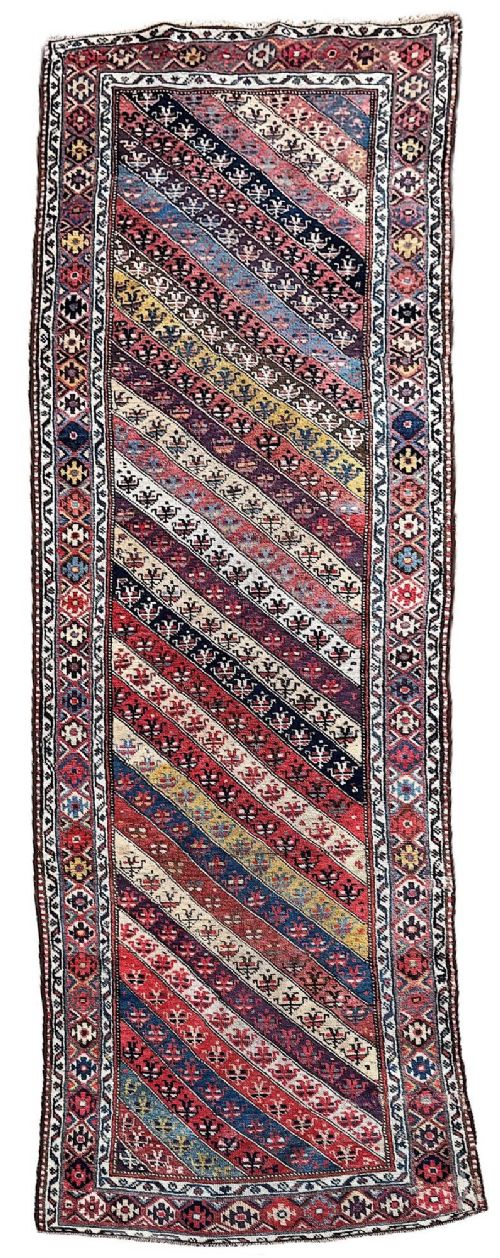
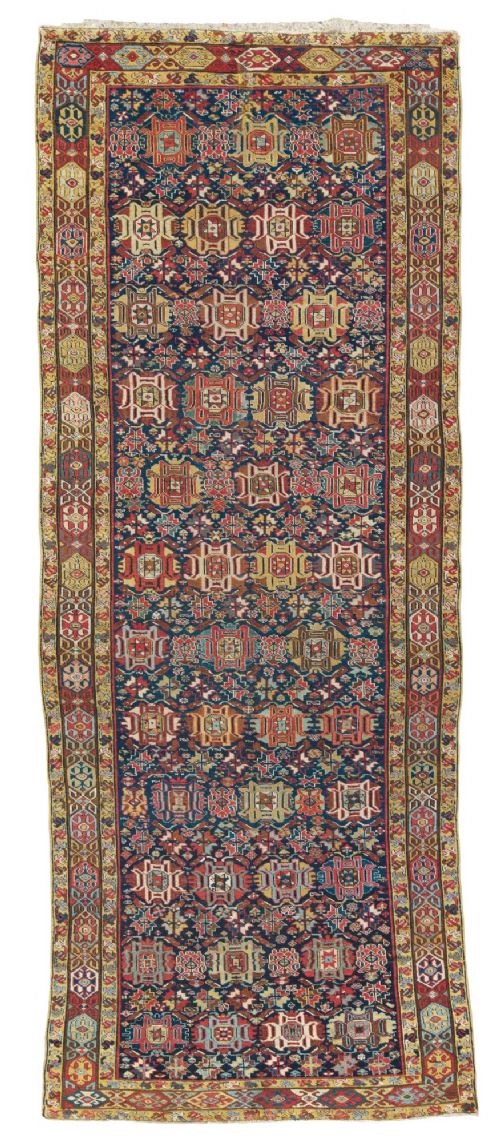
A caucasian long runner is a tribal floor covering shaped in narrow proportions for corridors, hallways and long rooms. These pieces originate from regional weaving centres across the Caucasus, including Kazak, Talish, Shirvan, Karabagh, Kuba and Seychour, alongside related Kurdish and Persian tribal workshops.
The format is built for length, with dimensions stretching significantly further in one direction to suit linear spaces. You will encounter formats labelled as runner rugs, rug runners, hallway runners and kelleh carpets spanning from the mid-nineteenth century up to the early twentieth century.
Designs rely on geometric medallions, repeating lattices, floral motifs and tribal iconography handed down through generations of weavers. The palette often utilises bold ground colours like deep blue and green contrasted against intricate borders.
How They Were Made
These textiles are constructed primarily from wool pile hand-knotted onto sturdy cotton or wool foundations. Natural dye sources provide the characteristic depth of colour seen across the pile.
Weavers utilised traditional upright looms to execute dense knotting that ensures durability under foot. Select examples incorporate materials like camel hair into the foundation or pile for varied texture and natural tonal variation.
Caucasian Long Runner Retail Price Guide 2026
Typical asking prices for caucasian long runner among the pieces listed under this phrase on Sellingantiques today, from the lower quarter to the upper quarter. They describe what is for sale here now, not the wider market.
Nomadic weavers frequently added tiny protective amulets and zig-zag motifs into the borders to ward off the evil eye.
What Varies in Quality
Knot density and structural tightness dictate the fineness of the weave and the crispness of the geometric design. Higher-grade examples maintain structural integrity and even pile retention across the entire span.
The purity and complexity of the dye palette separate standard production from superior weaving. Age-related wear alters the fabric, but original pile depth and uncompromised selvages preserve the integrity of the piece.
The Caucasian Long Runner Glossary
- Kelleh
- A large format rug or wide runner traditionally used in Middle Eastern reception rooms. It provides an extended rectangular shape distinct from standard narrow corridor runners.
- Talish
- A specific regional weave originating from the Talish district in the Caucasus. These pieces typically feature narrow proportions, open central fields and detailed multizoned borders.
- Kazak
- A style of Caucasian rug known for bold geometric medallions and saturated primary colours. They are woven by tribal groups in the south-west Caucasus.
- Selvage
- The reinforced side edges of a carpet formed by wrapping the outermost warp threads. Good preservation here protects the structure from fraying.
- Warp
- The vertical foundation threads stretched tightly on the loom before knotting begins. Wool and cotton are standard warp materials for these runners.
Caucasian Long Runner: Frequently Asked Questions
Where should I place a runner?
These narrow formats suit long hallways, corridors, entryways and narrow galleries where linear floor coverage is required. Their proportions draw the eye down a passage while protecting high-traffic flooring.
Ensure you measure the passage width and length carefully before selecting a piece. Leave adequate wooden or stone flooring exposed around the edges to frame the textile properly.
How do I care for antique wool runners?
Vacuum gently using a suction-only attachment without a rotating beater bar to protect the ancient wool pile. Professional rug cleaning is recommended for deep maintenance.
Keep the textile out of direct, prolonged sunlight to prevent natural dye fading. Use a breathable rug underlay to prevent slipping and reduce friction against hard floors.
How do I identify a Talish runner?
Talish pieces are characterised by exceptionally narrow proportions and an uncluttered central field. They frequently display small stylized star motifs or lattice patterns down the axis.
The borders on these runners are often complex and multi-layered, providing a sharp contrast to the open field. Their colour palette leans toward clear blues, whites and soft reds.
What is a Kazak runner?
Kazak runners display bold, large-scale geometric medallions, hooked polygons and animal or human forms. The wool is typically thick and plush, tied with a looser structure than city-woven carpets.
The colours are deeply saturated, featuring strong reds, greens, and dark blues. These pieces originate from the Armenian and Turkic tribal groups inhabiting the southern Caucasus.