






Caucasian Flat Weave
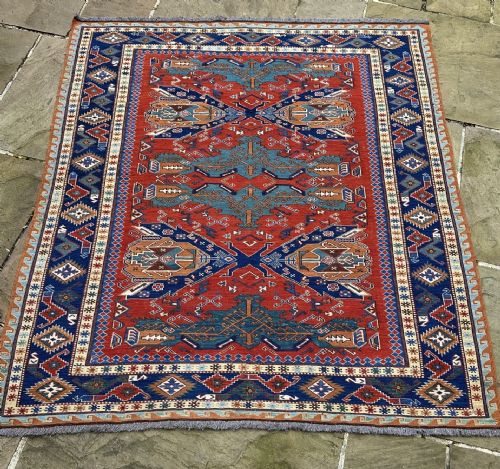
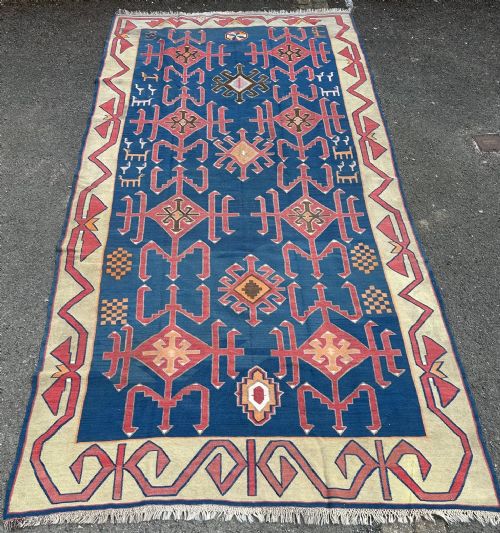
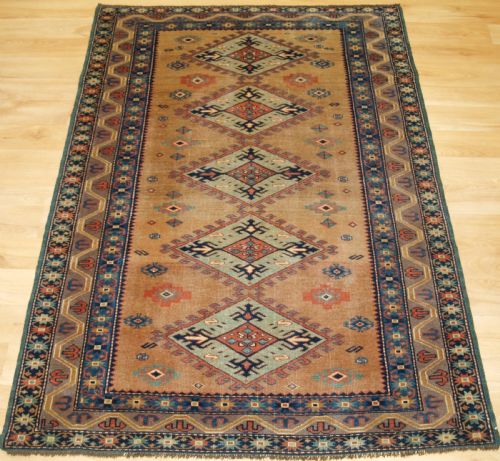
Caucasian flat weave textiles are geometric tribal rugs and domestic trappings that bring striking indigenous patterns and rich natural dyes to an interior.
Caucasian Flat Weave
When you search for caucasian flat weave, you encounter woven floor coverings, saddlebags, and cushion covers originating from the Caucasus region. These items range from large kilim carpets to smaller bag faces produced by nomadic and tribal groups across the mountains.
The objects include specific regional variations such as Shirvan, Karabagh, and Daghestan weaves, alongside work attributed to Shahsevan nomads. Most examples date from the late nineteenth century up to the mid-twentieth century.
Forms vary from runner rugs and carpets to utilitarian items like mafrash panels and khorjin bag faces. Each piece reflects the specific weaving traditions of its particular tribal origin within the Caucasus.
How they were made
Weavers constructed these textiles predominantly using hand-spun wool, often combined with cotton foundations depending on the specific tribal origin. The employment of natural dyes imparts a distinct softness and depth to the colour palettes found across the pieces.
Production techniques rely on flat-weaving methods, including slit-tapestry kilim weaves and soumak wrapping structures. These methods create durable, pileless surfaces that display sharp geometric motifs and intricate banded designs without the use of a loom-knotted pile.
Caucasian Flat Weave Retail Price Guide 2026
Typical asking prices for caucasian flat weave among the pieces listed under this phrase on Sellingantiques today, from the lower quarter to the upper quarter. They describe what is for sale here now, not the wider market.
A busy weaver could accidentally capture a stray goat hair inside the soumak wrap, leaving a tiny tactile signature of the Caucasus.
What varies in quality
The fineness of the weave and the precision of the geometric design separate standard examples from finer items. Tighter structural density in the flat-weave foundation allows for sharper pattern definition and greater longevity under daily use.
The clarity and saturation of the natural dyes significantly influence the visual impact of a piece. Subtle shifts in shade resulting from traditional dye batches contribute to the artistic merit of the textiles.
The Caucasian Flat Weave Glossary
- Kilim
- A flat-woven carpet or rug produced by tightly interweaving warp and weft strands without creating a pile. This technique results in a lightweight, reversible textile with crisp geometric patterns.
- Soumak
- A brocading technique where coloured weft threads are wrapped over and under warp threads to create a textured, durable surface. It is frequently seen on pieces originating from Shahsevan and Daghestan workshops.
- Mafrash
- A large rectangular storage bag or hamper panel woven by nomads for household possessions. These panels are often repurposed and mounted as decorative flat textiles.
- Khorjin
- A traditional pair of saddlebags used for transport on animals, the faces of which are often preserved as individual collectors items. They display compact tribal designs suited to the smaller format.
- Warp
- The vertical threads stretched lengthwise on a loom that form the structural foundation of the textile. The weft threads are passed across these structural lines to build the pattern.
Caucasian Flat Weave: Frequently Asked Questions
What is a caucasian flat weave?
A caucasian flat weave is a pileless textile produced by nomadic and village weavers in the Caucasus mountains. These items include kilims, runner rugs, and utilitarian bag faces.
They utilise hand-spun wool and natural dyes to form geometric patterns characteristic of regional groups like the Shahsevan, Shirvan, and Daghestan.
How were these rugs used originally?
Nomadic and village communities utilised these textiles for practical domestic purposes including floor coverings, bedding storage, and animal transport.
Bag faces and mafrash panels served as functional containers before surviving as decorative pieces for interiors today.
How do I care for a flat weave?
Care for these textiles requires gentle vacuuming without a rotating brush to protect the flat-woven structure and hand-spun wool fibres. Professional cleaning suited to natural dyed antique wool is recommended when necessary.
Keeping the pieces out of direct sunlight preserves the soft colours achieved by traditional dyeing methods.
How do I tell regional styles apart?
Regional styles are distinguished by their specific colour combinations, structural techniques, and geometric layouts. Shirvan pieces often feature banded designs with soft tones, whilst Karabagh examples can display large central medallions.
Daghestan and Shahsevan works utilise distinct wrapping methods and specific tribal motifs passed down through generations.