


Cattle in Landscape
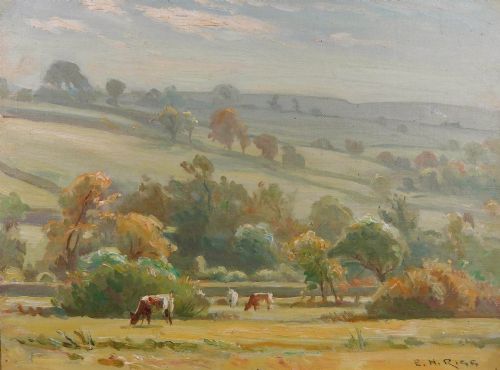
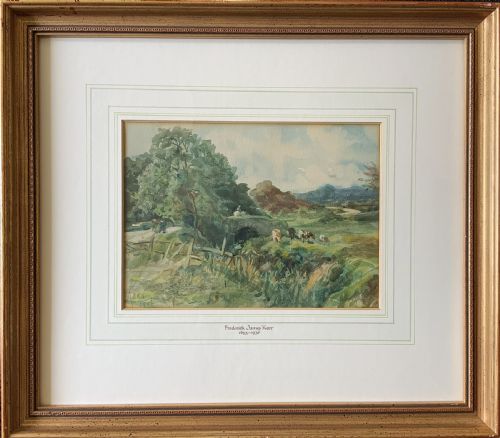
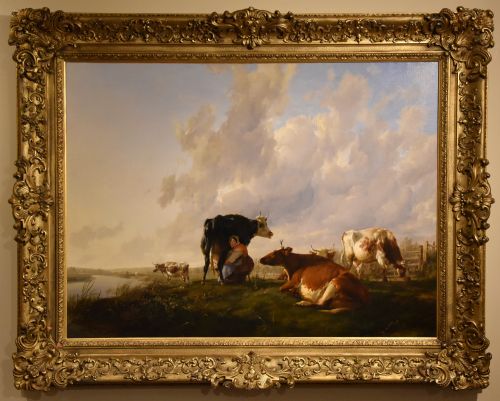
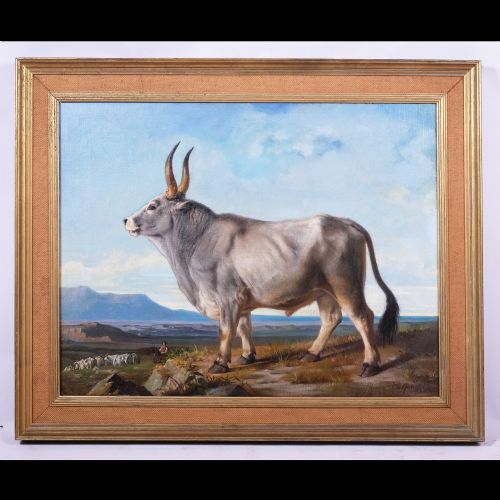
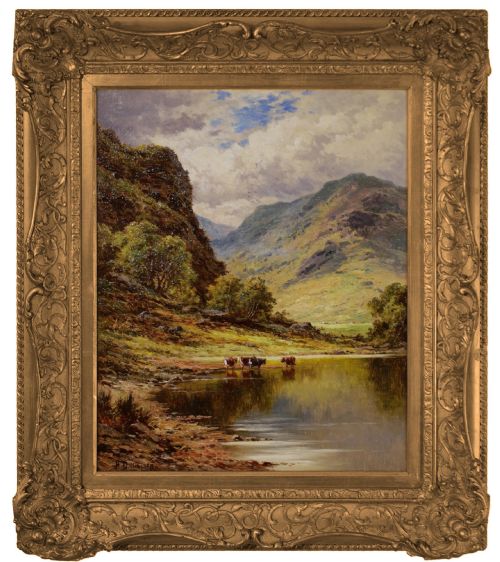
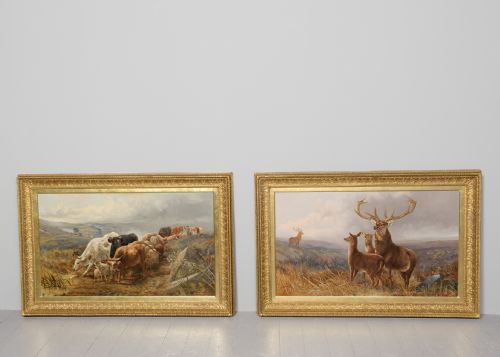
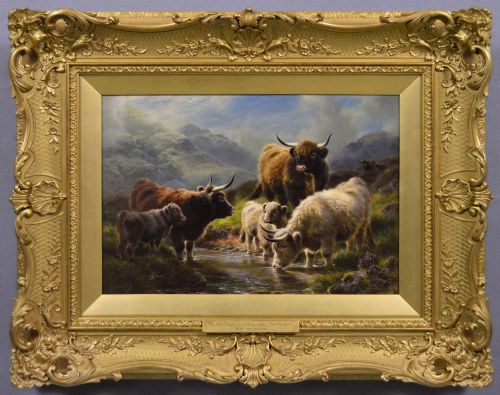
When you search for cattle in landscape, you are looking at pastoral scenes of cows, bulls, and farm life set within British and European countryside settings.
Cattle in Landscape
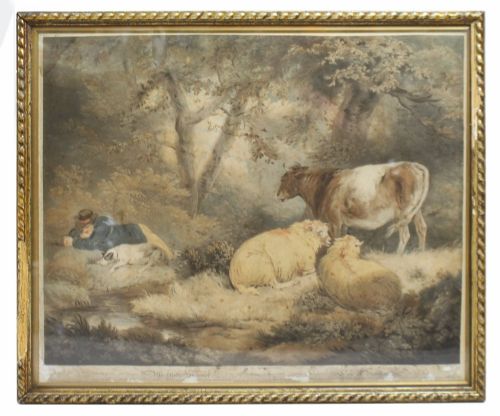
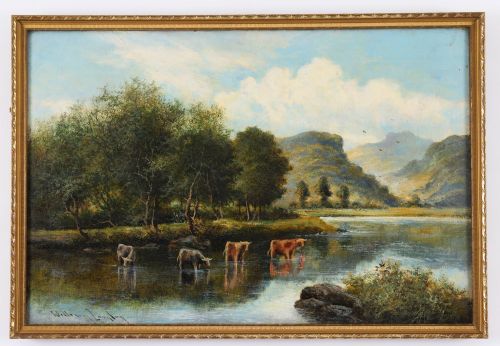
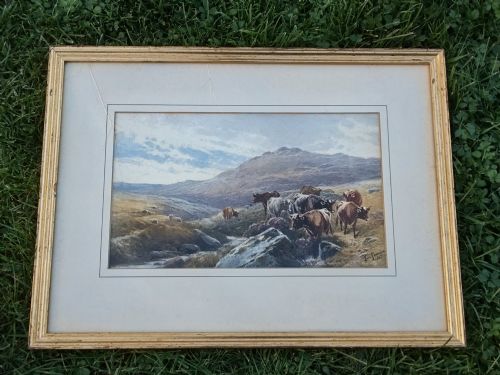
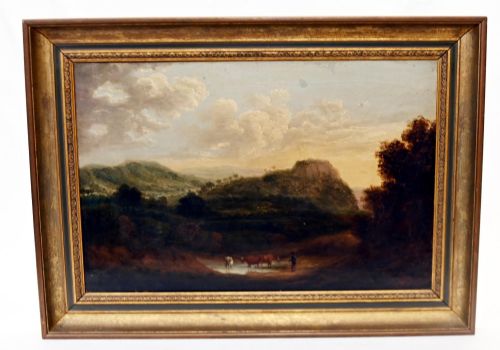
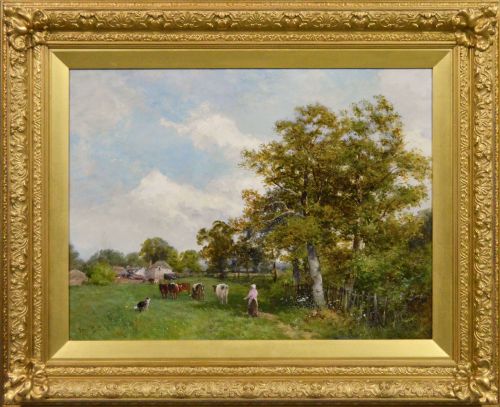
Buyers exploring cattle in landscape will encounter works spanning the eighteenth century through to the early twentieth century, with Victorian and Edwardian examples appearing most frequently. These pieces take the form of framed oil paintings on canvas or board, alongside watercolours on paper depicting rural farmyards, riverbanks, and mountainous Scottish lochs.
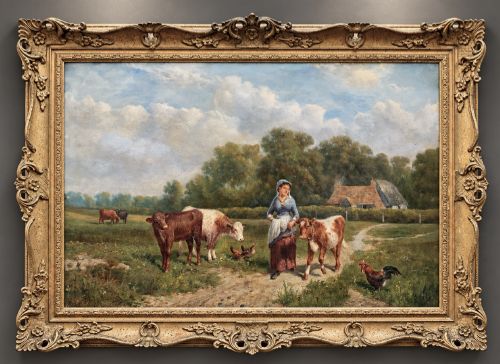
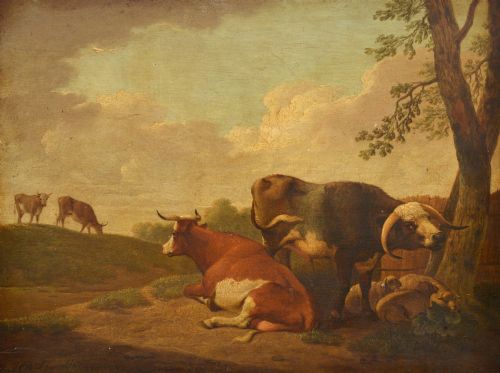
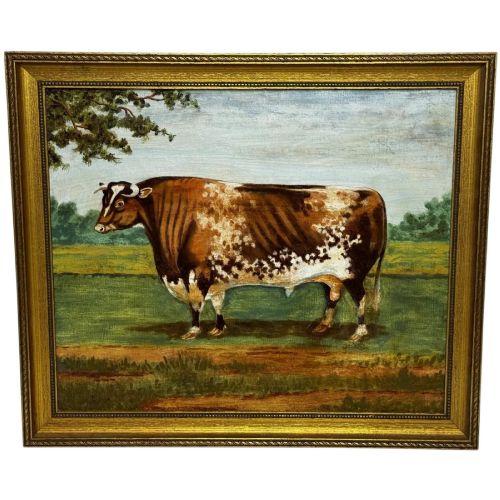
The subjects range from quiet river waterings and highland vistas to detailed animal portraits of prizewinning shorthorn bulls and cows being herded by milkmaids. Such works reflect a period taste for agrarian life and naturalism, capturing domestic livestock integrated into sweeping topographical views.
Originating largely from British and continental European artists, the pieces vary from intimate watercolours to large oil compositions framed in period giltwood and gesso. Each work records specific regional light and agricultural traditions, offering a window into historical rural economies.
Materials and construction
The physical objects rely primarily on oil paint applied to woven canvas or wood panels, alongside watercolours executed on heavy paper. Canvas supports are typically stretched over wooden frames and secured within ornate, moulded giltwood and gesso surrounds that reflect the decorative standards of their respective decades.
Artists built their compositions using layered oil paint to create texture in the foliage, water, and cattle hides, or utilised transparent watercolour washes to capture the luminous atmosphere of open fields. Pigments were applied with varying brushwork, ranging from tight academic realism to looser impressionistic strokes.
Original framing often matches the period of the painting, utilising applied plaster ornamentation finished with gold leaf over a prepared gesso base. These frames serve to protect the edges of the canvas or paper while providing the visual weight expected of nineteenth-century fine art.
Cattle in Landscape Retail Price Guide 2026
Typical asking prices for cattle in landscape among the pieces listed under this phrase on Sellingantiques today, from the lower quarter to the upper quarter. They describe what is for sale here now, not the wider market.
Listings feature works spanning the eighteenth, nineteenth, and twentieth centuries, executed in oil and watercolour on canvas, paper, and wood.
Evaluating the standard of work
Quality in these pastoral scenes rests upon the artist's anatomical accuracy in rendering the cattle and the compositional harmony between the animals and their environment. Superior works demonstrate a sophisticated understanding of light, shadow, and atmospheric perspective rather than relying on formulaic background scenery.
The handling of paint or watercolour medium dictates the visual depth of the piece, with accomplished practitioners achieving tactile textures in the animal coats and natural movement in the landscape. Inferior examples often present stiffly posed livestock disconnected from flat, repetitive background foliage.
The integrity of the original materials also influences the piece, including the stability of the canvas support and the preservation of the delicate giltwood and gesso frames. Works that retain their untouched surface patination and contemporary framing hold greater historical coherence.
William Langley·Thomas Sidney Cooper·Henry Hillier Parker·Robert Watson·Sidney Richard Percy
The Cattle in Landscape Glossary
- Oil on Canvas
- A painting medium where pigments bound in drying oil are applied to a stretched woven fabric support. This combination allows for rich colour blending and textured brushwork.
- Giltwood
- Wood that has been coated with a thin layer of gold leaf or metallic powder. It forms the primary decorative finish for traditional nineteenth-century picture frames.
- Gesso
- A paint mixture consisting of a neutral binder mixed with chalk, gypsum, or pigment. It was applied to wood frames to create a smooth surface for gilding.
- Pastoral
- A genre of art that idealises rural life and agrarian settings. These scenes typically feature shepherds, farmworkers, and livestock within peaceful countryside vistas.
- Watercolour
- A painting method in which natural pigments are suspended in a water-soluble vehicle. It is traditionally painted on paper to produce translucent effects.
Cattle in Landscape: Frequently Asked Questions
What periods do these paintings cover?
The works span from the eighteenth century through the Victorian era and into the early twentieth century. Most examples originate from the nineteenth century.
Victorian and Edwardian depictions make up the largest portion of the available selection, reflecting peak periods for British landscape painting.
How were these framed originally?
Many works are housed in their period frames constructed from wood and finished with gesso and gold leaf. These frames often feature ornate moulded patterns characteristic of their decade of manufacture.
Original frames provide important contextual clues regarding the age and exhibition history of the painting.
Are the works signed by the artists?
Numerous pieces feature artist signatures, monograms, or studio inscriptions inscribed directly onto the canvas or paper surface. Documentation on the reverse often records titles and dates.
Unsigned works are frequently attributed to specific schools or periods based on technique and stylistic comparisons.
How do I care for an oil painting?
Oil paintings require stable indoor humidity and protection from direct sunlight to prevent the canvas from warping and the paint layers from cracking. Dust should be removed gently with a soft, dry brush.
Avoid using moisture or chemical cleaners on the canvas surface or the giltwood frame.