




Cathedral Landscape Painting
A cathedral landscape painting brings monumental architecture and civic life together onto canvas or paper through the hands of centuries of artists.
Cathedral Landscape Painting
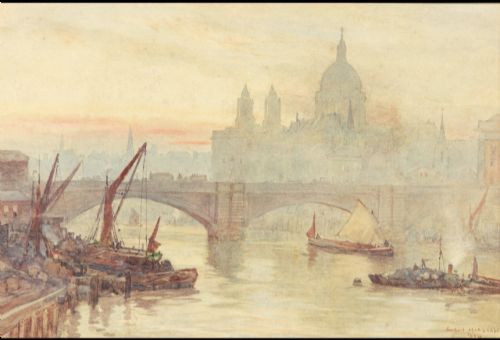
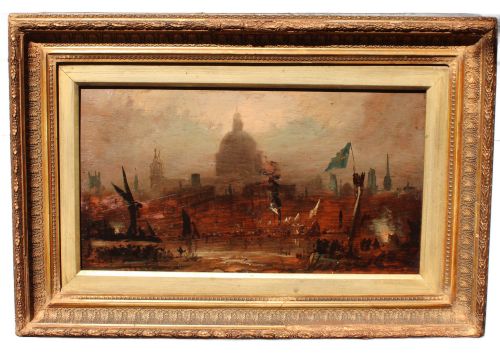
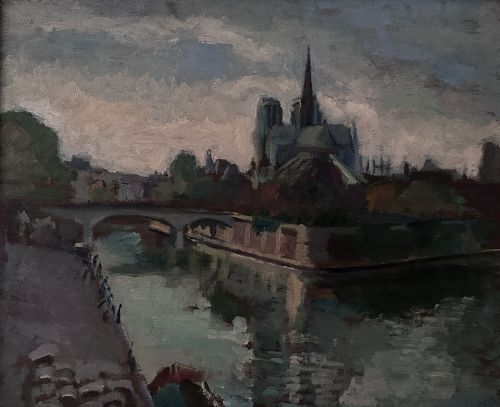
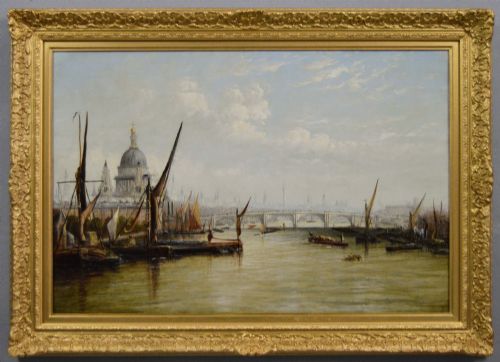
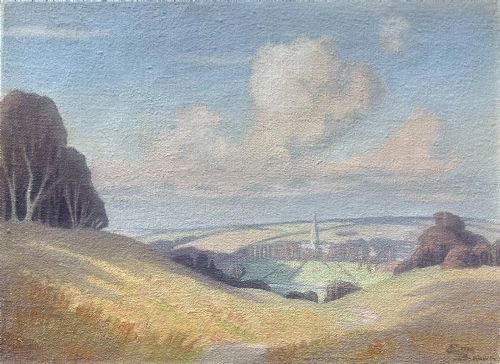
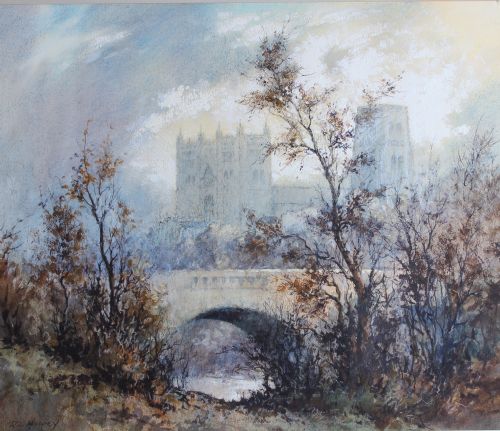
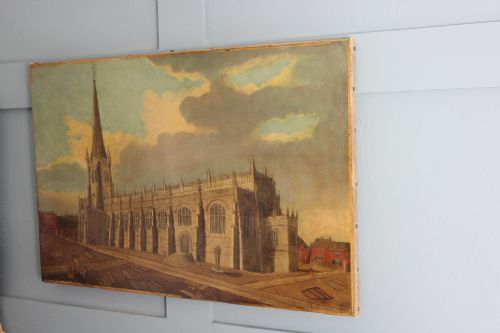
A cathedral landscape painting records great ecclesiastical buildings within their urban or rural settings, spanning periods from the eighteenth century through the mid twentieth century. These works capture specific sites such as St Pauls, Lincoln, Durham, and continental scenes including Notre Dame and Rouen.
The compositions vary from expansive river views with distant spires to intimate street scenes framing stone facades, executed as fine art paintings, oil paintings, and watercolours. Collectors find pieces ranging from early nineteenth century architectural views to post-impressionist interpretations.
Makers and followers render these landscapes on canvas, board, and paper, often framed in wood and gesso. The scale shifts from large watercolours to detailed oil studies.
Materials and technique
Artists painted these cathedral landscapes using oil paint or watercolour applied to canvas, prepared board, or heavy paper. Watercolours rely on transparent washes and fine pencil work to define architectural detail, while oils utilise rich impasto and layered glazes.
Support frames combine wood stretchers with gesso mouldings and gold leaf finishes. These materials determine how the surface ages and preserves the pigments of the nineteenth and twentieth centuries.
Listings feature works created on canvas, paper, and board, employing both oil paint and watercolour across periods from 1800 to 1950.
Judgement of quality
Quality rests upon the precision of architectural perspective and the handling of light across stone and water. Stronger works balance the sheer mass of the cathedral with lively foreground details like shipping, figures, or atmospheric weather.
The skill of the brushwork and the harmony of the palette separate accomplished professional output from simpler topographical records. Condition of the underlying canvas or paper and the integrity of the original frame also influence the standing of each piece.
Francis Moltino·Robert Leslie Howey·Paul-Jean Anderbouhr·Fred Lawson·Lewis J Wood·Walter Duncan·Henry John Kinnaird·George De Paris·William Sidney Cooper·Edward Fletcher·Allan Douglass Mainds·William Marlow·Henry Schafer·Paul Marny·Samuel Scott·Walter Linsley Meegan·Wilfred Bosworth Jenkins
The Cathedral Landscape Painting Glossary
- Oil paint
- Pigment suspended in a drying oil, typically linseed, allowing for rich colour depth and textured application. It provides durability and slow drying times.
- Watercolour
- Pigment ground in a water-soluble binder, traditionally applied to paper in translucent washes. It produces luminous effects.
- Gesso
- A paint mixture consisting of a neutral binder mixed with chalk, gypsum, or pigment, used to prepare wood surfaces or create moulded frames. It offers a smooth ground for gilding.
- Post-Impressionism
- An art movement developing from the late nineteenth century that rejected naturalistic depiction in favour of expressive colours and forms. Artists explored structure and symbolic content.
Cathedral Landscape Painting: Frequently Asked Questions
What periods do these paintings span?
The available works and archive pieces date from the eighteenth century through the mid twentieth century. They encompass Georgian, Victorian, and mid-century British and continental movements.
Most examples cluster in the nineteenth and early twentieth centuries, reflecting changing styles from topographical precision to post-impressionist interpretation.
Which cathedrals appear most often?
British subjects frequently feature St Pauls in London alongside Lincoln, Durham, Salisbury, York, and Canterbury. Continental views include Notre Dame in Paris, Rouen, and Padua.
Artists often positioned these buildings alongside rivers such as the Thames or the Wear to incorporate shipping and bridges into the composition.
How do I care for antique watercolours?
Watercolours require protection from direct sunlight to prevent the pigments and paper from fading over time. Glazing with conservation glass helps filter ultraviolet light.
Keep them away from damp environments to avoid foxing spots on the paper support.
Are these works signed by the artists?
Many pieces bear the signature or monogram of the painter, while others are attributed through historical records, style, or gallery documentation. Unsigned examples are often judged by their technique and period materials.
Attributions point to named painters, followers, or specific regional workshops.