

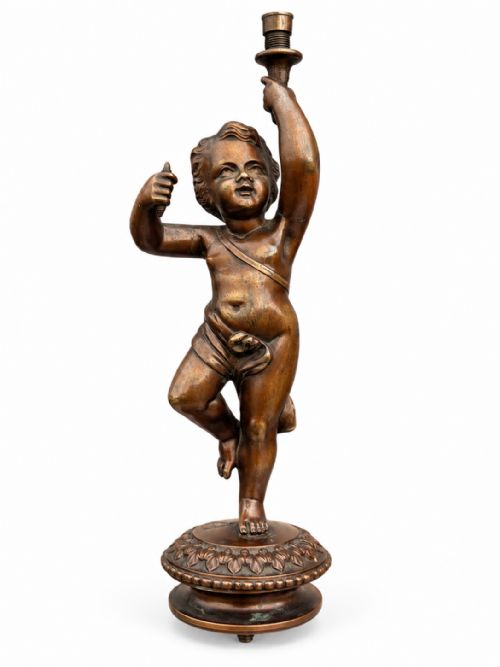


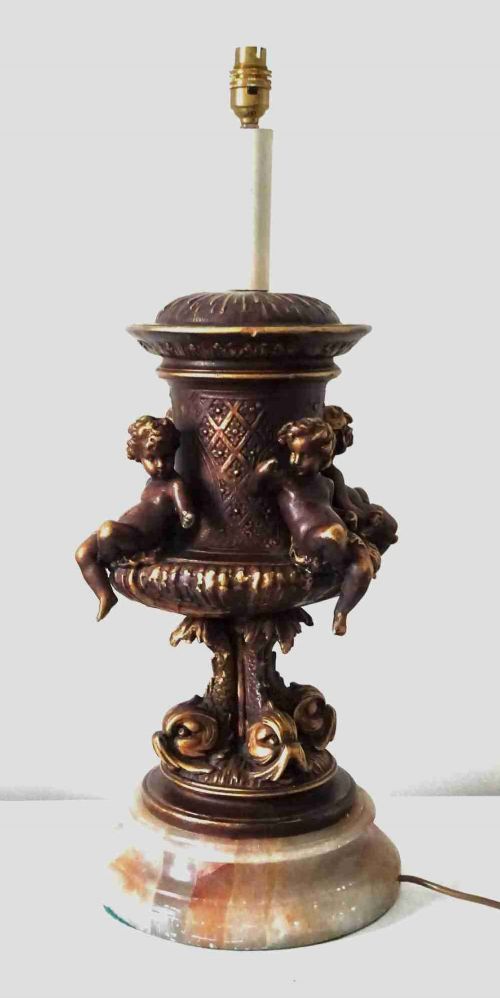


Cast Metal Putto
A cast metal putto brings classical exuberance to a room, offering the charm of winged cherubs cast in bronze, iron, and lead.
Cast Metal Putto
A cast metal putto represents the winged infant figures found across centuries of European decorative arts, capturing subjects from classical mythology and religious iconography. When searching for a cast metal putto, collectors encounter sculptural figures, lighting, mirrors, and doorstops originating from various periods including the eighteenth, nineteenth, and early twentieth centuries.
The pieces on this page span diverse stylistic revivals, taking the form of Italian Grand Tour bronzes, French wall lights, English iron frames, and heavy garden statuary. Grand Tour souvenirs and Victorian decorative pieces dominate the selection, showing how makers translated classical motifs into domestic objects.
Forms range from freestanding statues and doorstops to architectural elements integrated into urns, picture frames, and wall sconces. Each object demonstrates the enduring appeal of the cherubic form, whether rendered in dark patinated bronze or robust cast iron.
Methods of manufacture
Foundries utilised traditional metal-casting techniques to shape these figures, pouring molten bronze, iron, or lead into moulds to capture intricate details like feathers, curls, and facial expressions. Cast iron pieces often emerged from industrial foundries such as Coalbrookdale, where complex mouldings created durable mirrors, frames, and figures.
Surface finishes received careful attention after casting, with artisans applying dark patinas, paint, or chemical treatments to simulate ancient metalwork. Bronze figures frequently display rich brown or green patination, while iron and lead pieces rely on natural oxidation or applied coatings for protection and visual depth.
Cast Metal Putto Retail Price Guide 2026
Typical asking prices for cast metal putto among the pieces listed under this phrase on Sellingantiques today, from the lower quarter to the upper quarter. They describe what is for sale here now, not the wider market.
Listings feature items cast in bronze, iron, and lead, spanning the eighteenth, nineteenth, and early twentieth centuries.
Measures of quality
The integrity of the material and the sophistication of the patina dictate visual success, with deep, stable patination outperforming flat or flaky painted surfaces. Context matters too, as documented origins like Grand Tour workshops or known foundry marks elevate the standing of an object.
The Cast Metal Putto Glossary
- Putto
- A figure of a human infant, usually winged, depicted in classical art and revival decorative objects. They appear frequently in Renaissance and Neoclassical design.
- Patina
- The surface coloration and sheen developed naturally over time or applied chemically by makers. It adds depth and character to bronze and iron surfaces.
- Grand Tour
- A cultural journey undertaken by wealthy Europeans in the eighteenth and nineteenth centuries, collecting classical souvenirs like bronze sculptures and architectural models.
- Jardiniere
- An ornamental pot or stand for holding plants or flowers. These items often incorporate cast metal figures or putti into their decorative mounts.
Cast Metal Putto: Frequently Asked Questions
What is a putto?
A putto is a representation of a small child, often winged, derived from classical art and popularised during the Renaissance. These figures appear frequently in European sculpture and decorative hardware.
Over the centuries, makers adapted the motif into practical items like lamps, doorstops, and mirrors, blending classical aesthetics with domestic utility.
How do I care for bronze putti?
Bronze pieces require minimal intervention, needing only a gentle dusting with a soft, dry cloth to remove particle accumulation. Avoid using chemical polishes that strip away historical patination.
Applying a very light coat of microcrystalline wax can protect the metal surface from moisture in the air.
Are cast iron figures indoor items?
Cast iron was utilised for both interior decorative pieces and heavy garden statuary, depending on the specific object's design. Items like photo frames and mirrors belong strictly indoors.
Larger figures and lead garden putti were built to withstand outdoor environments, though severe weather can alter their surface finishes over decades.
How can I tell the age of a piece?
Dating relies on examining the casting quality, material composition, and style of the object relative to known historical periods. Victorian and Edwardian pieces often reflect specific revival movements like the Grand Tour or Arts and Crafts.
Tool marks, wear patterns on the base, and the character of the patina provide further clues to an object's age.