




Cast Iron Vases
Cast iron vases are robust ornamental vessels designed for gardens and grand interiors, offering enduring sculptural presence through classical forms.
Cast Iron Vases
Cast iron vases appear primarily as garden urns and decorative urns spanning the nineteenth century, the Victorian era, the Edwardian period, and nineteen thirty. These pieces draw heavily on neoclassical, classical revival, and Victorian classical styles to project an air of classical antiquity.
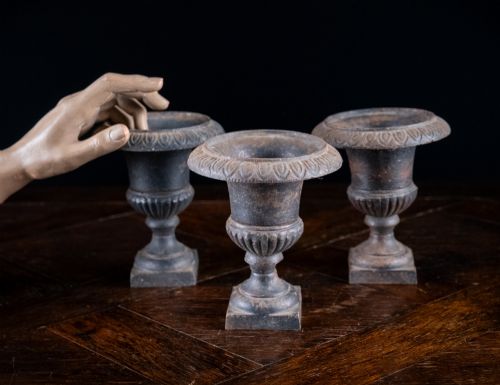
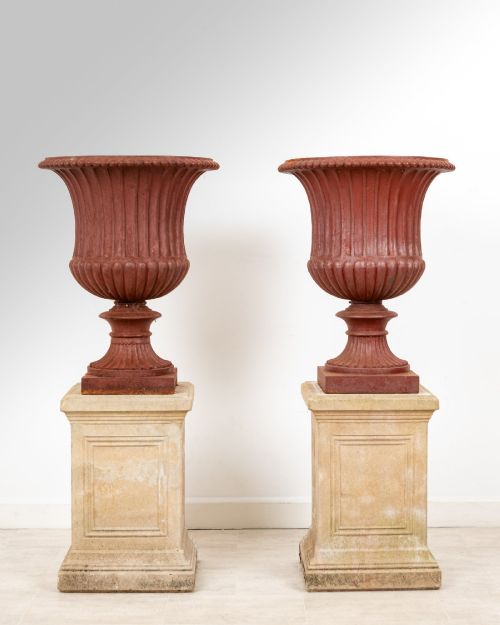
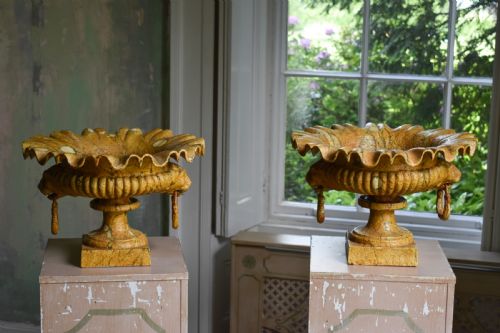
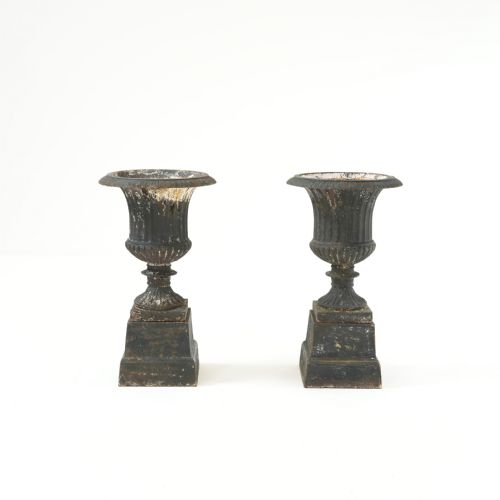
Visitors to this page encounter substantial garden urns set on plinth bases or stone pedestals, alongside smaller decorative pieces. Forms range from miniature cast iron urns to large garden urns mounted on stands, reflecting diverse domestic and outdoor applications.
How they were made
Foundries utilised cast iron and cast metal poured into moulds to create heavy, durable vessels capable of withstanding exterior conditions. Artisans frequently incorporated applied details such as acanthus leaf motifs into the casting process.
Many examples received protective or decorative coats of paint, while others were paired with separate stone pedestals or plinth bases to elevate their height and presence.
Some miniature cast iron urns prove that heavy Victorian foundry work could charm on a surprisingly small scale.
What varies in quality
Quality rests on the crispness of the cast ornamentation, where sharply defined foliage and classical details distinguish superior examples from softer castings. The proportion and balance between the urn bowl and its accompanying plinth base also determine visual success.
Weight and structural integrity set sturdier nineteenth century pieces apart, while surviving early paint surfaces add historical depth compared to later repainted variants.
Coalbrookdale
The Cast Iron Vases Glossary
- Campana urn
- A bell-shaped vessel with a flared rim, widely produced in cast iron for classical garden displays. This form originates from ancient pottery traditions.
- Plinth base
- A square or rectangular solid block supporting an urn, providing architectural stability and elevation. These are often integrated into the overall composition.
- Acanthus leaf
- A stylized plant motif modelled from the Mediterranean species, frequently used to decorate the exterior bowls of classical urns. It provides traditional relief ornamentation.
- Neoclassical
- A design style inspired by the art and architecture of ancient Greece and Rome, dominant during the nineteenth century. It emphasises symmetry, proportion, and classical motifs.
Cast Iron Vases: Frequently Asked Questions
Where should I place these urns?
These vessels suit outdoor gardens, patios, and grand entranceways where their robust weight and weather-resistant material endure the elements. They also serve as striking interior focal points when placed on sturdy flooring.
Pairing them with stone pedestals or plinths lifts the silhouette, enhancing visibility among garden plantings or architectural hallways.
How do I date these pieces?
Dating relies on stylistic cues such as Victorian classical motifs, neoclassical proportions, and the distinct characteristics of nineteenth-century foundry work. Reference points like Edwardian design details or specific production years also guide attribution.
Examining the surface wear, paint layers, and casting seams helps distinguish older nineteenth-century examples from early twentieth-century pieces.
Are these suitable for outdoor use?
Cast iron is naturally heavy and durable, making these garden urns well-suited for permanent outdoor placement throughout changing weather seasons. Their substantial mass prevents tipping in exposed garden locations.
Regular inspection for weathering helps maintain the protective paint layers and preserves the integrity of the cast metal beneath.
What styles are most common?
Neoclassical and Victorian classical designs dominate, featuring bell-shaped campana profiles, acanthus leaf ornamentation, and classical revival proportions. These traditional shapes reflect enduring nineteenth-century tastes for antiquity.
Variations include miniature versions and larger garden urns set upon dedicated stands or plinth bases.