

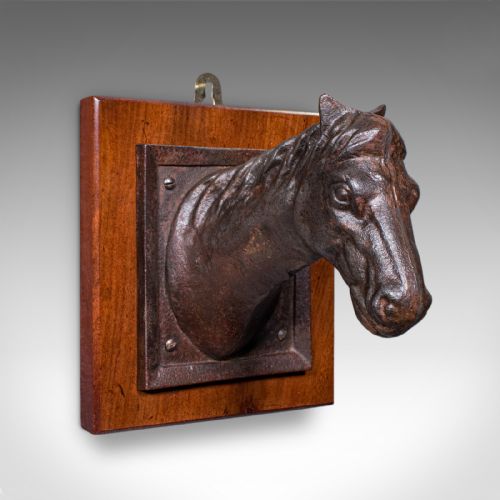
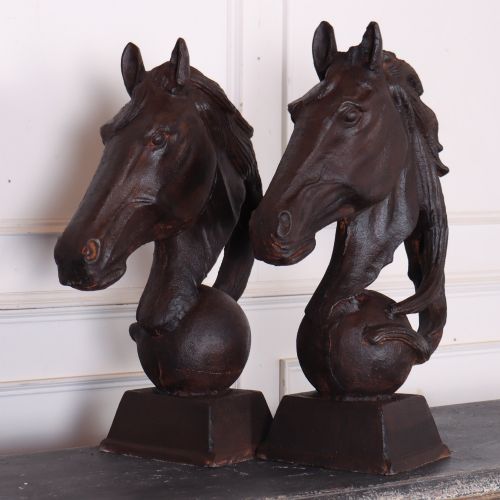

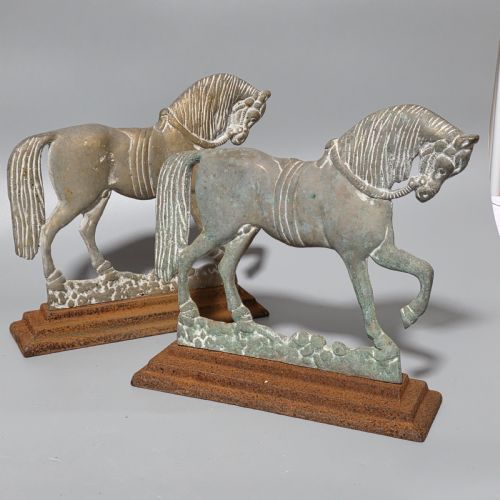


Cast Iron Horses
These cast iron horses bring robust utility and animal form together, offering heavy architectural fittings and sturdy doorstops for the home.
Cast Iron Horses
When you search for cast iron horses, you find a practical mix of heavy utility pieces and sculptural door stops shaped around equine forms. The selection leans heavily into utilitarian items from the nineteenth and early twentieth centuries, where horses served as daily workers and central motifs.
Most examples take the form of functional household items rather than fine art. You encounter doorstops, hitching posts, coat hooks, and wall bracket shelves rather than pure gallery sculptures.
The origin spans the Victorian and Edwardian eras, alongside pieces dated around eighteen-fifty, eighteen-eighty, and nineteen-twenty. These items reflect an industrial age that relied upon the horse for transport and labour.
How they were made
Foundries produced these objects by pouring molten iron into sand moulds to capture the musculature of the horse and the rigid lines of brackets or doorstops. This casting process allowed workshops to replicate complex animal shapes and sturdy architectural fixtures in large quantities.
Iron frequently combines with brass and wood across the listings, particularly in coach lamps, clothes airers, and door stops. These secondary materials provide operational hinges, hooks, or backing boards to support the heavy metal components.
Cast Iron Horses Retail Price Guide 2026
Typical asking prices for cast iron horses among the pieces listed under this phrase on Sellingantiques today, from the lower quarter to the upper quarter. They describe what is for sale here now, not the wider market.
Iron appears alongside hardwood, brass, and glass in items like carriage lamps and clothes airers.
What varies in quality
The crispness of the casting detail separates the standard utility hardware from the better sculptural pieces. Sharply defined horse heads and deeply modelled busts show that the foundry used fresh moulds rather than worn ones.
The integration of mixed materials alters the character of each piece. Heavy brass fittings and solid hardwood mounts elevate the utilitarian ironwork into more substantial decorative objects.
The Cast Iron Horses Glossary
- Cast Iron
- An iron-carbon alloy poured into moulds while molten to form rigid, heavy objects. It provides the primary material for durable doorstops and structural brackets.
- Hitching Post
- A sturdy post anchored outside a building to secure a tied horse. Cast iron examples feature decorative horse head tops designed to withstand heavy pulling.
- Doorstop
- A heavy weighted object used to keep doors open. Equine forms in iron give these functional items a decorative presence on the floor.
- Fireback
- A heavy iron plate placed at the back of a fireplace to reflect heat and protect the masonry. They often feature cast pictorial scenes such as horse and rider motifs.
Cast Iron Horses: Frequently Asked Questions
What were cast iron horses used for?
These pieces served practical roles around the home, stable, and street. They functioned as heavy doorstops, coat hooks, hitching posts, and structural shelf brackets.
Industrial foundries combined utility with equine imagery because horses were central to transport and agriculture during the Victorian and Edwardian periods.
How do I date cast iron horses?
Dating relies on stylistic clues, mounting hardware, and manufacturing techniques found across the piece. Victorian and Edwardian items often display period specific surface textures and associated brass or wooden elements.
Earlier examples from the eighteenth and nineteenth centuries show simpler casting patterns or specific functional forms like firebacks and carriage lamps.
Where should I place a hitching post?
Cast iron hitching posts are extremely heavy and require stable ground or secure interior placement to display safely. Many collectors mount or stand them in hallways, boot rooms, or gardens.
Their robust construction makes them suitable for architectural display both indoors and outdoors.
Are all these pieces solid iron?
While the main animal figures and structural frames consist of cast iron, many items incorporate mixed materials. Listings frequently include brass components, wooden backing boards, and glass elements.
Coach lamps and wall brackets often pair iron with brass fittings to provide functional movement and varied colour.