





Cast Iron Hall Furniture
Cast iron hall furniture brings robust utility and intricate Gothic or Rococo ornamentation straight into the entranceway.
Cast Iron Hall Furniture
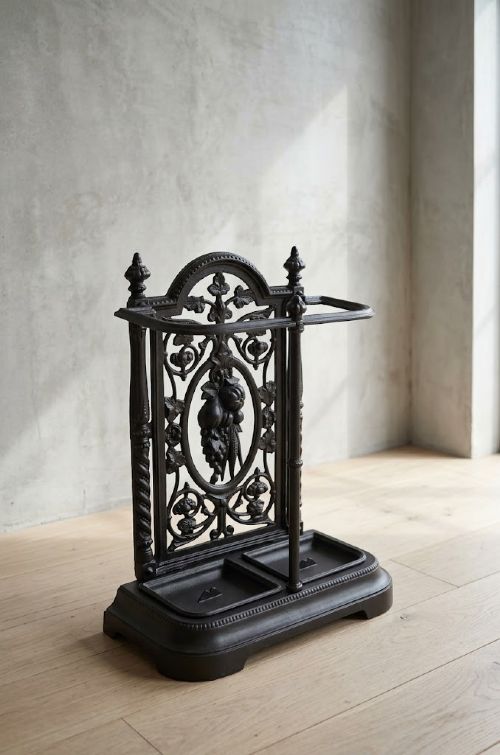
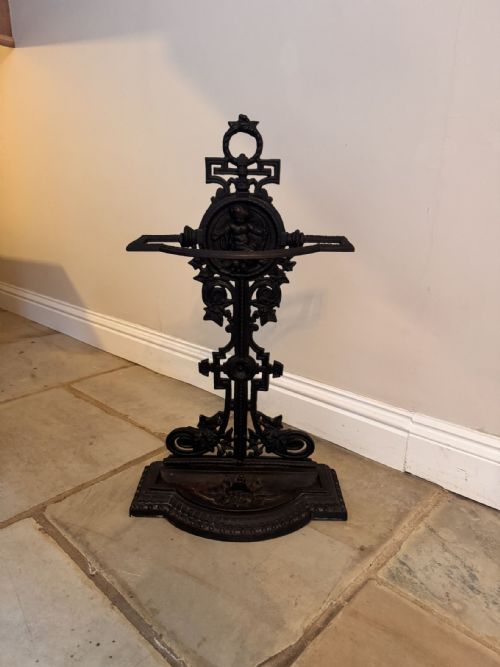
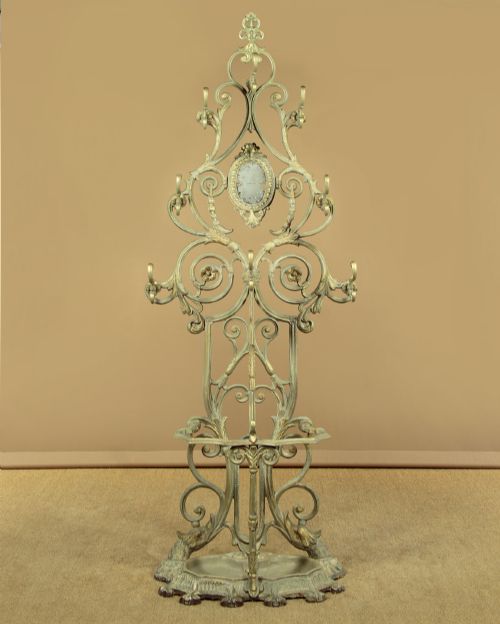
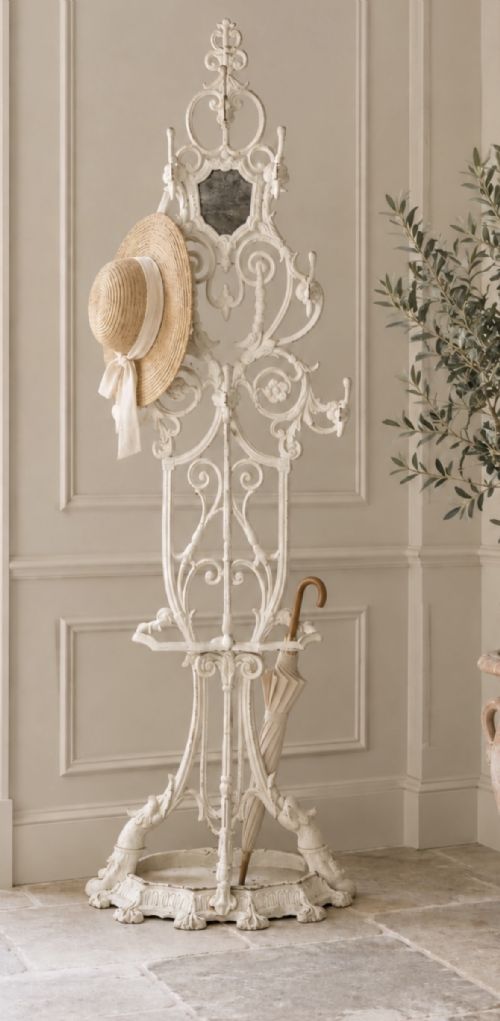
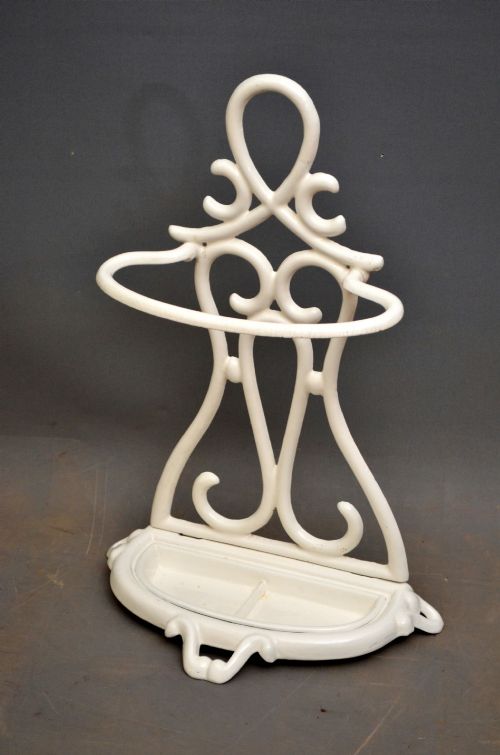
Buyers seeking cast iron hall furniture encounter heavy umbrella stands, stick stands, and combined coat stands dating from the Victorian and Edwardian eras. These pieces combine structural metalwork with functional holders for wet outerwear and walking gear.
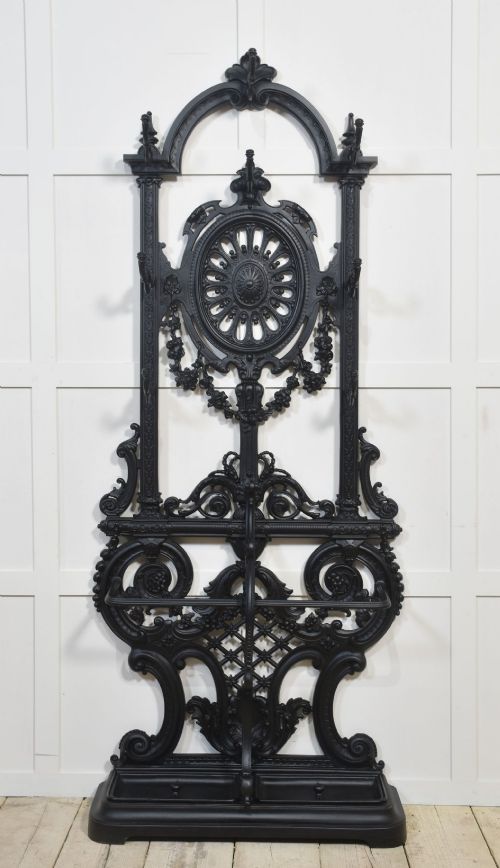
The most common examples on this page are umbrella and stick stands from the nineteenth century, often featuring openwork scroll designs or naturalistic motifs. French and English foundries dominate the available forms, ranging from simple industrial items to elaborate Gothic revival pieces.
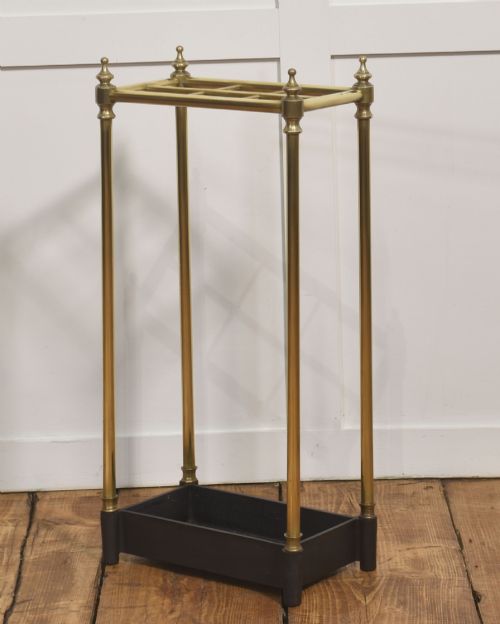
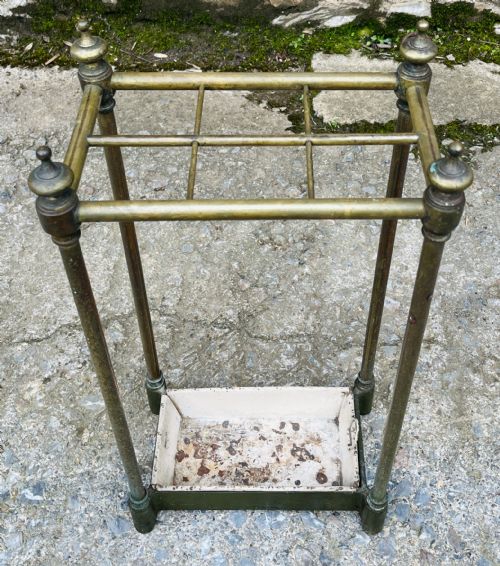
Larger hallstands frequently incorporate hooks for hats and coats alongside drip pans at the base to catch rainwater from sticks. Occasional variants include faux bamboo moulding or integrated brass elements to accent the dark metal structure.
Materials and foundry techniques
Foundries utilised sand casting to produce the intricate openwork patterns seen on Victorian hall furniture. Molten iron poured into moulds created rigid frames capable of supporting heavy coats and damp umbrellas without warping.
Surfaces were frequently finished with paint or enamel coatings to protect the metal from rust and moisture in busy hallways. Brass fittings, ceramic tiles, and glass components were sometimes added as decorative or functional accents.
Secondary materials such as oak and pitch pine appear in related hall seating and structural elements. The combination of heavy metal castings with timber components provided stability for high-traffic entrance spaces.
Cast Iron Hall Furniture Retail Price Guide 2026
Typical asking prices for cast iron hall furniture among the pieces listed under this phrase on Sellingantiques today, from the lower quarter to the upper quarter. They describe what is for sale here now, not the wider market.
Listings feature items from the Victorian and Edwardian periods, constructed primarily from cast iron with occasional brass, ceramic, and timber elements.
Assessing quality in cast iron pieces
Quality in these items rests on the crispness of the casting detail and the complexity of the design. Finer examples retain sharp relief in foliage, scrolls, or Gothic tracery, whereas lesser pieces show blurred edges from worn moulds.
The presence of maker marks from notable foundries elevates a piece above anonymous production. Original drip trays and intact enamel or paint finishes also distinguish superior survivors from heavily restored or altered items.
Corneau Freres Charleville·Shoolbred·Falkirk Foundry
The Cast Iron Hall Furniture Glossary
- Sand casting
- A traditional manufacturing process where a pattern is pressed into sand to create a mould for molten iron. This technique allowed foundries to mass-produce complex decorative patterns with textured surfaces.
- Drip pan
- A shallow metal or ceramic tray positioned at the base of a stand to catch water from wet umbrellas. Original pans add authenticity to stick and umbrella stands.
- Gothic Revival
- An architectural and decorative style popular during the Victorian period characterised by pointed arches, trefoils, and heavy vertical lines. Many hall stands utilise these medieval motifs in their ironwork.
- Rococo Revival
- A mid-nineteenth century design movement featuring asymmetrical scrolls, shell motifs, and naturalistic curves. Cast iron hall furniture in this style displays flowing, organic plant forms.
- Faux bamboo
- A decorative moulding technique that mimics the segmented joints of natural bamboo. Victorian makers applied this treatment to metal and wood to satisfy a taste for exotic design.
Cast Iron Hall Furniture: Frequently Asked Questions
What is cast iron hall furniture?
Cast iron hall furniture comprises umbrella stands, coat stands, and multi-functional hallstands designed for entranceways. These pieces utilise durable metal frames to organise outerwear and wet walking gear.
Items date predominantly from the nineteenth and early twentieth centuries, featuring decorative styles ranging from industrial utility to ornate Gothic revival.
How do I use a hall stand?
Hall stands organise coats, hats, sticks, and umbrellas in domestic entryways. Hooks hold garments while the lower sections secure long walking sticks and catch water from wet canopies.
Position the stand near an entrance on a stable floor surface, ensuring any original metal or ceramic drip pan sits correctly at the base to protect flooring.
How do I date Victorian ironwork?
Dating relies on stylistic clues, registration marks, and foundry stamps cast directly into the metal. Gothic and Rococo revival motifs point towards the mid-to-late nineteenth century.
Later pieces from around nineteen hundred often incorporate smoother lines influenced by Art Nouveau design or bear specific maker attribution.
Are these pieces heavy to move?
Cast iron objects are exceptionally heavy due to the density of the metal. This weight provides necessary stability so the stand does not tip when loaded with heavy winter coats.
Exercise caution when relocating items, and protect delicate flooring by checking the condition of the base and feet before placement.