

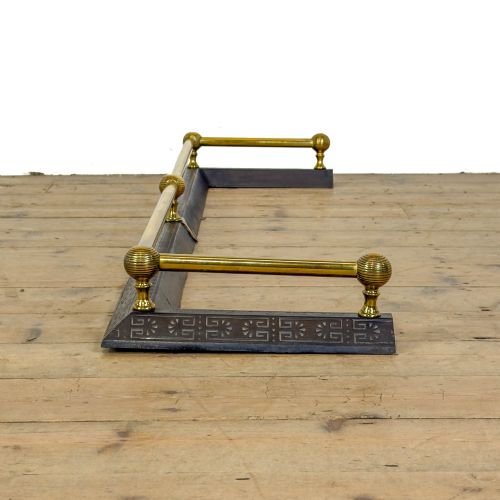


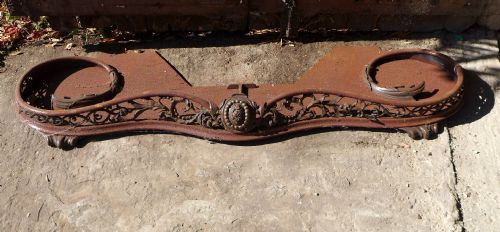


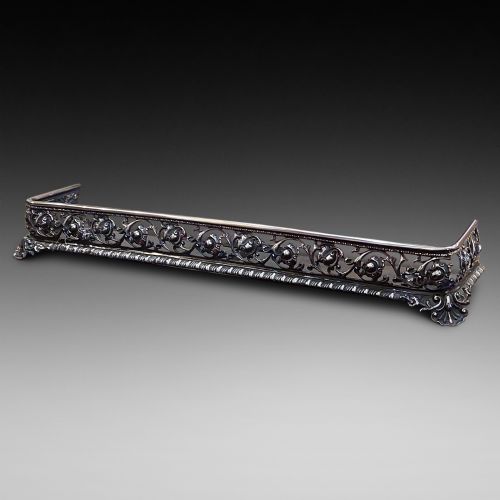

Cast Iron Fireplace Fender
A cast iron fireplace fender protects the hearth and frames the room, and these pieces bring period weight and proportion to a fireplace.
Cast Iron Fireplace Fender
A cast iron fireplace fender anchors the hearth, sitting low on the floor to contain embers and frame the grate. When you search for a cast iron fireplace fender, you encounter examples spanning the Georgian and Victorian eras, alongside nineteenth-century French designs.
The most common forms on this page combine cast iron with brass, steel, or bronze, often taking straightforward linear shapes or curved profiles. Certain pieces incorporate adjustable widths or pair directly with fire backs and grates to form a complete hearth arrangement.
How they were made
Maker's work relied on foundry casting for the primary iron components, producing heavy structural rails and decorative panels. Molten metal poured into sand moulds created the robust body characteristic of these hearth surrounds.
Craftsmen combined these cast elements with forged steel, wrought iron, and polished brass fittings. Gilt-brass details and bronze mounts were applied to French Empire and Rococo styles to introduce finer decorative contrast against the dark iron.
Cast Iron Fireplace Fender Retail Price Guide 2026
Typical asking prices for cast iron fireplace fender among the pieces listed under this phrase on Sellingantiques today, from the lower quarter to the upper quarter. They describe what is for sale here now, not the wider market.
Current listings demonstrate materials spanning cast iron, brass, steel, bronze, and gilt-brass across the Victorian, Georgian, and nineteenth-century periods.
What varies in quality
Quality rests in the crispness of the casting and the structural gauge of the metal used. Heavy-section iron and substantial brass or bronze mounts indicate superior workshop production rather than mass output.
The sophistication of the decorative style marks the upper tier of the range. Pieces exhibiting refined French Rococo or Empire detailing or sophisticated adjustable mechanisms stand apart from simpler, utilitarian iron rails.
The Cast Iron Fireplace Fender Glossary
- Cast Iron
- Molten iron poured into a mould to create rigid, heavy components with detailed surface ornament. It forms the core material for the majority of these hearth surrounds.
- Gilt-Brass
- Brass treated with a gold-coloured finish to provide decorative brightness against dark iron and steel. This treatment appears frequently on nineteenth-century French pieces.
- Fire Back
- A heavy cast iron plate placed at the back of the fireplace to protect the masonry and reflect heat. Certain listings group this accessory alongside the fender and grate.
- Adjustable Fender
- A design featuring a sliding mechanism to alter the width of the hearth surround. This allowed owners to fit the piece precisely to varying fireplace openings.
Cast Iron Fireplace Fender: Frequently Asked Questions
How do I measure for a fender?
Measure the width and depth of your hearth opening precisely, leaving a small clearance for the sides. Account for whether the hearth sits flush with the floor or projects into the room.
Take note of any protruding hearthstones or uneven masonry that might interfere with straight or curved rails.
Are these fenders suitable for modern fires?
These pieces function well around gas or electric hearth setups as well as traditional solid fuel fires. The durable metal construction withstands everyday proximity to heat.
Ensure the internal dimensions match your specific stove or grate layout before placing the piece.
How do I clean cast iron and brass?
Dust cast iron regularly with a dry cloth and apply light oil or paste wax to maintain the dark surface. Avoid harsh water-based cleaners that can encourage oxidation.
Polish brass and gilt-brass components gently with a dedicated metal cleaner, taking care not to stain the adjacent iron.
How do I distinguish Georgian from Victorian styles?
Georgian pieces often display restrained neoclassical lines, balanced proportions, and simpler integration of brass and iron. They tend to feel architecturally sober.
Victorian and later nineteenth-century examples frequently embrace heavier casting, more elaborate ornamentation, or French-influenced Rococo flourishes.