





Cast Iron Boot Cleaner
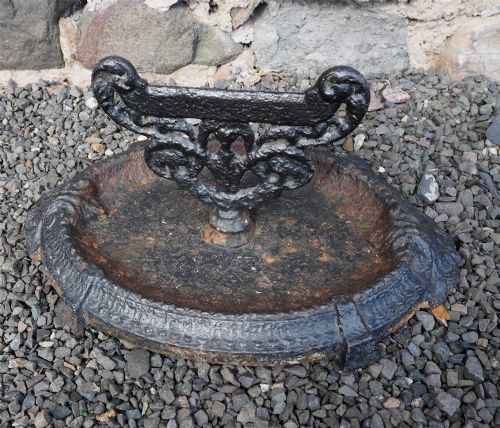
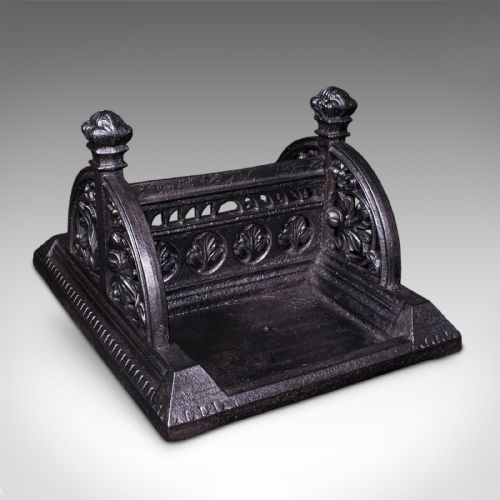
These cast iron boot cleaner pieces are robust household scrapers designed to remove mud from footwear before entry.
Cast Iron Boot Cleaner
A cast iron boot cleaner acts as a utilitarian fixture typically positioned beside a doorway or porch to clean muddy boots. Buyers inspecting this selection encounter sturdy iron blades alongside integrated pull handles and stone mounting blocks.
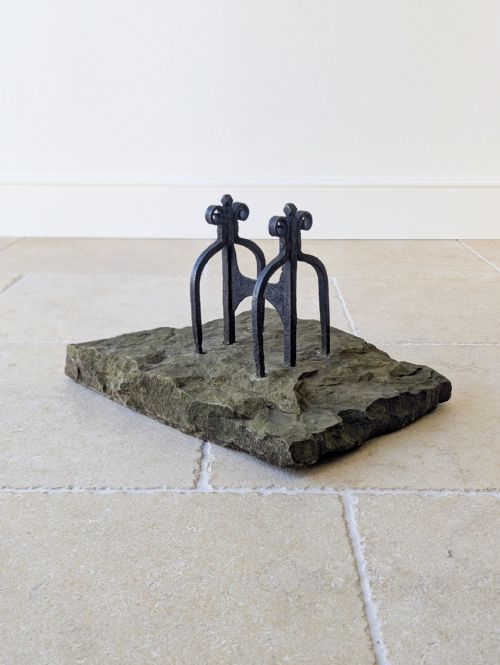
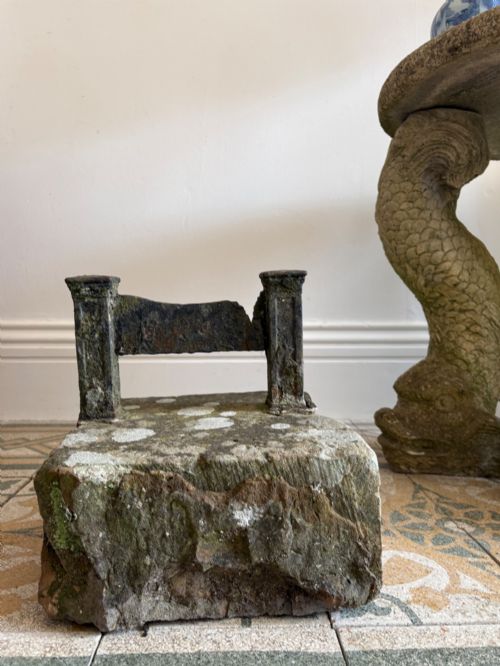
The assortment spans Georgian, Regency and Victorian periods, reflecting shifting domestic habits in townhouses and country estates. Most pieces rely on durable cast iron construction, frequently mounted into original stone bases or hewn yorkstone.
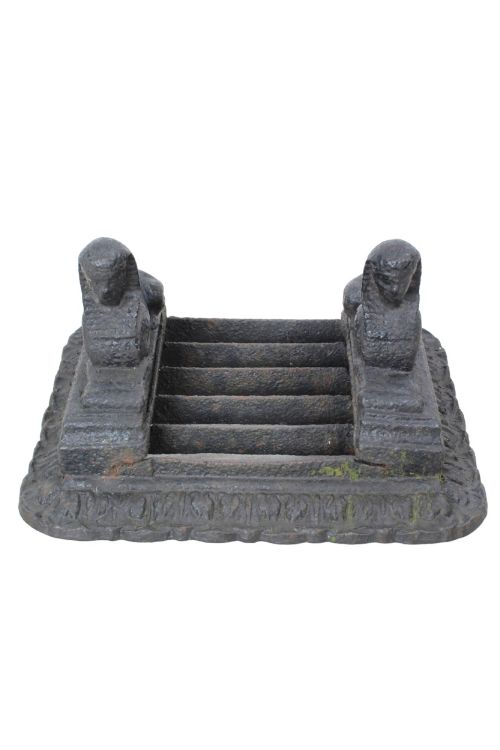
Functional forms range from simple domestic scrapers to elaborate designs incorporating Egyptian Revival motifs or Gothic styling. Each piece demonstrates how entranceways were equipped to handle heavy footwear in the nineteenth century.
Materials and production methods
Foundries utilised durable cast iron poured into moulds to create rigid blades and decorative frames, sometimes pairing the metal with wrought iron elements. These ferrous components were frequently inset into heavy stone or yorkstone blocks for stability.
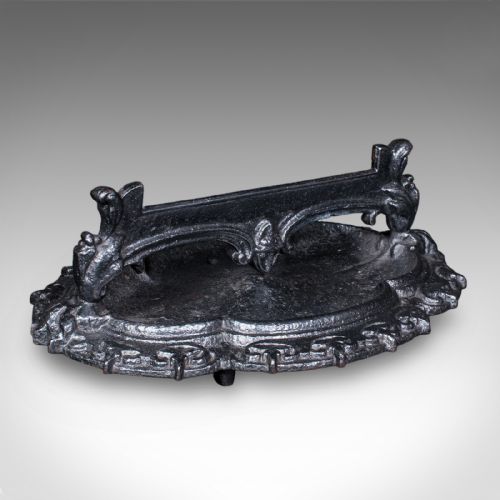
Makers integrated shoe pulls into the structural casting, allowing residents to leverage their feet while scraping soles clean. The combination of dense stone and cast metal ensured the fixture remained firmly anchored outside doorways.
Cast Iron Boot Cleaner Retail Price Guide 2026
Typical asking prices for cast iron boot cleaner among the pieces listed under this phrase on Sellingantiques today, from the lower quarter to the upper quarter. They describe what is for sale here now, not the wider market.
Listings feature items from the Georgian, Regency and Victorian eras, utilising cast iron, wrought iron, and yorkstone blocks.
Distinctions in quality and execution
Finer examples display crisp casting detail in decorative stylistic elements such as Egyptian Revival motifs or heraldic designs. Heavy, solid stone mounting blocks indicate substantial domestic commissioning compared to simpler standalone iron plates.
The integrity of the iron blade and the permanence of the stone setting separate standard utilitarian items from grander townhouse fixtures. Preservation of the original surface texture without excessive pitting marks superior surviving specimens.
Coalbrookdale
The Cast Iron Boot Cleaner Glossary
- Cast iron
- An iron-carbon alloy poured into a mould to form rigid shapes. It provides the heavy, durable structure essential for enduring outdoor use.
- Wrought iron
- Iron beaten into shape by hand, known for its fibrous texture and resilience. It appears alongside cast elements in specific structural frames.
- Yorkstone
- A tough British sandstone used traditionally for paving and architectural blocks. Scrapers are frequently inset directly into these solid stone foundations.
- Shoe pull
- An upright loop or handle attached to the scraper frame. It assists the user in steadying themselves or pulling off muddy boots.
- Egyptian Revival
- A nineteenth-century decorative style drawing on ancient Egyptian motifs and architecture. Foundries applied these distinct patterns to various household ironmongery.
Cast Iron Boot Cleaner: Frequently Asked Questions
How do you clean a cast iron boot cleaner?
Remove loose dirt with a stiff brush and wipe down the metal surface with a dry cloth. Avoid harsh chemical cleaners that might strip the protective finish from the iron.
Applying a light coat of oil helps protect the metal from moisture if kept outdoors. Regular maintenance preserves the texture and structural integrity of the piece.
Where were these boot scrapers originally placed?
These fixtures were installed directly outside front doors, porches, and carriage entrances of townhouses and country estates. Their primary position intercepted visitors and residents before they stepped inside.
Many examples remain set into stone doorsteps or exterior paving. They served as an essential threshold barrier against nineteenth-century mud and grime.
How do I distinguish Victorian from Georgian scrapers?
Georgian and Late Georgian examples often display simpler lines or proportions suited to eighteenth-century architecture. Victorian pieces frequently embrace revival styles, including Gothic and Egyptian motifs.
Examining the casting style and mounting method helps determine the period. Stonework characteristics also offer clues regarding the era of manufacture.
Can these scrapers be used outdoors today?
Cast iron and stone fixtures are inherently weather-resistant and function outdoors when properly maintained. Their heavy stone bases allow them to withstand external elements without additional anchoring.
Placing them on a well-drained surface prevents prolonged contact with standing water. This ensures the iron remains stable through changing seasons.