


Cast Iron Backplate
A cast iron backplate protects the masonry behind a hearth while radiating heat into the room.
Cast Iron Backplate
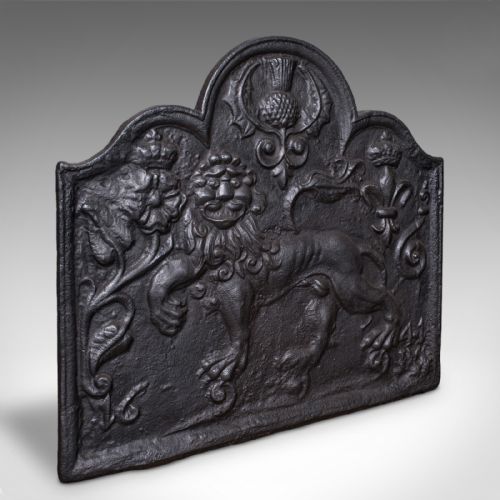
A cast iron backplate forms the heavy iron panel set against the rear wall of an open fireplace to absorb and radiate heat. These pieces protect the brickwork from intense flames while reflecting warmth back into the living space.
The examples gathered here span from the seventeenth century through the Victorian era into the early twentieth century. Buyers encounter robust firebacks, fireplace reflectors, and integrated fire baskets featuring distinct historical revivals.
Design vocabulary on this page moves from plain utility to elaborate relief moulding. Gothic revival, Carolean revival, and Arts and Crafts motifs dominate the surfaces of these hearth pieces.
Materials and casting methods
Foundries produced these panels using traditional sand casting techniques, pouring molten iron into impressions made by wooden patterns or carved boards. This method resulted in the heavy, durable plates designed to withstand decades of intense hearth temperatures.
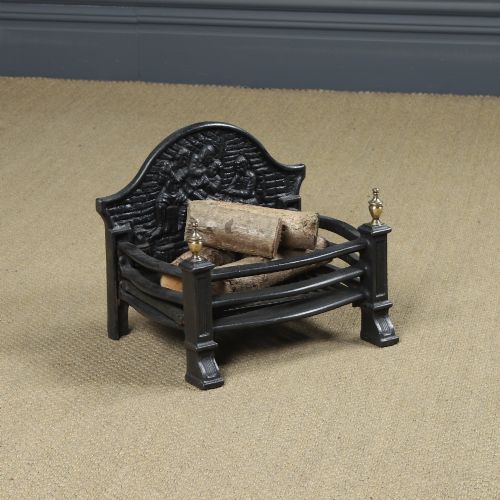
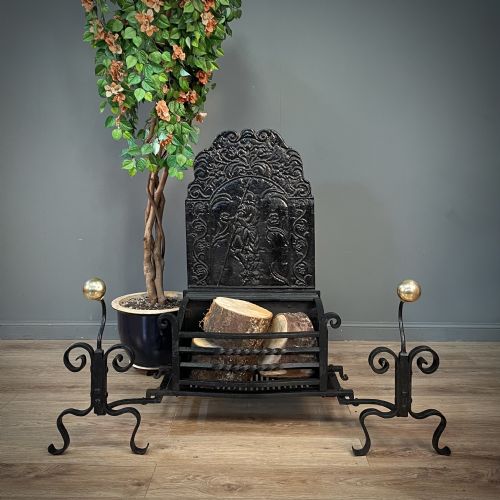
Makers occasionally combined cast iron with wrought iron and brass elements, particularly in larger fire baskets and grates. Some assemblies incorporated firebrick components to manage thermal stress within the fireplace opening.
Listings feature periods spanning from the 17th century through the Victorian era to 1920.
Judging quality in hearth ironwork
Distinction in these pieces lies in the crispness of the relief casting and the depth of the narrative or decorative scheme. Plates featuring sharp, well-defined tree of life motifs or heraldic imagery demonstrate superior pattern-making.
Weight and metal thickness also separate standard utilitarian items from decorative focal points. Heavier plates retain heat more effectively and show greater permanence in their structural integrity.
The Cast Iron Backplate Glossary
- Fireback
- A heavy metal plate placed at the back of an open fireplace to protect the wall and reflect heat into the room. These panels often display moulded dates or pictorial reliefs.
- Fire basket
- An iron grate designed to hold burning wood or coal elevated above the hearth floor. They frequently incorporate an attached backplate or reflector.
- Gothic Revival
- An architectural and decorative style drawing inspiration from medieval design. Pieces in this style feature pointed arches and quatrefoil patterns.
- Carolean Revival
- A decorative movement reviving the rich ornamentation of the mid seventeenth century. This style appears in English metalwork through exuberant scrolls and royal motifs.
- Inglenook
- A large, recessed fireplace space designed to warm the surrounding area. Heavy fire baskets and large plates suit these substantial hearths.
Cast Iron Backplate: Frequently Asked Questions
What is a cast iron backplate?
A cast iron backplate is a heavy metal panel positioned at the rear of an open hearth. It serves to protect the brick fireplace wall from direct heat and radiate warmth outward.
These plates often feature decorative reliefs, ranging from simple geometric borders to elaborate historical scenes and motifs.
How do you install a fireback?
Firebacks simply stand upright against the rear wall of the fireplace opening, often supported by the ash hearth or small feet. Their considerable weight usually keeps them secure without permanent fixings.
Ensure the hearth floor is level and clear of debris before placing the heavy iron panel against the brickwork.
Can these plates be used with gas fires?
Many of these iron plates work effectively behind modern gas log fires or traditional wood-burning setups. They absorb and throw out ambient heat regardless of the fuel source.
Check the dimensions of the fireplace opening carefully to ensure adequate clearance around the iron plate.
How do I clean old cast iron?
Maintenance involves removing soot and ash with a soft brush rather than harsh chemical cleaners. A light application of grate polish or oil helps preserve the dark metal surface.
Avoid using water, which can cause rust to form on unprotected iron surfaces over time.