





Cast Bronze Burner
These cast bronze burners span centuries of scholar's studio pieces and temple vessels, offering rich patinas and heavy forms for your interior.
Cast Bronze Burner
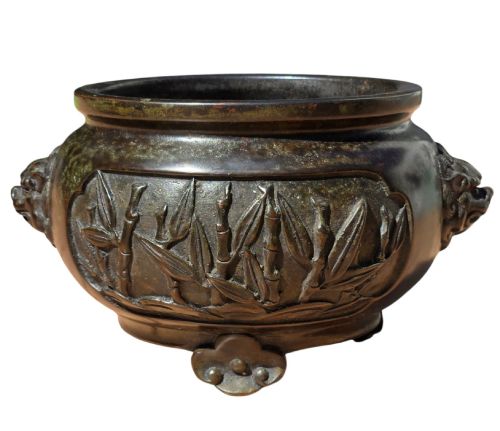
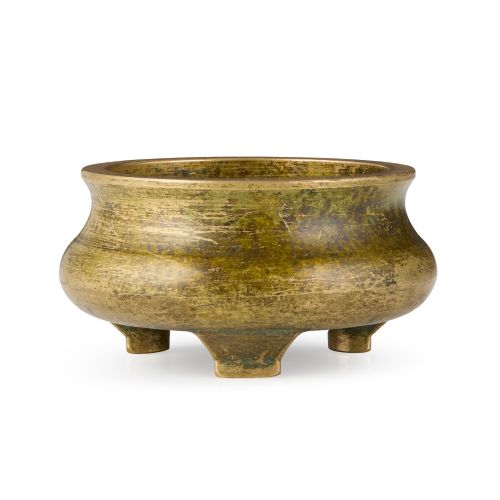
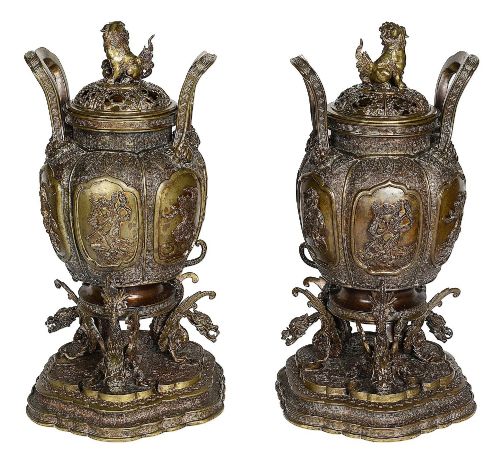
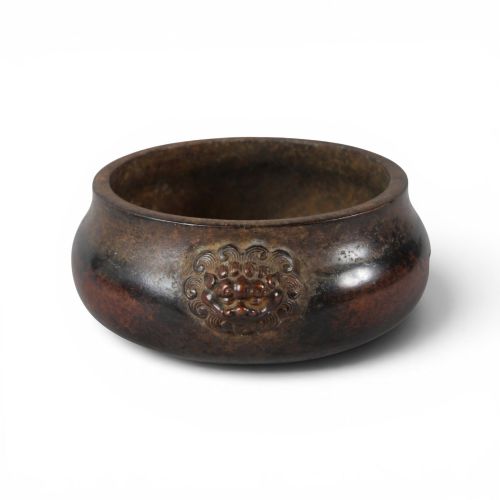
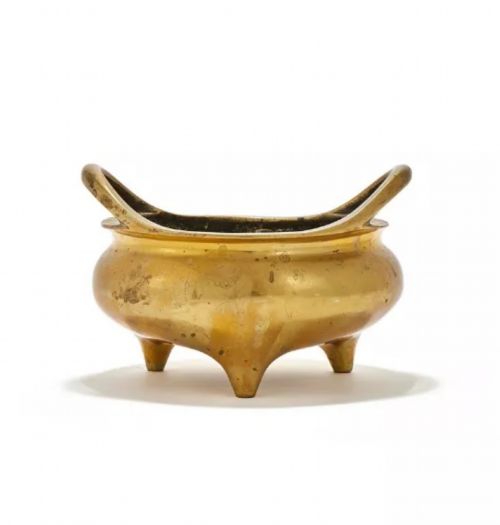
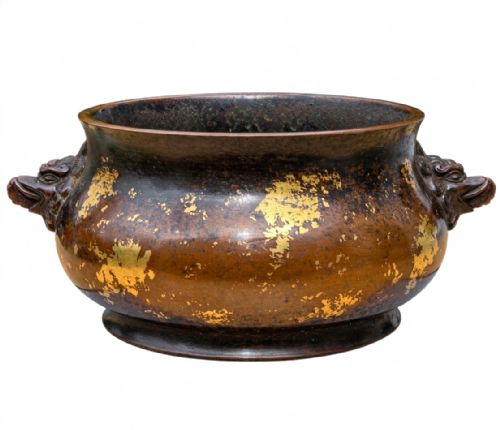
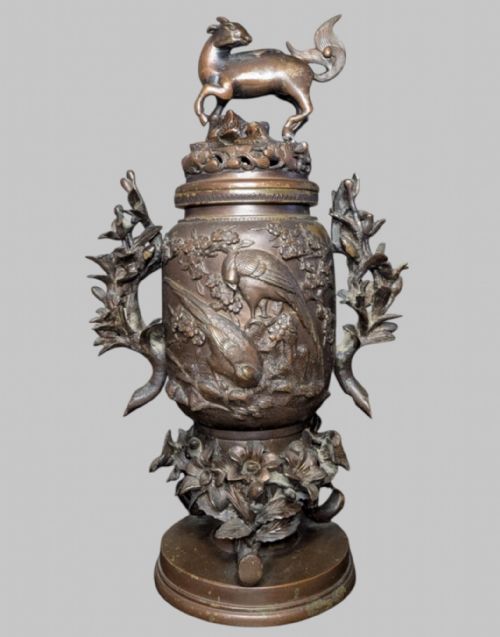
A cast bronze burner is a vessel designed to hold burning incense or oil, appearing across this page in forms such as tripod censers, scholar's vessels, lidded urns, and hanging ceremonial pieces. You will frequently encounter Chinese scholar's censers bearing tripod legs, lion-mask handles, or lotus motifs alongside Japanese Meiji period koro and Italian Lucerna oil lamps.
The objects originate from diverse cultural traditions including Ming and Qing dynasty China, Edo and Meiji period Japan, alongside European workshops and Indian makers. These pieces served scholarly, religious, and domestic functions, functioning as focal points for contemplation or illumination within traditional interiors.
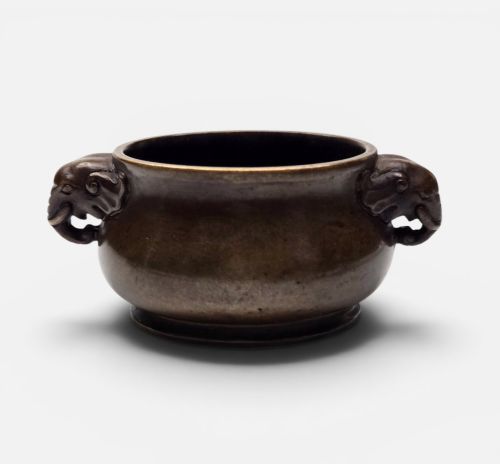
Vessels range from miniature elephant-head censers to massively heavy scholar's masterpieces exceeding three kilograms in weight. The selection balances utilitarian oil lamps and decorative bowls with ritual vessels featuring intricate relief panels and animal finials.
What varies in quality
Quality rests in the density of the casting and the crispness of applied details such as lion-mask handles, botanical relief panels, and studio marks. Heavier examples with substantial metal weight and resonant bell-ring tones demonstrate superior craftsmanship.
Some master-cast censers are heavy enough to produce a clear bell-ring resonance when struck.
The Cast Bronze Burner Glossary
- Censer
- A vessel designed for burning incense, typically featuring an open bowl or a pierced cover.
- Koro
- A Japanese term for an incense burner, often supported on legs and fitted with a lid and finial.
- Taotie
- A mythological zoomorphic mask motif commonly found cast into ancient and dynastic Chinese bronze vessels.
- Lucerna
- An Italian oil lamp design utilising cast brass or bronze, often suspended or mounted on a stand.
- Gui
- An ancient Chinese ritual bronze vessel form characterised by a circular bowl and loop handles, adopted in later scholar's censers.
Cast Bronze Burner: Frequently Asked Questions
What is a cast bronze burner used for?
These vessels primarily held aromatic incense for meditation, scholarly contemplation, or ceremonial space cleansing in traditional settings. Certain forms also functioned as oil lamps for interior illumination.
Over time, many pieces transitioned from active ritual or utility objects into treasured desk ornaments and decorative display items within scholar's studios.
How do I date a bronze censer?
Dating relies on examining the casting style, surface patination, reign marks, and cultural motifs present on the vessel. Ming and Qing dynasty pieces often feature specific dynasty markers and archaic decorative references.
European examples and Japanese pieces from the Edo or Meiji periods display distinct regional casting techniques and stylistic proportions that help narrow their origin.
Are all these censers Chinese?
No, while a significant portion of the selection originates from Ming and Qing dynasty China, the listings include Japanese Edo and Meiji period bronzes. You will also find Italian Lucerna oil lamps and Anglo-Indian ceremonial pieces.
Each region employed distinct forms, from tripod scholar's vessels to hanging temple burners and multi-part lidded urns.
How do I care for antique bronze?
Antique bronze requires minimal intervention to preserve its historical patination and surface finish. Dusting with a soft, dry cloth is generally sufficient for regular maintenance.
Avoid using abrasive cleaning agents, polishes, or harsh liquids that can strip the natural aged patina developed over centuries of exposure.