




Cast Bronze Bedside Lamps
Cast bronze bedside lamps bring weight, history and a warm glow to a room, drawing on periods from the nineteenth century to the Art Deco era.
Cast Bronze Bedside Lamps
Cast bronze bedside lamps represent a mix of utility and decorative design, spanning the nineteenth century, Edwardian era, and the 1930s. When you search for cast bronze bedside lamps, you encounter table lamps fashioned in various stylistic traditions including French Rococo, Art Nouveau, and Chinoiserie.
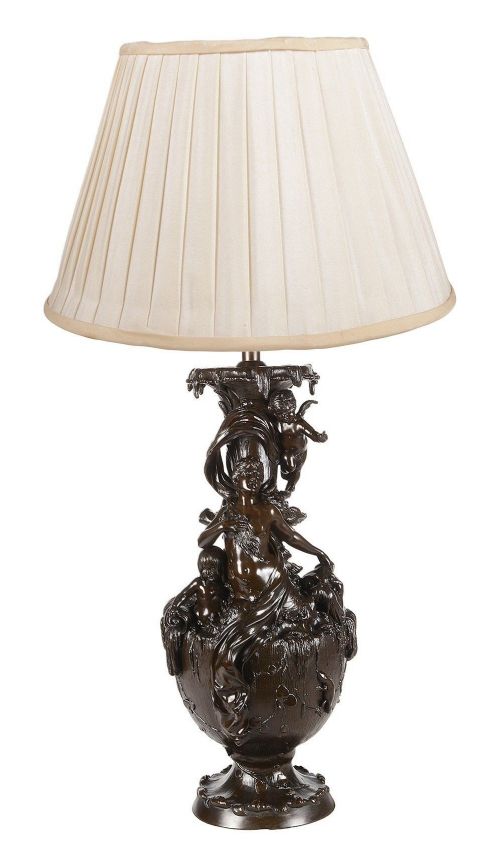
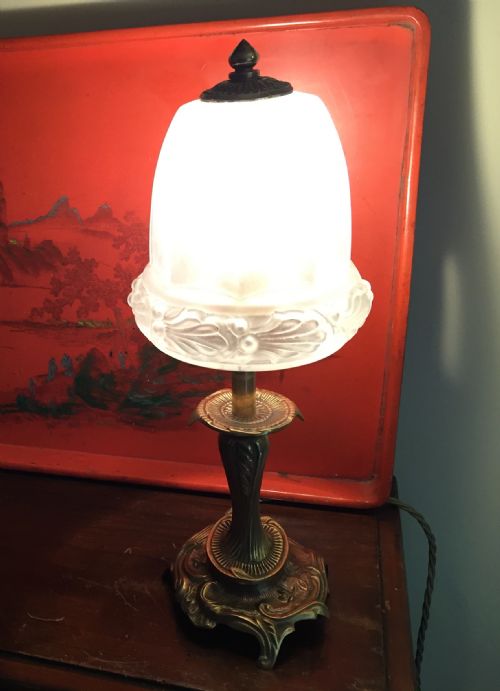
The pieces on offer include figural bases, such as the Goddess Amphitrite or a young girl blowing a kiss, alongside architectural forms with marble bases or frosted glass shades. Many examples originate from France and Japan, reflecting international tastes from the Meiji period to the interwar years.
Materials and construction
These lamps rely primarily on cast bronze, patinated white metal, and spelter, often paired with marble bases for stability and weight. Artisans utilised techniques of gilding and patination to finish the metal surfaces, creating contrasting textures and tones.
Additional elements incorporate fabric, brass, wood, and frosted glass, particularly for shades and structural details. The combination of cast metalwork with decorative motifs demonstrates skilled foundry work across different stylistic periods.
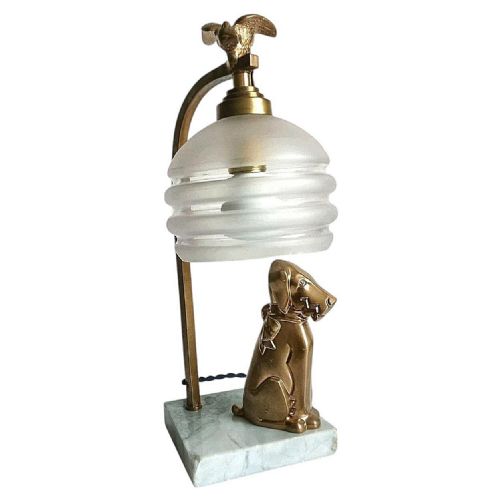
A French novelty dog and parrot lamp brings a touch of playful nineteenth-century character to the lineup.
Assessing quality
The choice of secondary materials, such as solid marble bases rather than lighter substitutes, distinguishes more substantial examples. Artistry in sculptural details and the cohesion of stylistic motifs dictate the upper tier of the selection.
The Cast Bronze Bedside Lamps Glossary
- Bronze
- An alloy consisting primarily of copper, traditionally used for durable and finely detailed castings. It forms the primary structural and decorative body for many antique lamps.
- Patination
- The process by which a surface acquires a weathered or treated appearance over time or through chemical application. This finish enhances the visual depth of metal lamp bases.
- Champlevé
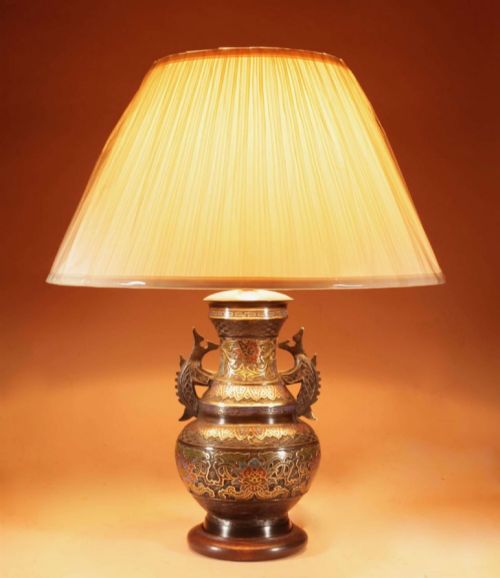
- An enamelling technique where troughs or cells are carved into the metal surface and filled with enamel before firing. It appears on decorative Japanese pieces from the Meiji period.
- Spelter
- An alloy of zinc and other metals often used as a cost-effective alternative to bronze for sculptural figures. It takes patination well to simulate heavier metals.
- Rococo
- An ornate design style characterised by asymmetrical scrollwork, naturalistic motifs, and fluid curves. French examples on this page often adopt this decorative vocabulary.
Cast Bronze Bedside Lamps: Frequently Asked Questions
What periods do these lamps come from?
The selection spans the nineteenth century, including Edwardian examples, the 1900s, 1910s, 1920s, and the Art Deco period around 1930.
Maker styles range from nineteenth-century French Rococo and classical designs to Japanese Meiji period works and Chinoiserie interpretations.
How do I identify French styles?
French pieces often display characteristics of Rococo revival, classical figures such as the Goddess Amphitrite, or Napoleon III console lamp designs. They frequently incorporate gilt bronze or patinated white metal.
Detailing on these lamps tends to feature ornate casting, figural subjects, and sometimes marble bases that add substantial weight to the piece.
Are all these lamps solid bronze?
While many utilise cast bronze, the listings also include pieces made from patinated white metal, spelter, and brass. Secondary materials like marble, wood, and frosted glass frequently form part of the construction.
Each material offers a distinct weight and finish, distinguishing solid bronze castings from alloy alternatives like spelter.
What styles are represented here?
The inventory encompasses Chinoiserie, Art Nouveau, Japanese Meiji period, Art Deco, French Rococo, and French classical styles. These diverse aesthetics reflect international design movements from the late nineteenth century into the interwar years.
Such variety allows buyers to choose between figural sculptures, ornate console lamps, and oriental decorative motifs.