
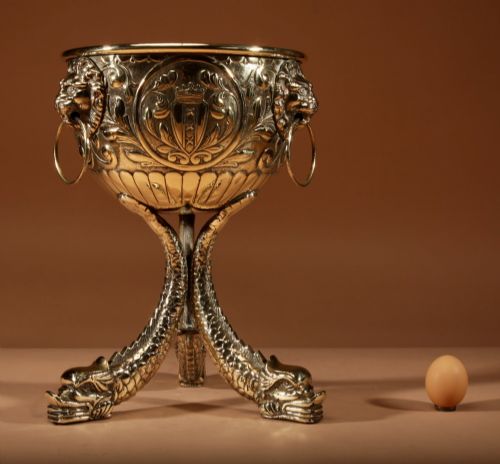
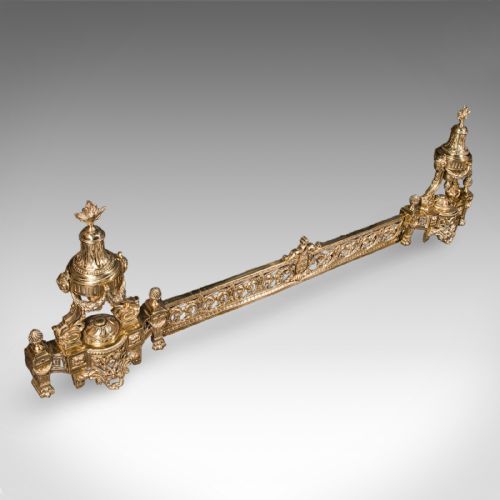
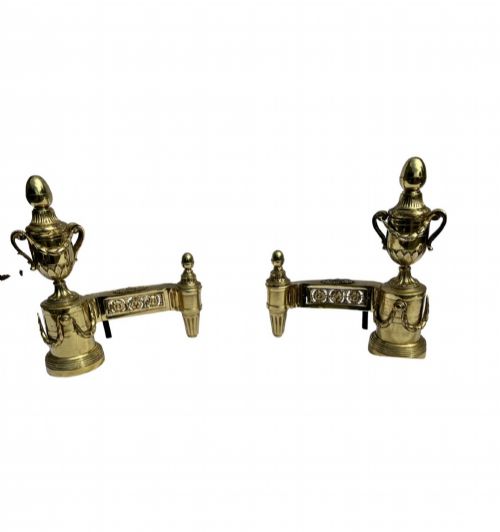


Cast Brass Urns
Cast brass urns bring classical weight to a room, offering enduring metalwork shaped by centuries of revival design.
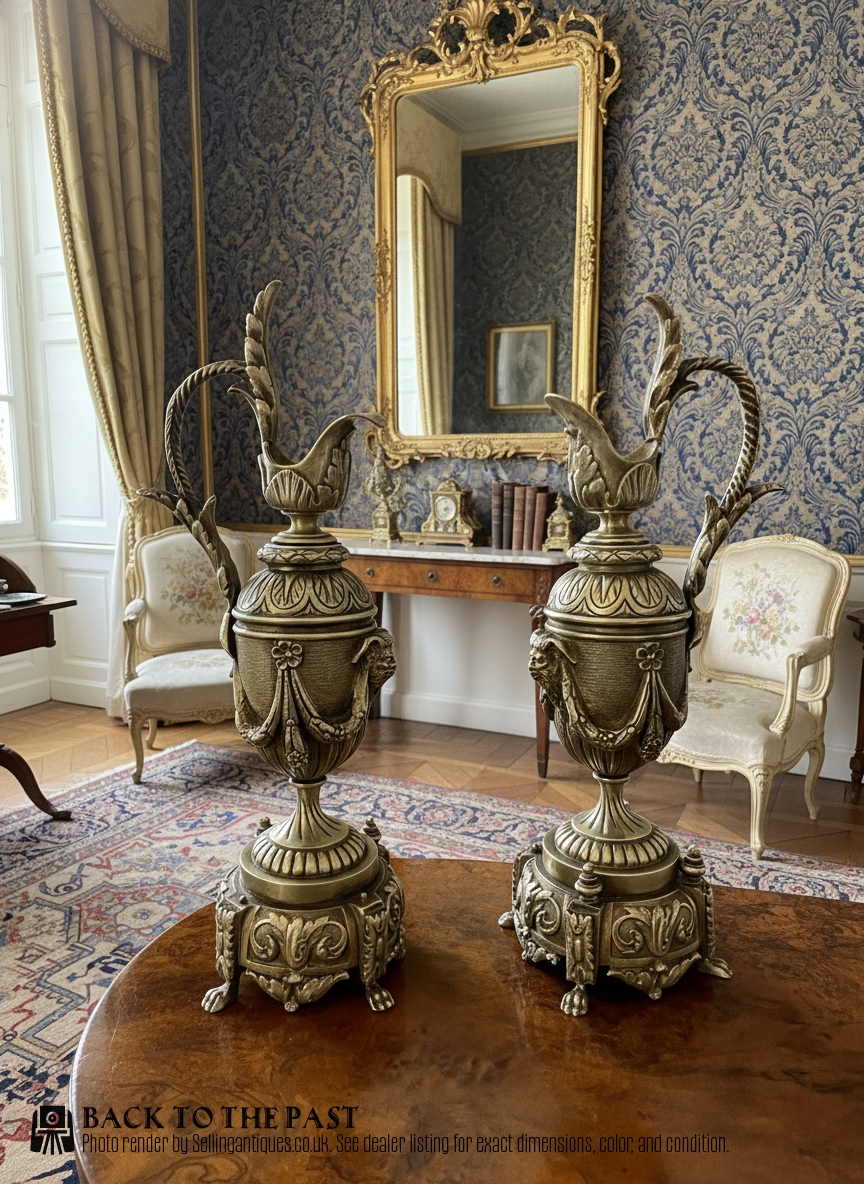
Cast Brass Urns
Cast brass urns occupy a distinct place among ornamental metalwork, often appearing within broader groups of Victorian and Edwardian decorative objects. These vessels draw on classical forms, ranging from hearth accessories to decorative tabletop pieces.
Buyers will most frequently encounter these items in styles that echo earlier periods, such as Neoclassical, Rococo Revival, and the Adam style. They function primarily as decorative focal points, table lamps, or garden urns adapted for interior display.
Origins span English, French, and Continental workshops, reflecting a broad European appetite for heavy cast metal decor throughout the nineteenth and early twentieth centuries. The surviving examples demonstrate how domestic interiors integrated classical motifs into everyday furnishings.
Assessing quality
The distinction between standard production and superior work lies in the sharpness of the cast ornament and the weight of the metal. Finer pieces display crisp definition in foliage, masks, and scrollwork without softening from worn moulds.
Proportion and structural integrity also separate the finer examples from simpler items. Well-executed bases, secure joints, and carefully polished patination indicate skilled foundry work that retains its decorative impact over time.
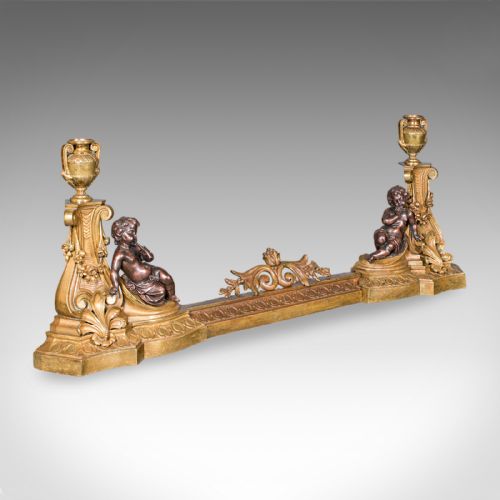
Look closely for hidden dolphins and cherubs keeping watch from the base of the metalwork.
The Cast Brass Urns Glossary
- Cast brass
- An alloy of copper and zinc poured into a mould to create solid decorative objects. This technique allows for complex three-dimensional shapes and detailed surface ornamentation.
- Ormolu
- Gilt bronze created by applying a mercury and gold amalgam to a bronze base and heating it. This finish provides a bright, lasting golden lustre characteristic of high-status decorative objects.
- Neoclassical
- A revival style drawing on classical Greek and Roman art, prominent during the eighteenth and nineteenth centuries. It is characterised by symmetry, restraint, and classical motifs such as urns and swags.
- Jardiniere
- An ornamental pot or stand designed to hold plants or flowers. These vessels often feature heavy cast metal construction and decorative handles or mounts.
Cast Brass Urns: Frequently Asked Questions
Are these pieces from the nineteenth century?
Many items date from the Victorian era and the late nineteenth century, reflecting popular revival styles of the period. Makers frequently looked back to earlier classical eras for inspiration.
Stylistic markers and casting techniques help distinguish these nineteenth-century interpretations from later twentieth-century reproductions.
Can these urns be wired for lamps?
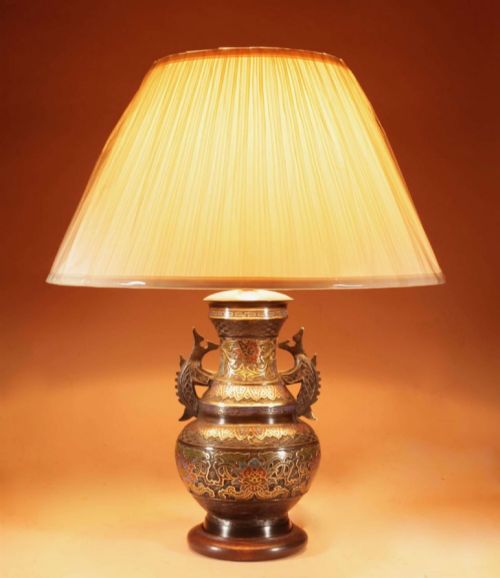
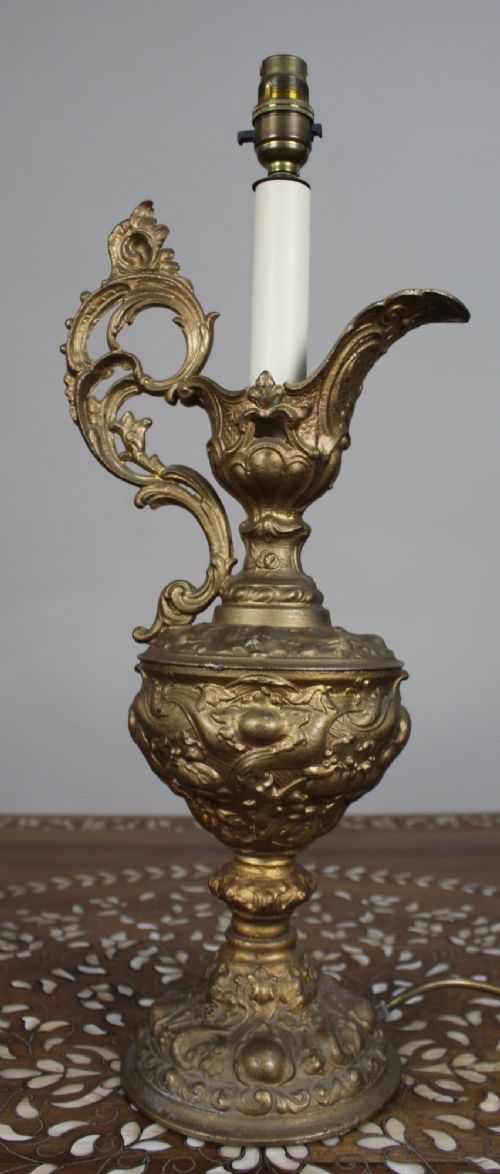
Several decorative urns and vessels are adapted as table lamps, integrating electrical fittings alongside original metal bodies. These conversions often happened later in the twentieth century to make antique forms functional for modern lighting.
Examine the wiring and internal fittings to ensure they meet current safety standards before plugging them in.
What styles influence these designs?
Design vocabulary draws heavily on Neoclassical, Rococo, and Renaissance revival movements. These styles introduced classical urn shapes, acanthus leaves, and sculptural mounts into domestic interiors.
Maker preferences across England and France shaped how these historical motifs were interpreted in cast metal.