



Cast Brass Screen
These cast brass screen pieces are substantial hearth furnishings that bring period weight and intricate metalwork to a room.
Cast Brass Screen
A cast brass screen functions as an ornamental and protective barrier placed before an inactive fireplace, stopping soot and sparks while dressing the hearth. When you search for a cast brass screen, you are looking at substantial metalwork designed to hold pride of place in a Victorian or revival-style room.
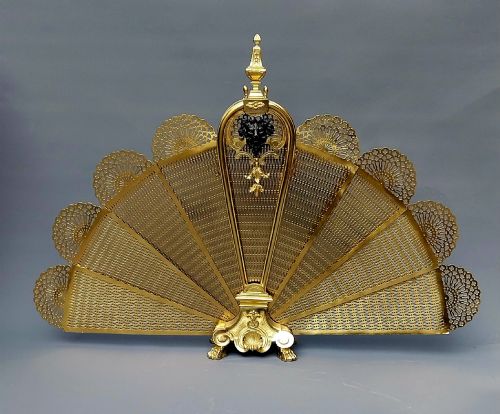
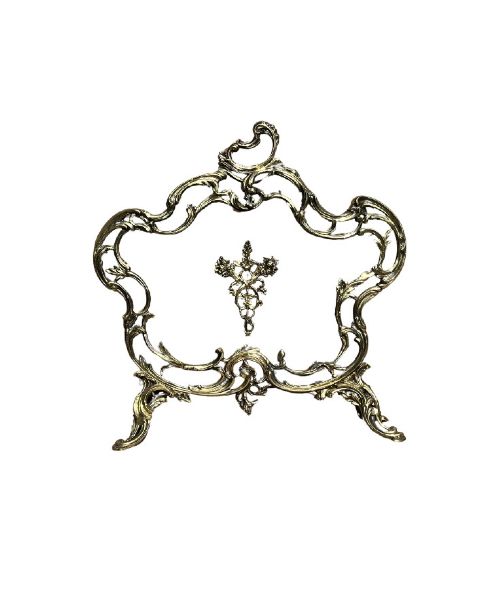
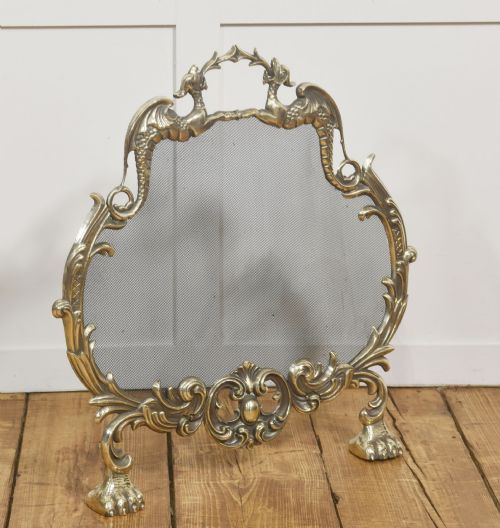
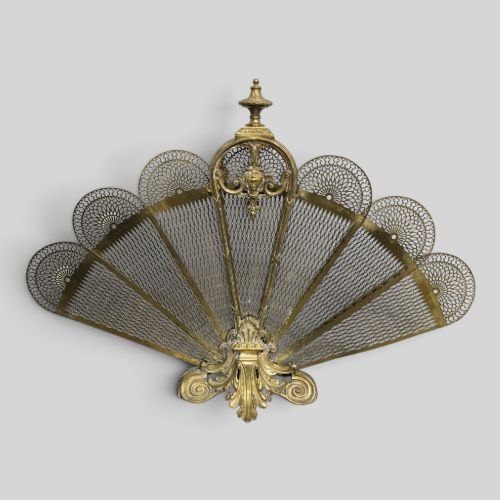
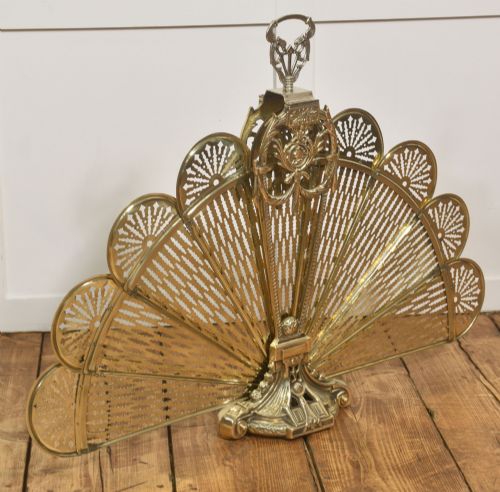
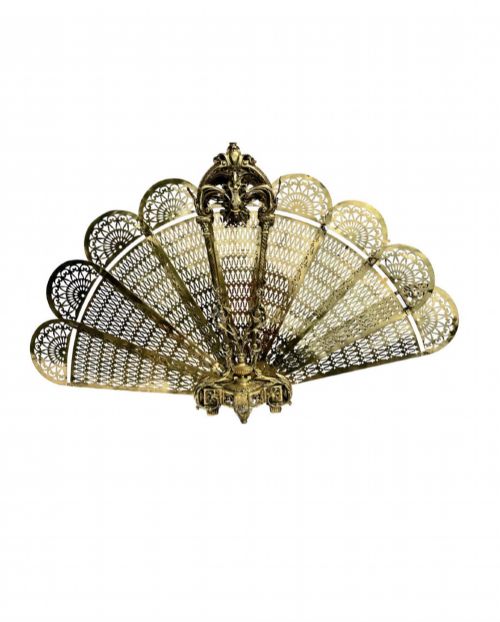
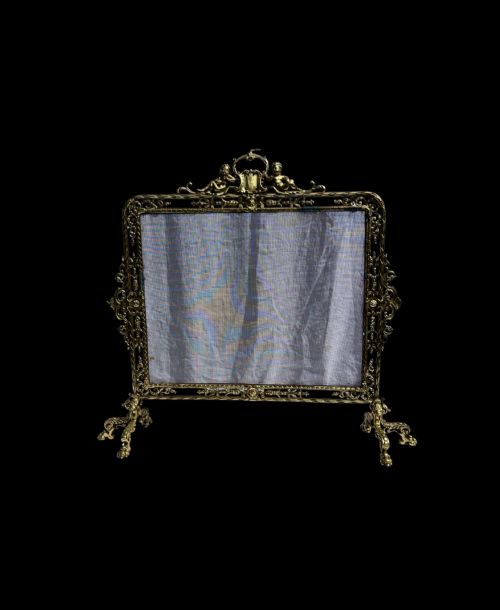
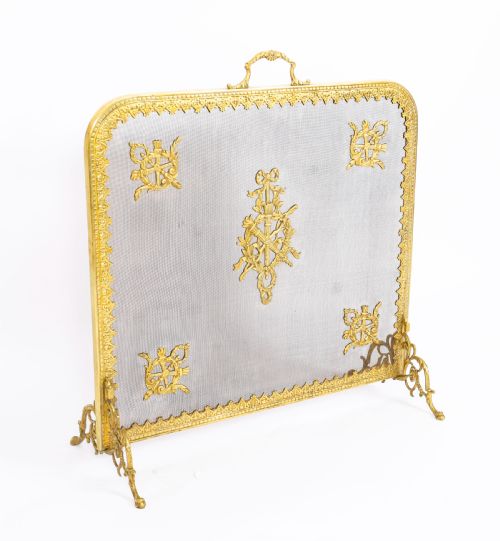
The versions you are most likely to meet on this page take the form of fire screens, fireguard screens, and folding peacock fan screens. These pieces span the Victorian era, the nineteenth century, and the early decades of the twentieth century, with French Rococo Revival and Empire Revival designs appearing regularly.
Many examples combine solid cast frames with delicate wire mesh or folding fan blades, offering both decorative presence and space-saving utility. They range from simple brass frames to elaborate gilt bronze pieces adorned with classical trophies.
How they were made
The construction of these pieces relies heavily on cast brass, gilt bronze, and bronze, shaped through traditional foundry methods to achieve complex relief ornament. Makers utilised wire mesh and iron mesh within the central frames to create heat-resistant panels that could withstand the proximity of an open hearth.
Surface finish played a crucial role in the manufacturing process, with gilding and patination applied to highlight the intricate scrollwork and asymmetrical motifs characteristic of Rococo and Empire revivals. Folding mechanisms in the fan-style screens required precise articulation of individual metal blades to ensure smooth operation.
Cast Brass Screen Retail Price Guide 2026
Typical asking prices for cast brass screen among the pieces listed under this phrase on Sellingantiques today, from the lower quarter to the upper quarter. They describe what is for sale here now, not the wider market.
Listings feature items from the Victorian period, alongside pieces dated across the nineteenth and early twentieth centuries.
What varies in quality
Quality in these pieces is dictated by the crispness of the casting and the depth of the chased detail across the metal frame. Finer examples display sharp definition in their classical trophies and foliate scrolls, whereas simpler items show softer, shallower relief work from worn or repetitive moulds.
The choice of primary metal also separates the standard production from the exceptional, as heavy gilt bronze and refined cast brass command greater presence than standard mixed metal or basic iron components. The integrity of the mesh panels and the precision of the hinges further distinguish high-grade workshop output from everyday domestic items.
Bouhon Frères
The Cast Brass Screen Glossary
- Cast brass
- An alloy of copper and zinc poured into a mould to create three-dimensional forms. It provides the heavy, rigid structure for the primary frames.
- Gilt bronze
- Bronze that has been coated with a thin layer of gold to give a rich, durable surface finish. This material is frequently found on the more ornate French revival pieces.
- Wire mesh
- A woven metal grid fitted into the centre of the screen to contain embers. It allows heat to radiate while maintaining a physical barrier.
- Rococo Revival
- A nineteenth-century design movement favouring asymmetrical C-scrolls, naturalistic foliage, and shell motifs. It heavily influences the decorative detailing on many fireplace screens.
- Empire Revival
- A neoclassical style drawing on ancient Roman and Greek motifs, including military trophies and symmetrical geometry. It appears on formal nineteenth-century gilt bronze examples.
Cast Brass Screen: Frequently Asked Questions
What is a cast brass screen?
A cast brass screen is a heavy decorative metal barrier placed in front of a fireplace when a fire is not burning.
These furnishings combine functional spark protection with intricate period designs, often featuring elaborate frames and mesh panels.
How were they used historically?
In nineteenth-century drawing rooms, they shielded occupants from the sudden intense heat of dying hearth fires.
They also served to hide empty grates during warmer months, keeping the fireplace visually tidy and ornamental.
How do I live with a fire screen?
Position your screen directly in front of the fireplace opening to anchor the room's seating arrangement and draw the eye to the mantel.
Keep the metal polished with gentle methods appropriate for brass and bronze to maintain the surface lustre over time.
How do I identify a Victorian screen?
Victorian screens often feature robust cast brass frames, folding peacock fan mechanisms, or heavy wire mesh.
They frequently incorporate revival styles such as French Rococo ornament alongside standard nineteenth-century manufacturing marks.