


Cast Brass Pestle
A cast brass pestle sits at the heart of these apothecary and kitchen sets, offering tactile weight and historic utility for the modern interior.
Cast Brass Pestle
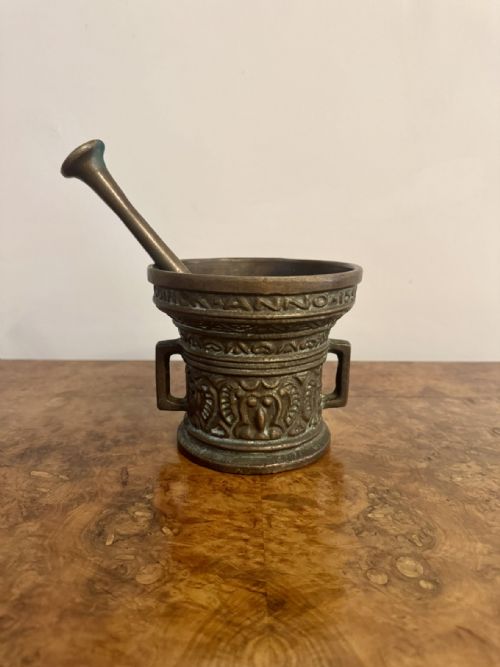
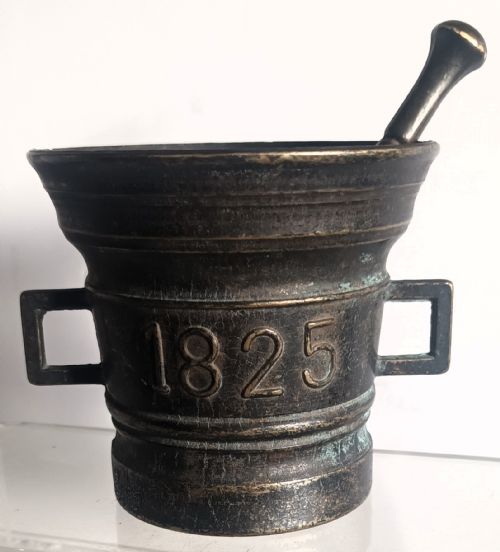
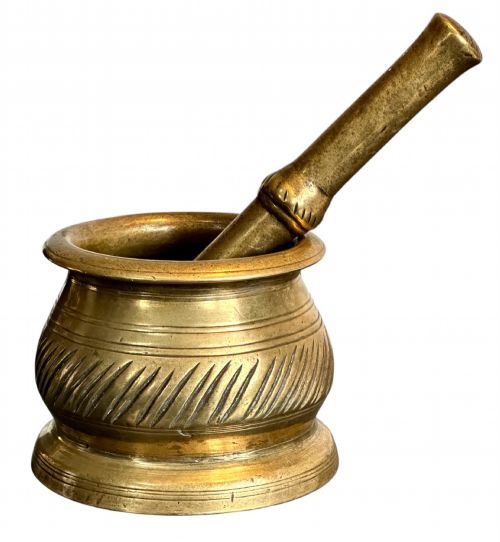
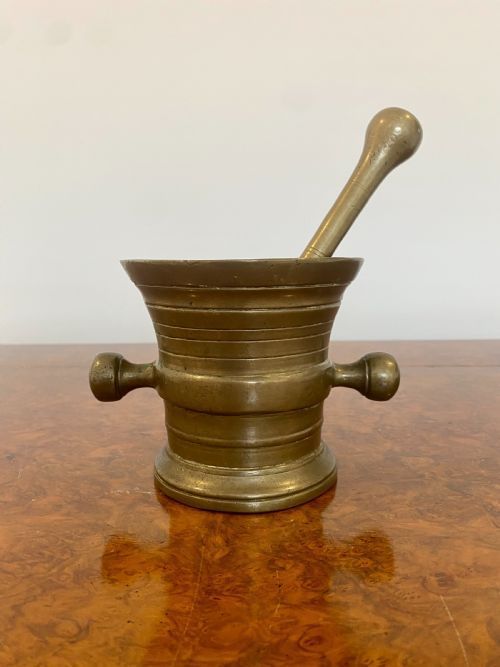
When you search for a cast brass pestle, you encounter heavy kitchen and apothecary tools designed to grind substances down. The pieces listed here span centuries, ranging from the seventeenth century through the Georgian and Victorian eras, often paired directly with their matching mortars.
Most examples hail from English domestic and chemist contexts. You will find forms styled in Renaissance Revival, Gothic Revival, and standard Victorian apothecary traditions, reflecting their practical origins in kitchens and dispensaries.
How they were made
These implements were produced primarily through metal casting techniques using copper alloys. Makers utilised bronze, brass, bell metal, and cast bronze to achieve the necessary mass and durability for crushing materials.
The casting process left distinct surface textures and heft, which makers then shaped into functional hand-held pestles designed to fit comfortably alongside heavy desktop and counter mortars.
Some seventeenth-century examples feature a Tudor Rose motif, proving that even heavy apothecary hardware occasionally embraced royal branding.
What varies in quality
Quality across these items depends on the crispness of the cast and the integrity of the metal alloy used. Superior examples display balanced proportions, substantial weight, and well-preserved surface patinas shaped by centuries of handling.
Plain domestic implements sit at one end, while pieces bearing specific decorative motifs or period-specific styling, such as Tudor Rose designs or Gothic Revival elements, represent greater artisanal ambition.
The Cast Brass Pestle Glossary
- Bell metal
- An alloy of copper and tin traditionally used for bells, known for its resonant quality and hardness. It appears frequently among these historical culinary and apothecary implements.
- Apothecary
- A historical practitioner who prepared and sold medicines and drugs. These sets served chemists and apothecaries for pulverising medicinal ingredients.
- Georgian
- Relating to the reigns of the first four British monarchs named George, spanning from the early eighteenth century to the early nineteenth century. Pieces from this period exhibit characteristic utilitarian elegance.
- Victorian
- Pertaining to the reign of Queen Victoria, marked here by industrial expansion and functional chemist supplies. Victorian iterations often reflect precise utilitarian manufacture.
Cast Brass Pestle: Frequently Asked Questions
What were cast brass pestles used for?
These implements served primarily in kitchens and apothecaries to grind herbs, spices, and medical compounds into fine powders. Their heavy metal construction provided the necessary force for daily preparation.
Over the centuries, they transitioned from essential workshop tools into decorative items prized for their historical presence and material honesty.
How do I date a cast brass pestle?
Dating relies on stylistic clues, alloy composition, and the accompanying mortar forms. Pieces reflect distinct design movements from seventeenth-century Tudor motifs to Victorian industrial manufacturing.
Comparing the casting finish and regional English stylistic traits helps narrow down the era of production.
Are pestles and mortars sold as sets?
Many surviving examples remain together as matched pairs because they functioned as a single unit in kitchens and dispensaries. The listings frequently present them as combined sets.
Individual tools also appear separately, having been separated from their original mortars over long periods of use.
How should I clean a brass pestle?
Maintenance requires gentle dusting and preserving the historic surface oxidation rather than aggressive polishing. Harsh chemical cleaners strip away the genuine patinas developed over centuries.
Keeping the metal dry protects the alloy and maintains the authentic finish valued by collectors.