
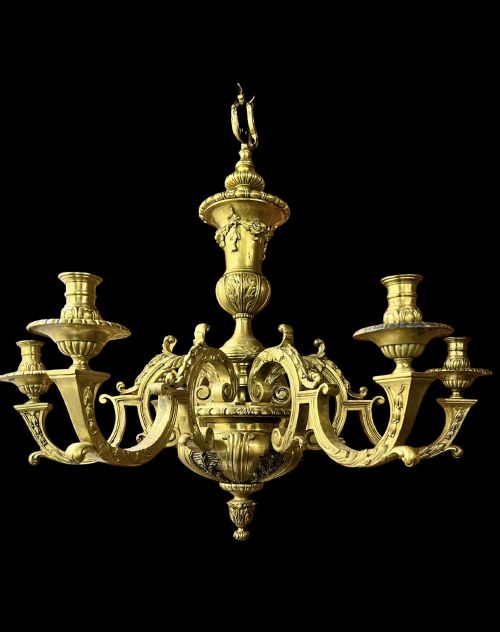


Cast Brass Pendant Fitting
A cast brass pendant fitting anchors a room with substantial weight, bringing period character to ceilings through durable metalwork.
Cast Brass Pendant Fitting
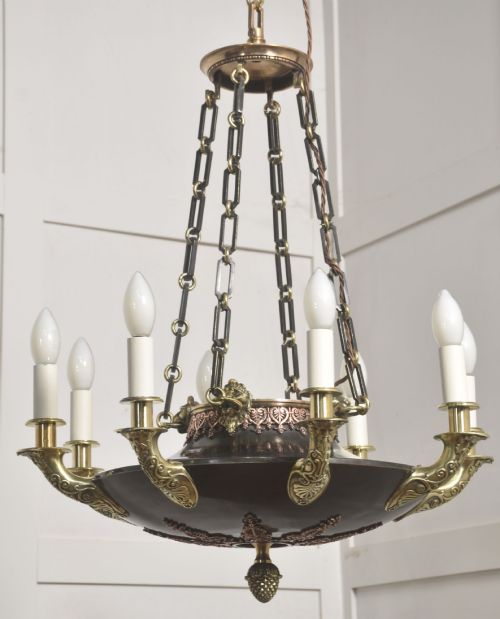
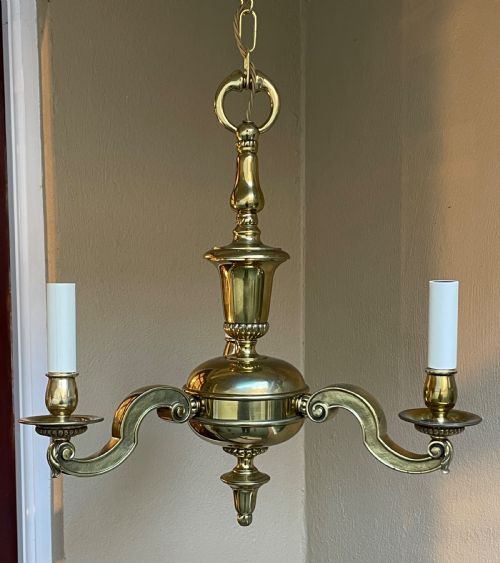
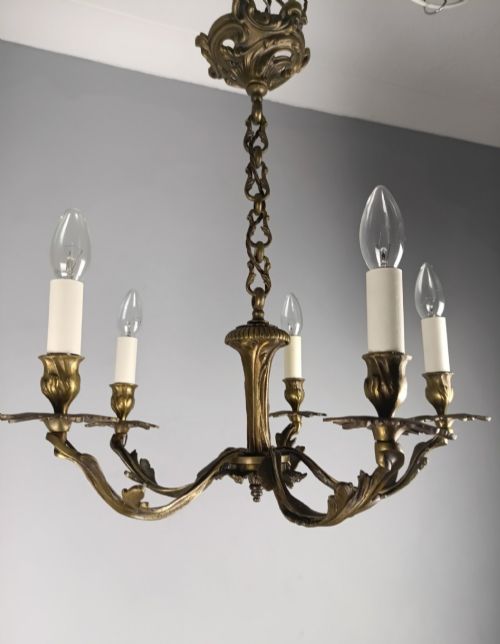
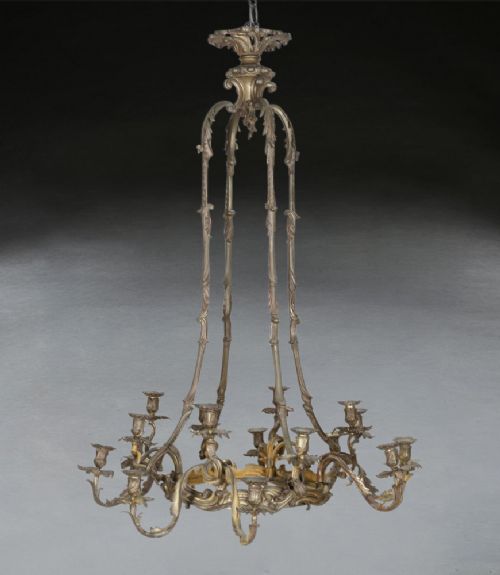
When buyers search for a cast brass pendant fitting, they encounter substantial lighting fixtures and decorative ceiling roses originating from the Victorian era, the nineteenth century, and the early twentieth century. These pieces encompass multi-light chandeliers and ornate ceiling fittings designed to suspend from the ceiling with architectural presence.
The selections on this page lean heavily toward French and British designs, ranging from simple Victorian ceiling roses to grand multi-branch chandeliers with eight or sixteen lights. Buyers frequently find pieces reflecting revival styles such as Empire Revival, French Rococo, and Georgian Style.
The form of a cast brass pendant fitting dictates how it hangs and distributes light within a room, often utilising heavy metal frames, branches, and mountings. These hanging fixtures serve both a functional lighting purpose and an ornamental role in period interiors.
How they were made
The construction of these pieces relies on solid brass, bronze, copper, and silvered bronze, shaped through traditional casting methods that produce heavy, durable metal components. Artisans utilised specialised metalworking techniques to form intricate branches, frames, and decorative mounts.
Surface finishes vary from the natural warmth of cast brass and gilt brass to the darker tones of bronze and silvered bronze. Details such as acanthus leaf mounts were cast separately and integrated into the primary structure of the chandelier or ceiling rose.
Some Victorian ceiling roses spent over a century silently catching the smoke from oil lamps and candles before reaching the marketplace.
What varies in quality
Quality in these hanging fixtures rests upon the crispness of the casting and the depth of the ornamentation, such as the definition found on acanthus leaf mounts or gothic details. Heavy, substantial metal construction separates robust examples from lighter alternatives.
The sophistication of the stylistic execution, whether in a French Neoclassical or a Victorian Gothic idiom, dictates the refinement of the piece. Superior examples exhibit harmonious proportions across multiple branches and integrated metal components.
The Cast Brass Pendant Fitting Glossary
- Cast brass
- A metal alloy of copper and zinc poured into moulds to create solid, decorative hardware and lighting components. This material forms the primary structure of many period pendant fittings.
- Chandelier
- A branched ornamental light fixture suspended from the ceiling. These fixtures hold multiple light sources, ranging from three-branch arrangements to sixteen-light configurations.
- Ceiling rose
- A decorative circular moulding affixed to the ceiling from which a pendant light hangs. Victorian examples in cast brass provide an ornamental anchor for the fitting.
- Empire Revival
- A decorative style drawing inspiration from the classical antiquity of the French Empire period. Pieces in this style often feature formal symmetry and classical motifs.
- Acanthus leaf
- A classical ornament modelled on the foliage of the Mediterranean acanthus plant. These leaves frequently appear as cast mounts on the arms and stems of chandeliers.
Cast Brass Pendant Fitting: Frequently Asked Questions
What periods do these pendant fittings date from?
The pieces span the Victorian era, the nineteenth century, and the early twentieth century, encompassing dates up to the nineteen-thirties.
Stylistic influences range from French Rococo and Empire Revival to Georgian and Gothic revivals.
How were these fittings used originally?
These fixtures hung from high ceilings in principal rooms to provide ambient illumination via multiple candle or electric light branches.
Ceiling roses served as decorative plates mounted directly to the ceiling surface to frame the suspension point of the light.
What materials are commonly found in these pieces?
The primary materials are cast brass, bronze, copper, and silvered bronze, often complemented by gilt finishes.
Construction methods rely heavily on metal casting to produce sturdy frames and decorative mounts.
How do I identify different revival styles?
Empire Revival pieces display formal classical symmetry, whereas French Rococo and Chateau styles favour asymmetrical, ornate scrollwork.
Victorian gothic examples utilise heavier, ecclesiastical motifs alongside traditional brass and bronze casting.