
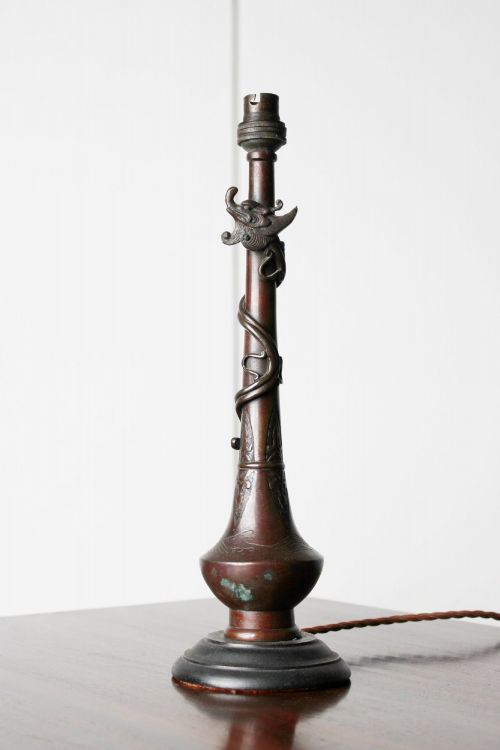


Cast Brass Base Lamp
These cast brass base lamp examples offer sturdy weight and period detail, giving any room a reliable pool of warm light.
Cast Brass Base Lamp
A cast brass base lamp brings together solid metal foundations and period forms ranging from slender columns to ornate figurative mounts. When you search for a cast brass base lamp, you find domestic lighting engineered to anchor heavier glass, marble, or bronze fittings securely to a table or floor.
The selections encountered here span the Victorian, Edwardian, and Art Deco eras, alongside nineteenth century designs and specific regional pieces like French classical or Italianate works. Many of these items began life as oil lamps or fluid reservoirs before receiving later conversions for electrical wiring.
Materials and construction methods
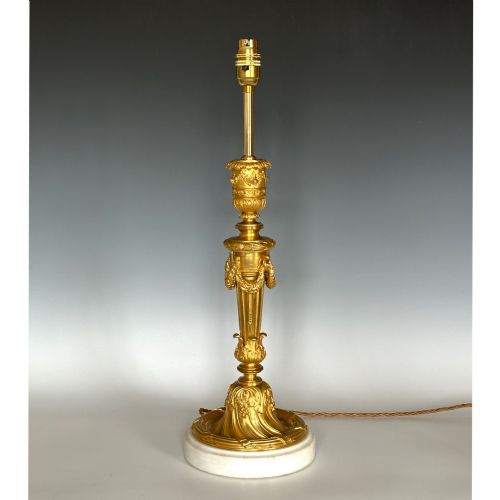
Foundries produced these heavy structural supports by pouring molten brass, bronze, or cast metal into detailed moulds, often employing techniques of chasing and patination to sharpen the ornamental foliage, masks, and fluting. Marble plinths and opaline or cranberry glass reservoirs were then integrated directly into the metal framework to add colour and contrasting weight.
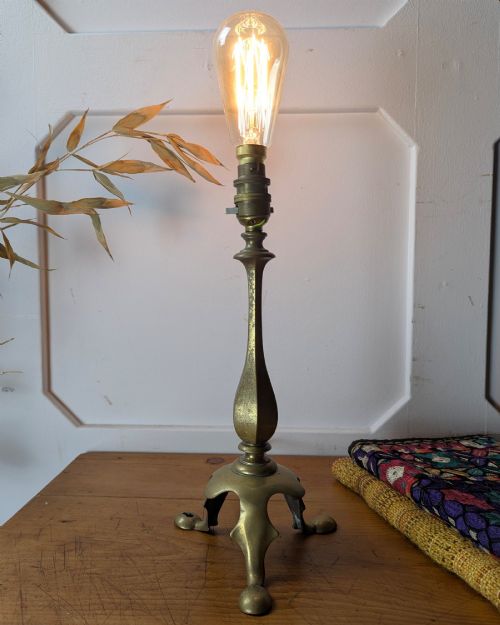
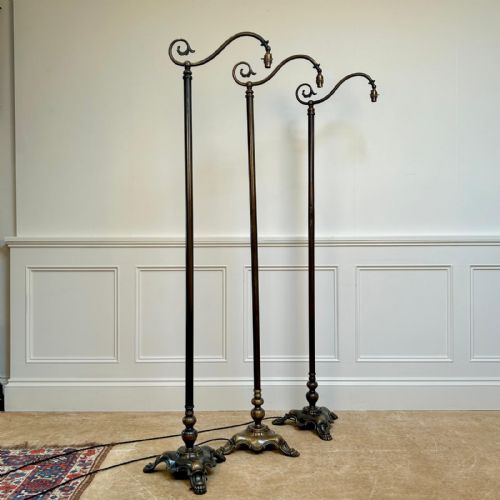
Floor lamps and larger table standards frequently incorporated telescopic mechanisms or heavy tripod legs to maintain balance, while smaller pieces utilised Corinthian capitals or hexagonal baluster stems screwed firmly to stepped plinths.
The listings here feature items spanning the nineteenth century through the 1930s, constructed from brass, bronze, marble, and glass.
Distinctions in craftsmanship
The finest examples display crisp casting definition in the floral openwork, classical masks, and figural details without the softening of edges that comes from worn secondary moulds. Superior weight distribution and thick gauge metal ensure that the standard or table light remains entirely stable upon its base.
Finer items also preserve their original patination, gilding, or fire-gilt ormolu surfaces intact, whereas lesser or heavily polished pieces lose the subtle tonal variations accumulated over decades of domestic use.
JOSEPH HINKS
The Cast Brass Base Lamp Glossary
- Ormolu
- Gilded bronze used widely for decorative mounts and classical ornaments on nineteenth century fittings. This mercury-gilded technique produces a deep, lasting metallic sheen.
- Corinthian
- A classical architectural order featuring elaborate acanthus leaf capitals, frequently adapted for the upper shaft of heavier brass columns. It remains a hallmark of formal nineteenth century design.
- Baluster
- A moulded shaft with a swelling lower portion that tapers towards the top, commonly seen on hexagonal table standards. This profile provides both visual weight and a comfortable grip.
- Opaline
- A delicate, opaque or translucent glass developed during the Victorian period, often coloured in soft pastels and paired with bronze or brass columns. It diffuses light evenly across domestic interiors.
- Patination
- The natural surface oxidation and darkening acquired by bronze and brass over many decades. Collectors value this stable skin as evidence of genuine age.
Cast Brass Base Lamp: Frequently Asked Questions
How do I date a brass lamp?
Examine the casting quality, the assembly screws, and the overall style, noting whether the form aligns with Victorian aesthetic revivals or early twentieth century Art Deco movements.
Material combinations, such as the pairing of bronze with opaline glass or Italian classical mounts, also offer reliable clues to the period of manufacture.
Were these lamps converted from oil?
Many examples originating from the nineteenth century started life as paraffin or oil burning lamps before undergoing professional conversion to electricity in later decades.
Traces of burners, reservoirs, or wick adjusters often remain visible beneath the modern bulb fittings and shade carriers.
Are floor lamps stable?
Standard floor lamps and tripod base designs utilise heavy cast metal foundations to support the extended height and prevent tipping during everyday domestic use.
The substantial mass of the brass or bronze foot keeps the centre of gravity low.
How should I clean the brass?
Dust the metal gently with a soft, dry cloth to preserve the natural patination and prevent the removal of historic surface finishes.
Avoid abrasive metal polishes that strip away the aged character accumulated over generations.