


Cased Sterling Silver Teaspoons
Cased sterling silver teaspoons arrive neatly fitted in presentation boxes, offering a glimpse into formal dining traditions and polished British silverwork.
Cased Sterling Silver Teaspoons
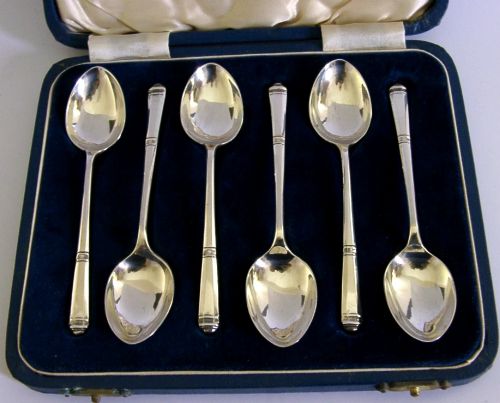
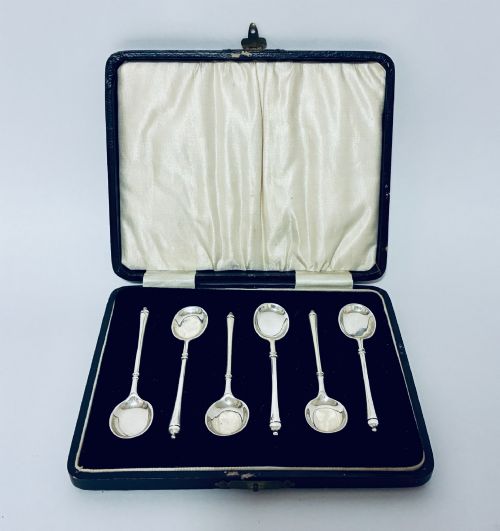
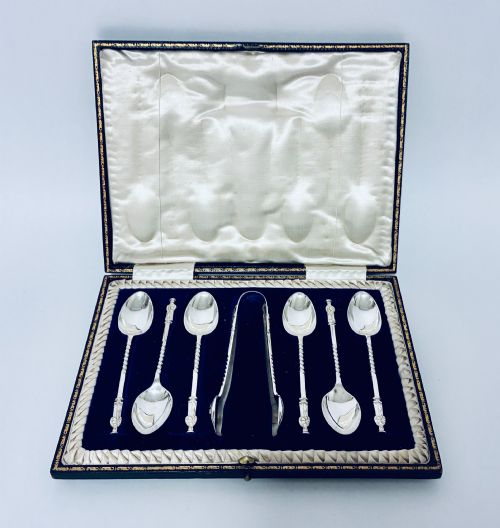
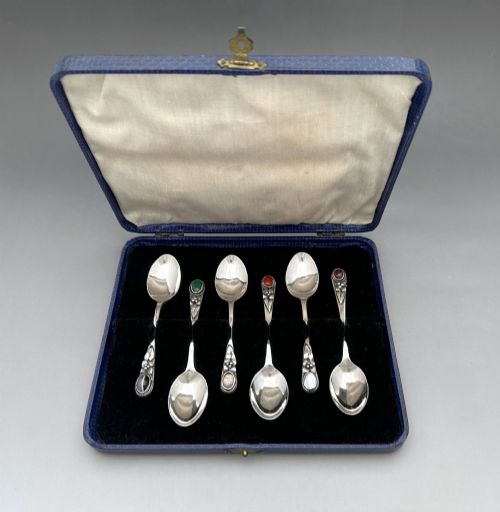
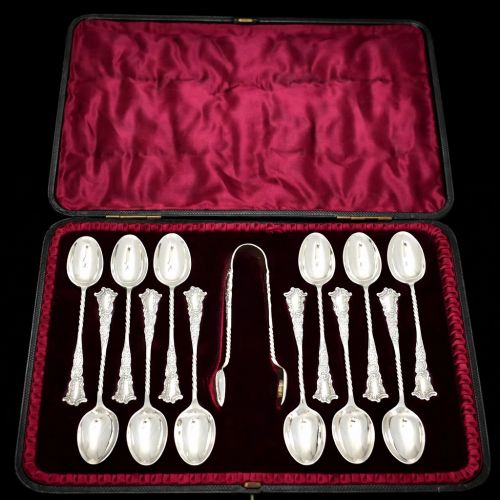
These cased sterling silver teaspoons represent matched sets of dining flatware housed within dedicated presentation boxes, frequently appearing from the Victorian, Edwardian, and Art Deco periods. Buyers seeking these items encounter matching sets of six or twelve spoons, sometimes accompanied by matching sugar tongs or butter knives.
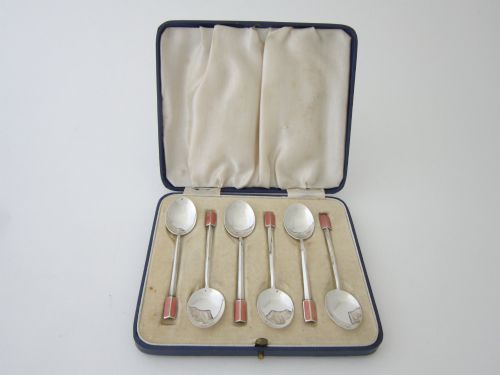
The selections span from Georgian George III examples to mid-century British silver sets, with Art Deco enamelled variations and Arts & Crafts designs appearing regularly. Makers from Birmingham, Sheffield, and London produced these sets for gifting and domestic display, utilising hallmarked solid silver throughout.
What varies in quality
Quality rests in the crispness of the hallmarks, the weight of the solid silver used in each spoon, and the intact condition of any applied enamel or gilding. Finer sets display precise casting and hand-finished detailing on handles featuring apostle figures or geometric Art Deco motifs.
The integrity and original condition of the fitted presentation case also influence the overall standard, particularly the preservation of interior silk or velvet linings and secure exterior clasps.
Listings span multiple decades of British manufacturing, ranging from George III Georgian examples up to mid-century 1950s modernist designs.
P A W Bateman·Walker and Hall·Robert Stebbings·Cooper Brothers and Sons
The Cased Sterling Silver Teaspoons Glossary
- Sterling silver
- A silver alloy containing 92.5 percent pure silver and 7.5 percent other metals, usually copper, ensuring structural durability for cutlery.
- Hallmark
- An official stamp struck into precious metals by an assay office to guarantee the purity of the silver, the maker, and the year of production.
- Vitreous enamel
- A coloured glassy substance fused to the surface of the silver through high-temperature firing, creating smooth decorative panels on handle terminals.
- Silver-gilt
- Sterling silver that has been coated with a thin layer of pure gold, sometimes referred to as vermeil, giving a warm golden tone to the flatware.
- Demi-tasse
- A small spoon designed specifically for use with espresso or Turkish coffee, measuring noticeably shorter in length than a standard teaspoon.
Cased Sterling Silver Teaspoons: Frequently Asked Questions
What are cased teaspoons used for?
These spoons were traditionally used for formal tea and coffee service in British households, serving guests during afternoon gatherings or after-dinner occasions.
Because they remained stored in fitted boxes rather than everyday cutlery drawers, many sets survive in remarkably clean and unblemished condition.
How do I identify the date of my silver spoons?
You can determine the production year by examining the stamped hallmarks on the reverse of the spoon stems, which include a specific letter code for the assay year.
Birmingham, Sheffield, and London offices recorded their output this way, alongside the lion passant mark confirming sterling standard silver.
Are enamelled silver spoons fragile?
Vitreous enamel is a glass-based material that requires careful handling to prevent chipping or cracking if dropped against hard surfaces.
Storing the spoons securely within their original fitted velvet or silk-lined slots protects the enamel work from everyday friction.
What is the difference between teaspoons and coffee spoons?
Coffee spoons and demi-tasse spoons feature a shorter handle and smaller bowl compared to standard teaspoons, scaling down for use with small cups.
Art Deco sets frequently utilise this smaller format alongside colourful enamel decoration.