


Carved Yellow Marble
Carved yellow marble works bring intense colour and classical weight into a room, fashioned into tables, architectural models, and decorative vessels from the nineteenth century onward.
Carved Yellow Marble
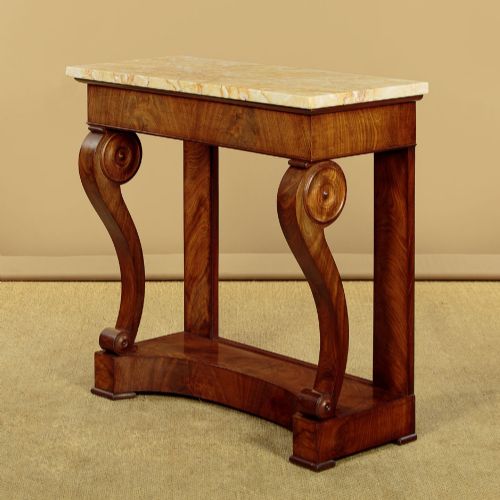
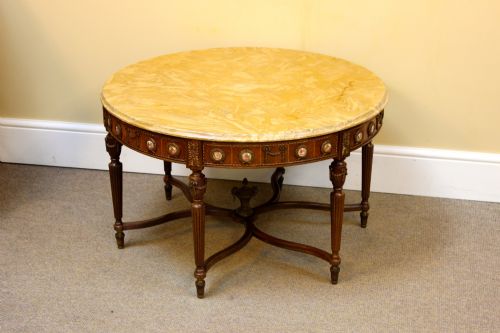
When you search for carved yellow marble, you encounter pieces predominantly realised in rich Sienna marble, alongside occasional examples in associated stones. The selection encompasses tables, console tables, coffee tables, architectural models, tazzas, and wall panels reflecting neoclassical, Victorian, and Edwardian sensibilities.
The objects span from mid-nineteenth century Grand Tour souvenirs to later period furnishings, utilising the distinctive golden-yellow and veined character of the stone. These works originate from Italian and English workshops, demonstrating the enduring European fascination with classical materials.
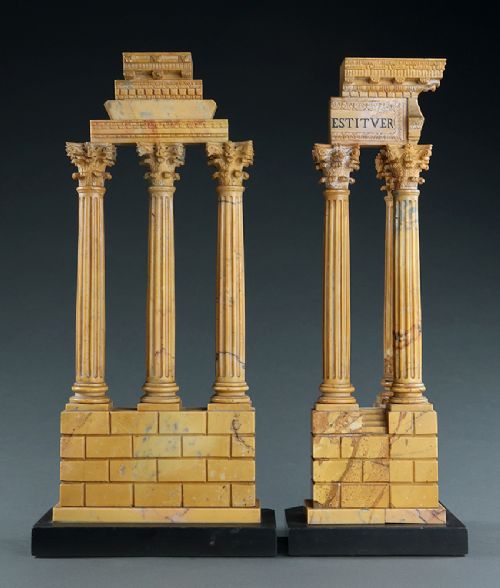
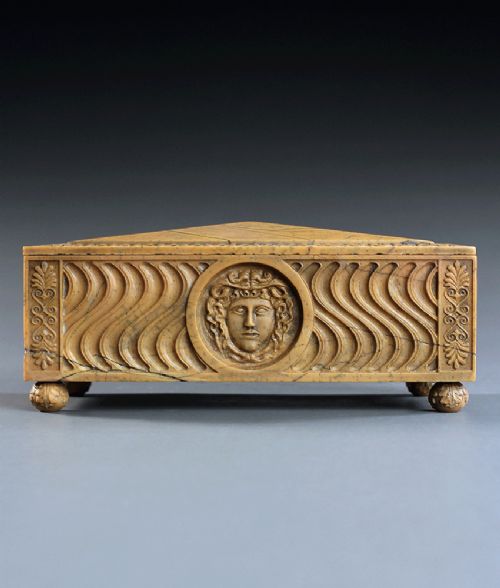
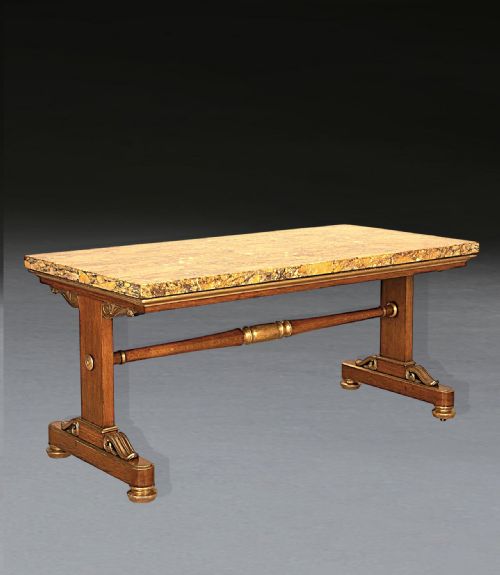
Console tables, centre tables, and occasional coffee tables dominate the larger furniture forms, often supported by giltwood, mahogany, or oak frames. Smaller decorative items, such as sarcophagus caskets, forum temples, and tazzas, represent the portable sculpture market collected by travellers on the Grand Tour.
How they were made
The primary material, Sienna marble, is quarried in Tuscany and valued for its deep yellow ground traversed by dark, dramatic veins. Stonemasons shaped this dense material using traditional hand-carving and polishing techniques to create smooth, lustrous surfaces on architectural models, tazzas, and table slabs.
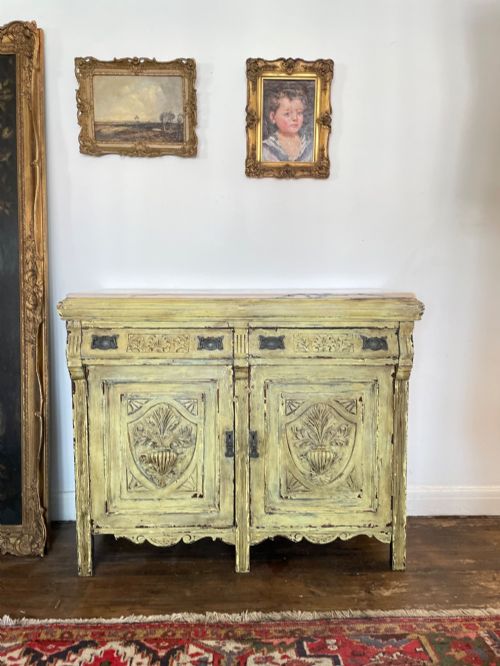
Furniture pieces combine this heavy stone with supportive wooden frames in mahogany, oak, and painted wood, sometimes enhanced with giltwood enrichment or brass details. Sculptural and architectural elements rely entirely on precise chiselling and turning to capture classical motifs such as acanthus leaves, columns, and low relief carvings like the St Mark's lion.
Listings feature items spanning the mid-nineteenth century through the Edwardian period, utilising Sienna marble, giltwood, mahogany, and brass.
What varies in quality
Quality in carved yellow marble rests primarily on the depth and drama of the stone's natural figuring, alongside the crispness of the carving. Finely executed architectural models and low relief panels demonstrate superior hand work compared to standard utilitarian slabs.
The integration between the marble top and its supporting frame, whether giltwood, mahogany, or brass, determines the structural integrity and aesthetic cohesion of larger tables. The richness of the polish and the absence of clumsy repairs distinguish the finer pieces within this group.
Kasper Hendrik Roskam
The Carved Yellow Marble Glossary
- Sienna Marble
- A distinctive yellow Italian marble featuring dark grey or purple veining, highly prized for decorative objects and table tops.
- Grand Tour
- A cultural journey undertaken by wealthy young Europeans in the eighteenth and nineteenth centuries, resulting in the collection of antiquities and marble models.
- Tazza
- A shallow ornamental bowl or cup set upon a stem and foot, frequently carved from decorative stone during the nineteenth century.
- Scagliola
- A composite material made from selenite, glue, and pigments, applied to mimic the appearance of true marble and stone inlay.
- Neoclassical
- A style originating in the mid-eighteenth century that drew inspiration from the classical art and architecture of ancient Greece and Rome.
Carved Yellow Marble: Frequently Asked Questions
What is Sienna marble?
Sienna marble is a decorative natural stone quarried in Tuscany, known for its warm yellow background and dark, irregular veining. It became immensely popular during the nineteenth century for decorative items and furniture tops.
Craftsmen utilised its striking appearance for Grand Tour souvenirs, architectural models, and substantial console tables that brought classical Italian warmth into British and European homes.
How do I date a marble table?
Dating relies heavily on the construction of the wooden base, the joinery methods used underneath, and the overall stylistic period of the frame. Mahogany and giltwood frames often correspond to specific Victorian, Regency, or Edwardian cabinetmaking trends.
Examining the edge profile of the marble top and the wear patterns on the stone can also offer clues to its nineteenth-century origins.
What were Grand Tour marble models?
Grand Tour marble models were miniature architectural structures, such as forum temples and sarcophagus caskets, purchased by travellers visiting classical sites in Italy. They served as scholarly mementoes and displays of refined taste.
These pieces demonstrate exceptional miniature stonemasonry, capturing ancient ruins and classical vessels in polished yellow and white marbles.
How do I care for yellow marble?
Marble requires gentle cleaning with a soft, damp cloth and neutral soap, avoiding acidic substances like lemon juice or vinegar that etch the polished surface. Regular dusting helps preserve the natural lustre of the stone without abrasive polishes.
For furniture pieces, ensure the heavy stone top is safely supported and treated with care when moving the combined wooden and marble structure.