

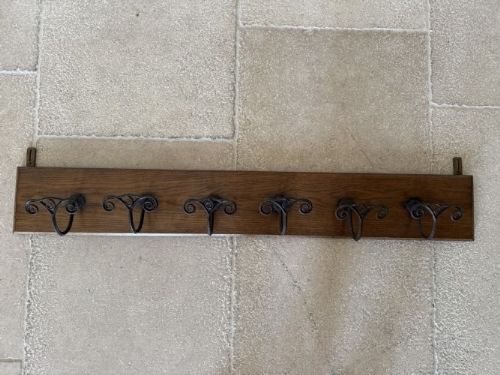


Carved Wooden Wall Hooks
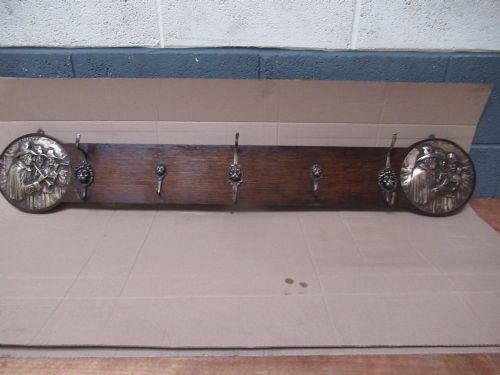
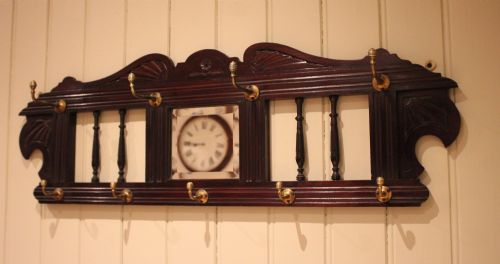
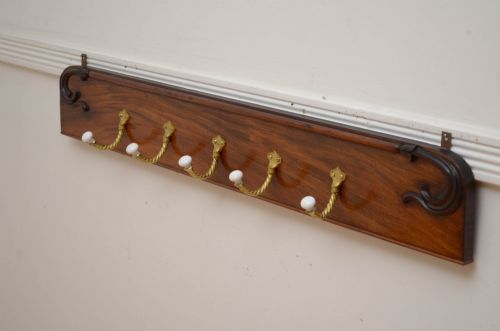
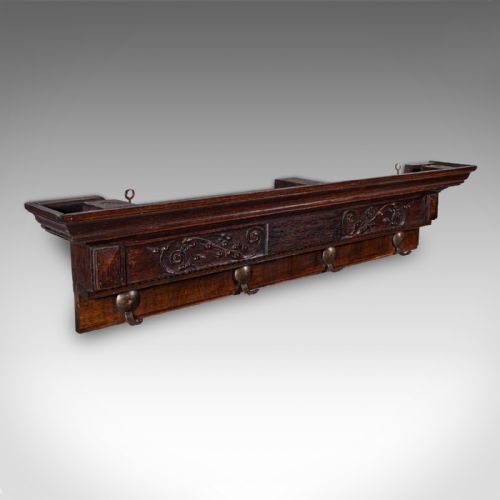
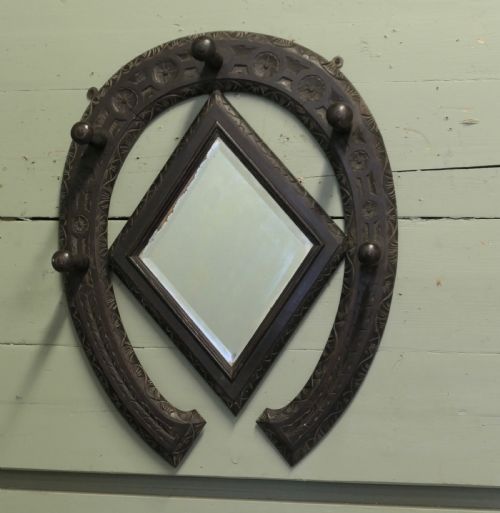
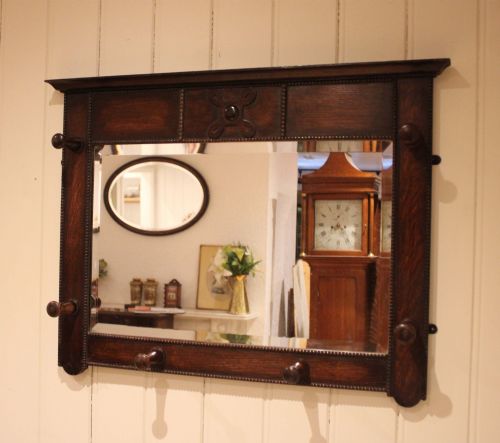
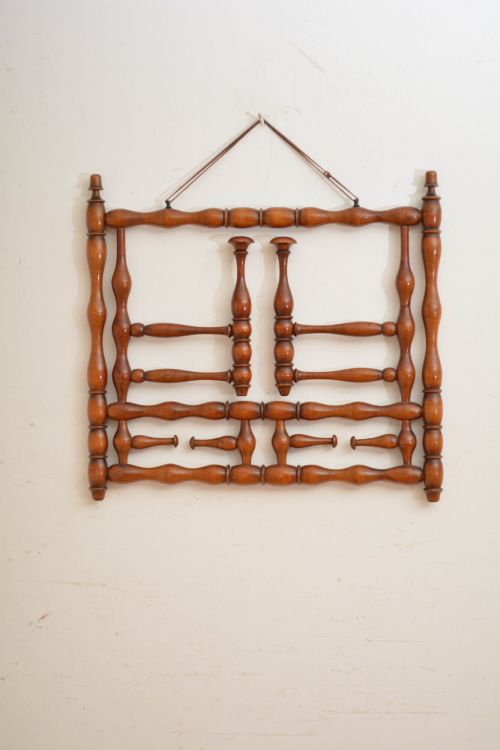
These carved wooden wall hooks bring genuine utility and deep relief-carved character to a hallway, dressing room or boot room.
Carved Wooden Wall Hooks
Carved wooden wall hooks combine functional hanging storage with decorative relief work, spanning eras from the eighteenth century through the Edwardian period and into the nineteen-thirties. You will encounter everything from simple oak hook racks to elaborate Black Forest animal head carvings featuring chamois goats, eagles, and gnomes.
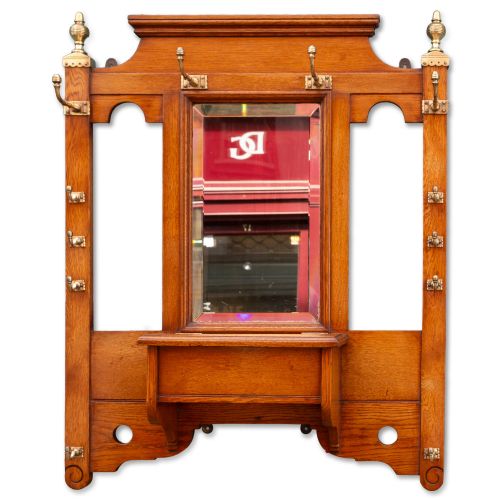
The surviving forms include single wall hooks, multi-hook coat racks, and composite pieces incorporating bevelled wall mirrors, umbrella stands, and key cabinets. Oak and mahogany dominate the earlier timber selections, while Linden wood serves as the primary medium for deeply carved continental animal subjects.
These items were originally mounted in domestic hallways, cloakrooms, and hunting lodges to receive hats, coats, whips, and riding tack. Their survival depends upon the resilience of the timber and the sturdiness of the original brass, ceramic, or iron hooks mounted to the backing boards.
How they were made
Cabinetmakers and carvers utilised dense hardwoods such as oak, mahogany, walnut, and beech for the backplates and structural mounts, providing a stable foundation to bear heavy garments. Linden wood was favoured for figurative Black Forest work because its even grain permitted intricate undercut relief carving without splitting.
Metalwork played a critical role in construction, with forged brass, iron, and occasionally glass or ceramic elements screwed directly into the wooden backing. Mirrors, when present, were set into bevelled rebates within the timber frame, secured by wooden slips or panel backs.
Carved Wooden Wall Hooks Retail Price Guide 2026
Typical asking prices for carved wooden wall hooks among the pieces listed under this phrase on Sellingantiques today, from the lower quarter to the upper quarter. They describe what is for sale here now, not the wider market.
A nineteenth-century Black Forest goat's head stares down from the wall, guarding your house keys with stubborn alpine dignity.
What varies in quality
The distinction between ordinary and exceptional pieces lies primarily in the depth, precision, and anatomical accuracy of the hand-carving. Naturalistic animal subjects with glass eyes and deeply undercut foliage display a superior level of artistry compared to machine-moulded or flat-sawn alternatives.
Material selection and structural integrity also dictate the tier of the piece, particularly the choice of figured timber for the backing board and the original matching quality of the attached hooks. Pieces retaining their original mirrors, undisturbed patination, and secure mounting brackets command greater attention from collectors.
The Carved Wooden Wall Hooks Glossary
- Black Forest
- A style of highly detailed wood carving originating from the Brienz region of Switzerland during the nineteenth century. These pieces typically depict woodland animals, birds, and alpine foliage in deep relief.
- Bevelled plate
- A mirror glass with angled or sloped edges that catch the light. This technique adds depth and decorative refinement to hall stands and mirror-backed coat racks.
- Hat and coat rack
- A wall-mounted or freestanding timber board fitted with multiple upward-pointing hooks for coats and upper brackets specifically designated for headwear. They were standard fixtures in Victorian and Edwardian entrance halls.
- Linden wood
- A pale, close-grained timber harvested from lime trees, widely chosen by nineteenth-century carvers. Its soft yet stable nature allows for extreme precision in miniature and high-relief sculptural work.
- Whip hook
- A specialised single or double wall hook designed to hold riding crops, hunting whips, or walking canes. They often feature animal heads or sports motifs.
Carved Wooden Wall Hooks: Frequently Asked Questions
How do I securely mount an antique wooden coat rack?
Most antique racks feature original mounting holes or batten slots positioned to align with standard wall studs. Use heavy-duty screws and appropriate wall anchors to distribute the weight evenly across the timber backplate.
Because these pieces were designed to bear the weight of heavy winter garments and wet coats, ensuring a direct fixing into solid masonry or wooden framing is essential for safety.
What is the best way to clean carved wooden wall hooks?
Dust the carvings regularly with a soft-bristled brush to prevent dirt from accumulating within the recesses of the relief work. Apply a microcrystalline wax sparingly to nourish the timber and preserve the historic patina.
Avoid liquid furniture polishes or silicone sprays, as these can build up in the carved crevices and soften the original finish over time.
How can I tell a Victorian rack from an Edwardian one?
Victorian examples tend to employ darker, heavier timbers like mahogany and walnut, often featuring ornate Gothic Revival motifs or dense, sombre ornamentation. They frequently incorporate cast brass hooks and bevelled mirror plates.
Edwardian pieces often showcase lighter golden oak, simpler geometric forms, and a greater emphasis on everyday domestic utility in reception valets and cloakroom boards.
Were these pieces meant only for hallways?
While entrance halls and vestibules were their primary destination, these racks served multiple domestic functions across different rooms. Smaller versions with integrated shelves and mirrors often appeared in bedrooms and bathrooms as shaving or dressing cabinets.
In country houses and hunting lodges, robust hook racks were mounted in boot rooms and back corridors to manage heavy outdoor gear and riding equipment.