

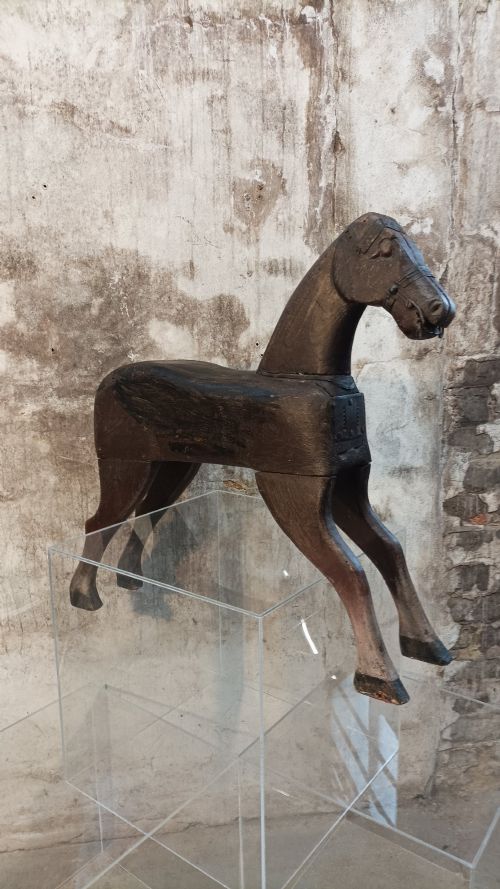
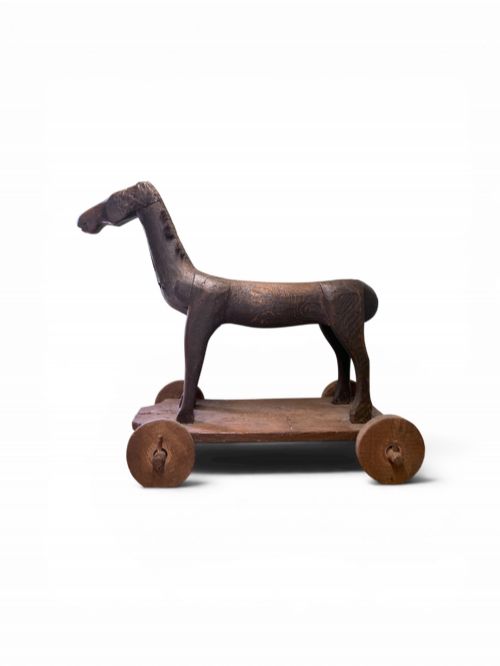
Carved Wooden Toy
A carved wooden toy brings tangible folk art and early playthings into daily rooms, spanning rocking horses, pond yachts, and soldier figures.
Carved Wooden Toy
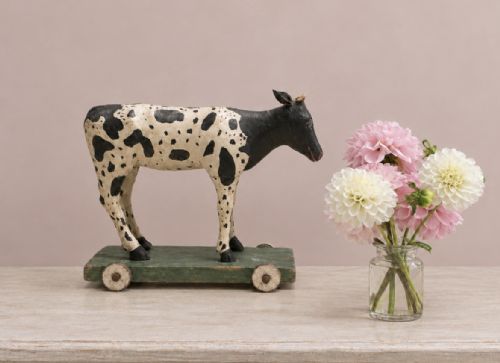
When you search for a carved wooden toy, you encounter folk art figures, scratch-built models, and substantial rocking horses from the eighteenth to the early twentieth century. These objects bridge the gap between childhood play and decorative sculpture, having survived from country houses, nurseries, and ponds.
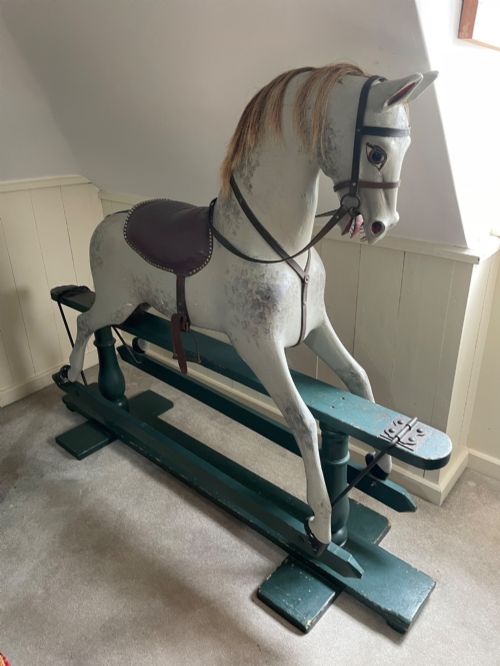
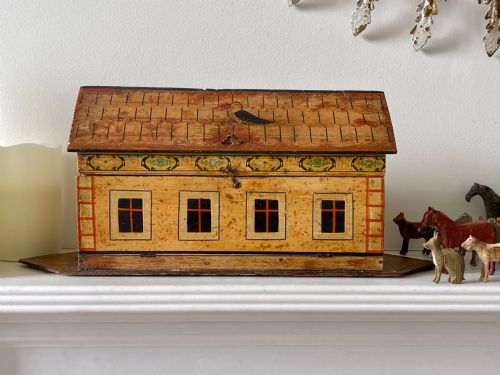
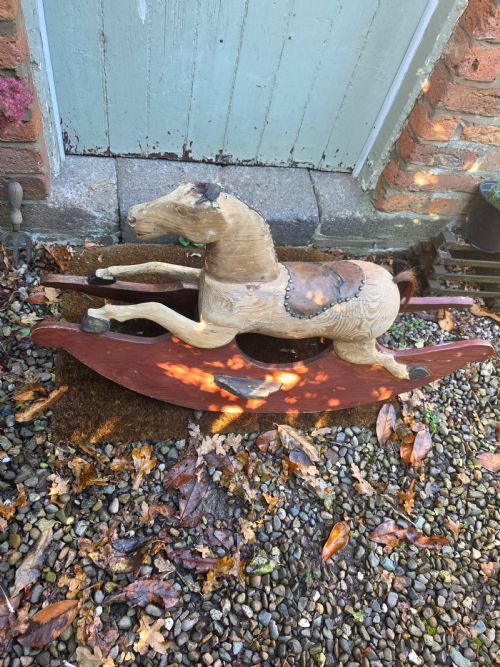
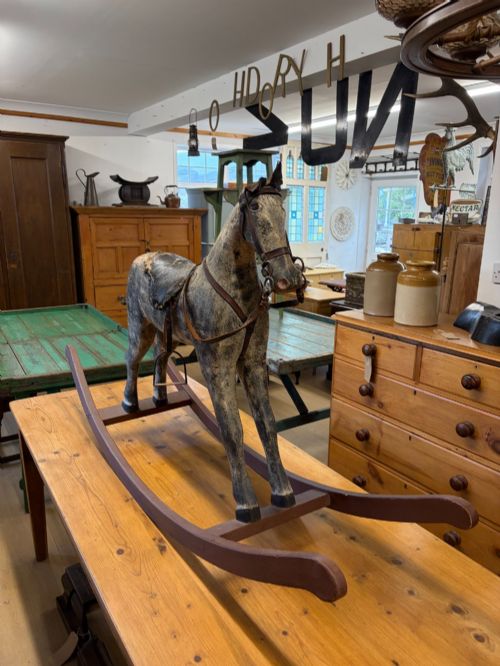
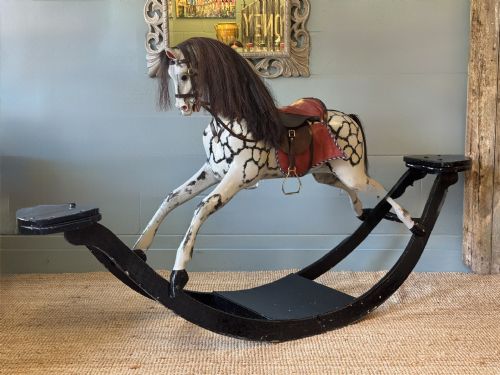
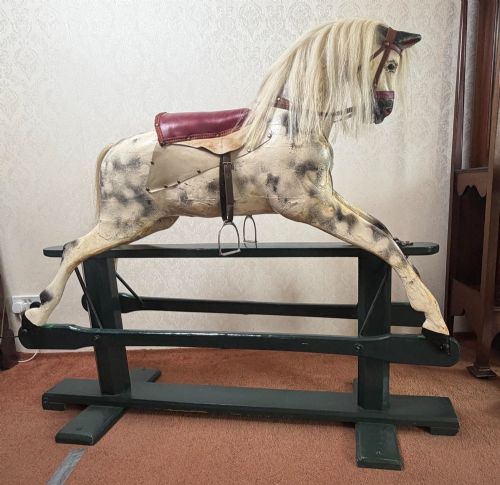
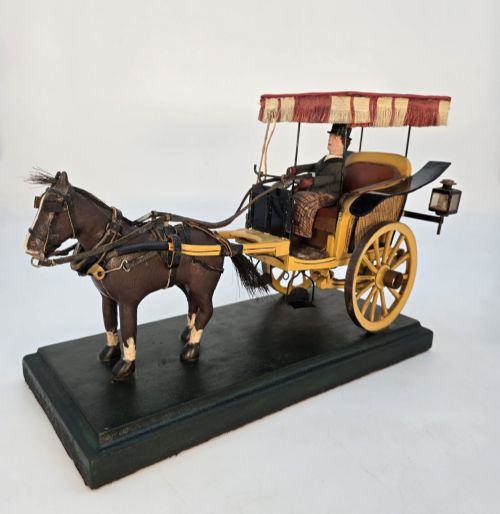
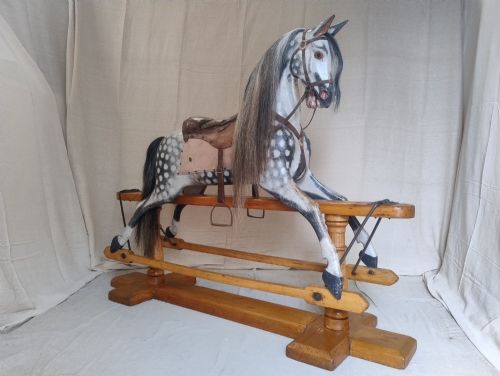
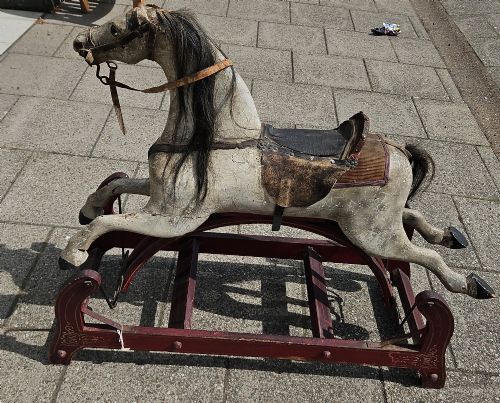
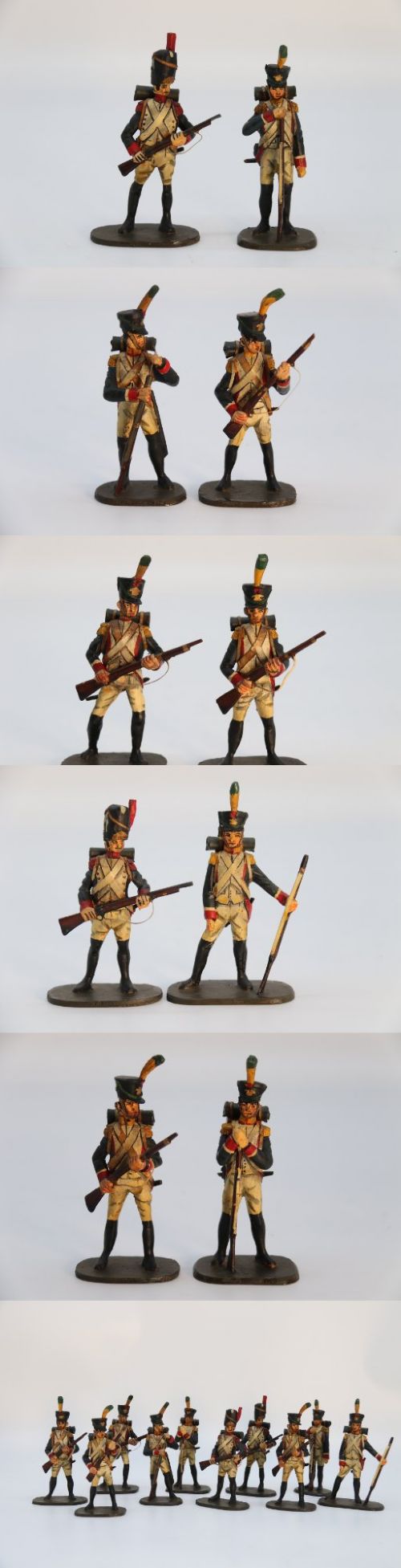
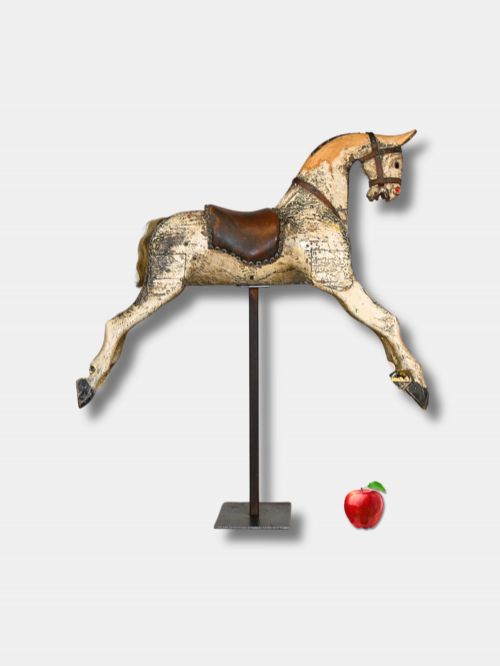
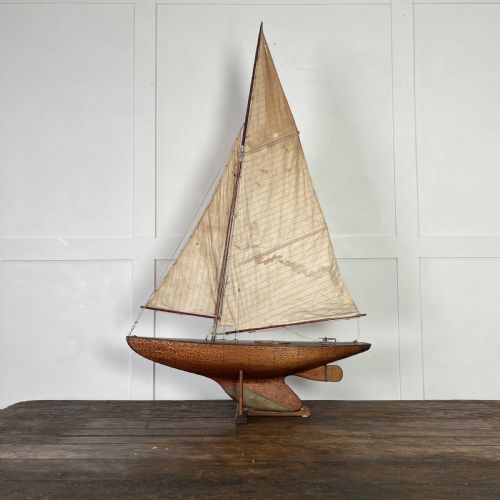
Rocking horses dominate the selection, appearing on original rockers or safety stands with pine bodies, leather tack, and horsehair manes. Alongside them sit pond yachts, Noahs Ark sets with animals, jigger dolls, and miniature carriages.
Origins stretch across English, American, and Spanish workshops, encompassing both named London makers and anonymous primitive carvers. The survival of original paint surfaces marks the distinction between heavily restored examples and those held in untouched condition.
Materials and construction
Carvers utilised pine, carved wood, and iron hardware to build sturdy frames designed for actual use by children. Rocking horses often incorporate leather for bridles and horsehair for manes and tails, fixed securely to wooden bodies.
Surface treatment relies on layers of paint, showing naive brushwork on folk art figures, soldier groups, and toy horses. Scratch-built models like Paris chaise carriages demonstrate detailed joinery combined with painted decoration.
Carved Wooden Toy Retail Price Guide 2026
Typical asking prices for carved wooden toy among the pieces listed under this phrase on Sellingantiques today, from the lower quarter to the upper quarter. They describe what is for sale here now, not the wider market.
Listings span the eighteenth, nineteenth, and early twentieth centuries, featuring materials like iron, horsehair, leather, and carved pine.
Quality variations
The degree of original surface preservation separates standard items from superior pieces, with untouched early paint finishes commanding attention. Carving execution ranges from naive provincial handiwork to sophisticated workshop production by established makers.
Completeness alters desirability, particularly for sets like Noahs Ark collections retaining numerous carved animals, or rocking horses keeping original stands, leather tack, and horsehair intact.
G J Lines of London·F H Ayres·Lines Bros Sportiboy
The Carved Wooden Toy Glossary
- Folk art
- Creative work produced by self-taught or provincial artisans using traditional techniques. These items display naive proportions and charm rather than academic precision.
- Treen
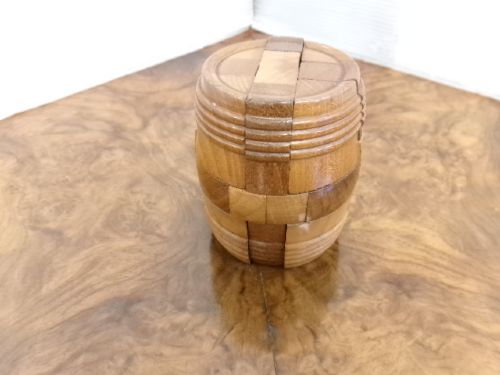
- Small handmade wooden objects for household or leisure use. Examples include ball and cup games and small puzzles.
- Jigger doll
- A mechanical toy figure designed to dance on a board when tapped by hand. They frequently wear period attire such as top hats.
- Pond yacht
- A model sailing boat designed for outdoor racing on park ponds. Larger versions retain substantial wooden hulls and canvas rigging.
- Marionette
- A puppet controlled from above using wires or strings. Wooden examples feature articulated joints for movement.
Carved Wooden Toy: Frequently Asked Questions
How were rocking horses used?
Children rode these substantial wooden figures indoors for exercise and amusement during the Victorian and Edwardian eras. They stood in nurseries or halls, built to withstand energetic play.
Over decades, many transitioned from children's toys into decorative sculptures displayed within period interiors and country houses.
What is a jigger doll?
A jigger doll is a mechanical folk art toy featuring an articulated wooden figure attached to a thin strip of wood. When the base receives a tap, the figure dances with loose limbs.
Examples from the early twentieth century often wear detailed outfits like top hats and tailcoats, made by English artisans.
How do I identify original paint?
Original paint surfaces show natural crackle, minor wear, and patination accumulated over generations of handling. Under close inspection, early paint layers integrate smoothly with the underlying pine or carved wood.
Modern repaint layers lack this uniform integration and sit heavily on the timber without genuine historical depth.
Were pond yachts meant to sail?
Large pond yachts were functional sailing models launched on park waters by owners who trimmed their sails for open runs. Their wooden hulls house internal ballast to keep them upright.
Today, collectors display these large vessels on stands to appreciate their hull lines and deck fittings.