

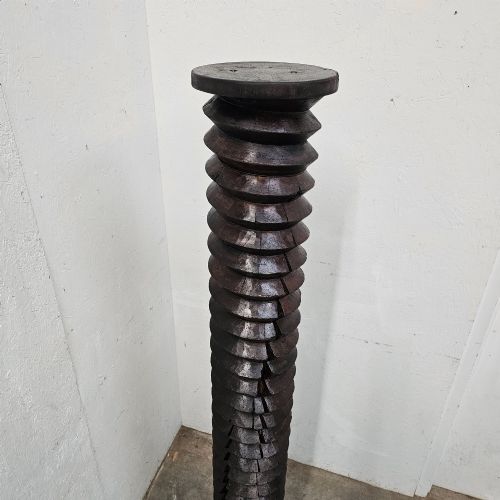
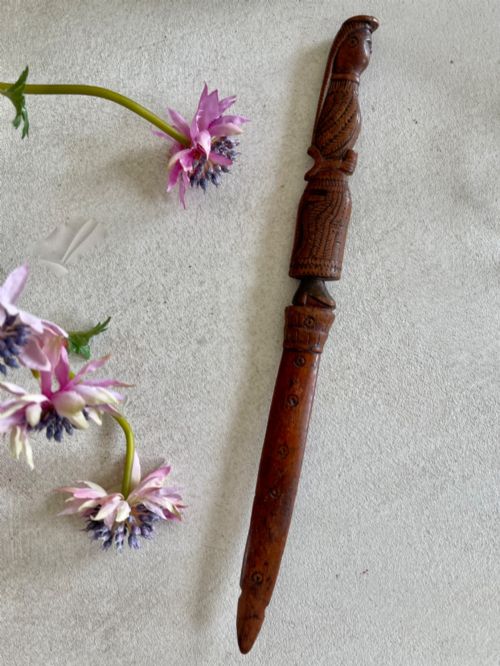
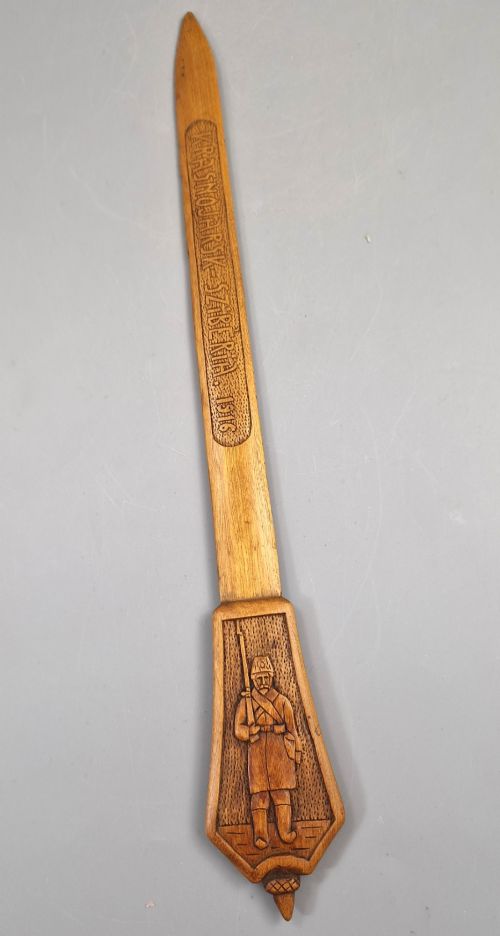
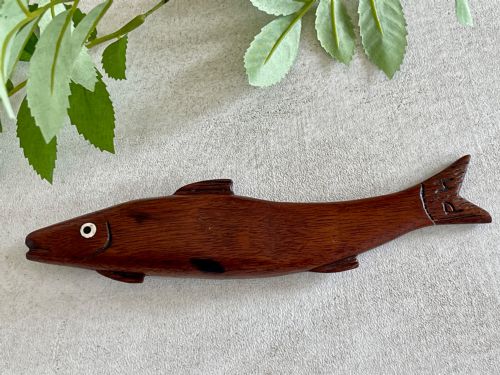





Carved Wooden Tool
A carved wooden tool is a utilitarian object shaped by hand, combining domestic or trade function with folk art.
Carved Wooden Tool
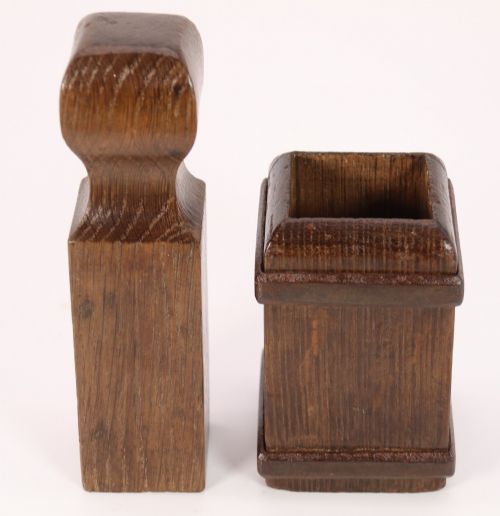
When you search for a carved wooden tool, you encounter objects shaped by hand for specific domestic, maritime or workshop tasks. The selection relies heavily on treen, textile tools, and folk art originating from the eighteenth and nineteenth centuries.
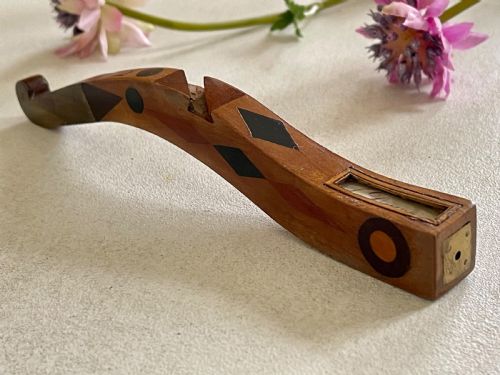
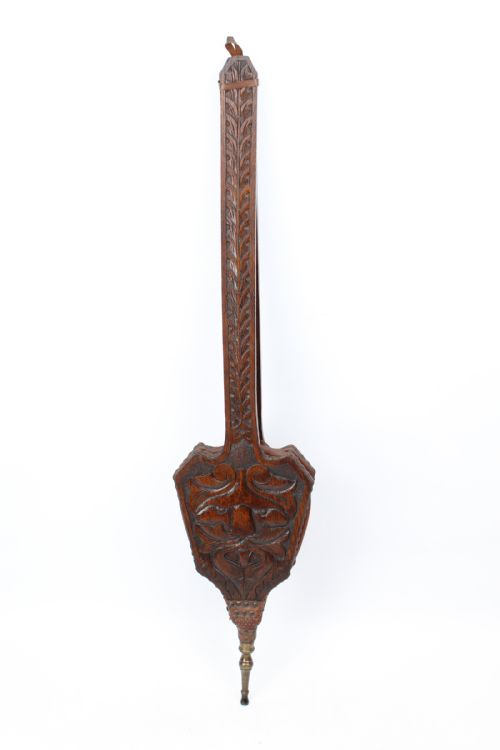
The most common examples include knitting sheaths, distaffs, and fireplace bellows shaped from oak, beech, and fruitwood. These items bridge the gap between everyday utility and decorative folk carving.
Materials and construction
Carvers utilised native hardwoods such as oak, beech, and fruitwood, selected for density and grain. Metal components in brass, iron, and white metal frequently provide reinforcement or functional mounting.
Makers shaped these items using hand tools, employing chip carving, incised geometric decoration, and lathe turning. Inlays of bone, horn, and contrasting timber often punctuate the primary wooden structure.
Carved Wooden Tool Retail Price Guide 2026
Typical asking prices for carved wooden tool among the pieces listed under this phrase on Sellingantiques today, from the lower quarter to the upper quarter. They describe what is for sale here now, not the wider market.
Judging the range
Quality rests upon the crispness of the hand-cut detail and the retention of original surface patination. Objects displaying deliberate decorative geometric incising or figural carving sit above plain utilitarian counterparts.
The integrity of the timber and the absence of clumsy structural repairs dictate desirability. Items retaining integrated functional components like wrought iron mounts or leather panels command greater interest.
Liberty & Co
The Carved Wooden Tool Glossary
- Treen
- Small handmade wooden objects for domestic use. This category covers everything from kitchen utensils to small personal items.
- Knitting sheath
- A pocket or carved holder tucked into a belt to support a single knitting needle. They often feature intricate folk art chip carving.
- Distaff
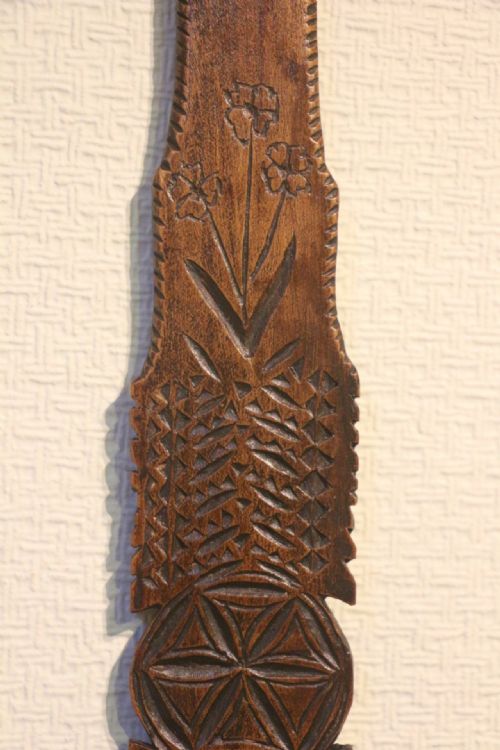
- A staff that holds wool or flax for spinning. These tools frequently display carved geometric patterns and regional decorative styles.
- Fid
- A conical wooden or horn tool used by sailors to splice rope. They were shaped smoothly from dense hardwoods.
- Hat block
- A carved wooden form used by milliners to shape hats. They mirror the exact contours of period headwear.
Carved Wooden Tool: Frequently Asked Questions
What is a treen knitting sheath?
A knitting sheath is a small wooden holder tucked into a waistband to anchor a needle during hand knitting. Makers often decorated them with chip carving and inlay.
These pieces were essential domestic tools in rural cottage industries, particularly in Northern England and Scotland during the eighteenth and nineteenth centuries.
How were antique distaffs used?
A distaff held unspun flax or wool fibres ready for hand spinning. The operator tucked the base under an arm or fixed it to a spinning wheel.
Many surviving examples display folk art carving, reflecting the personal investment makers placed in everyday tools.
What is a sailors fid?
A fid is a tapered wooden tool utilised by mariners to open strands of rope for splicing. They required dense woods like rosewood or fruitwood to withstand heavy pressure.
Sailors often carved these tools during long voyages, sometimes incorporating decorative turnings or inscriptions.
How do I date carved wooden tools?
Dating relies upon tool marks, timber selection, and regional decorative styles. Eighteenth-century examples often show simpler, deeper hand-cut facets compared to later Victorian work.
Documentation, provenance, and characteristic forms associated with specific trades also help establish the era of production.