



Carved Wooden Shoe
A carved wooden shoe is a small folk art container or practical country house accessory that brings tactile warmth to a desk or hallway.
Carved Wooden Shoe
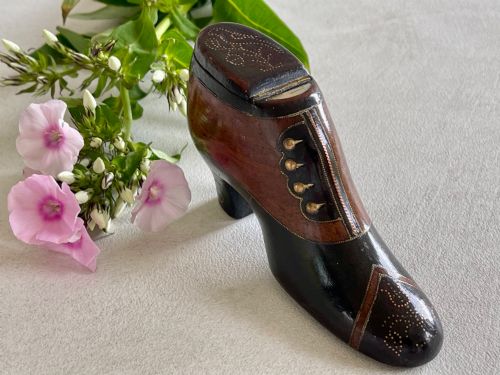
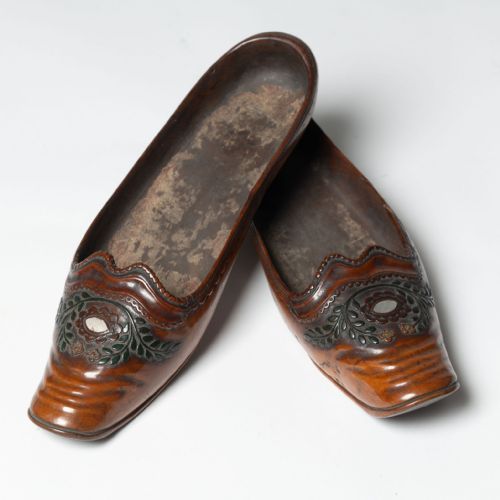
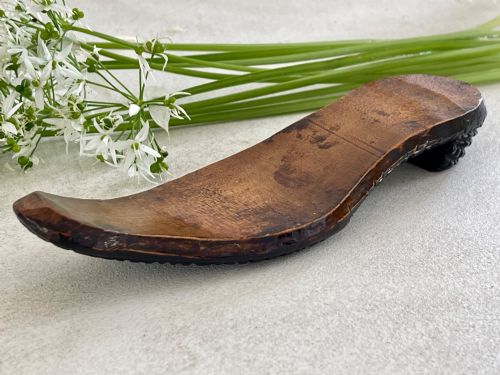
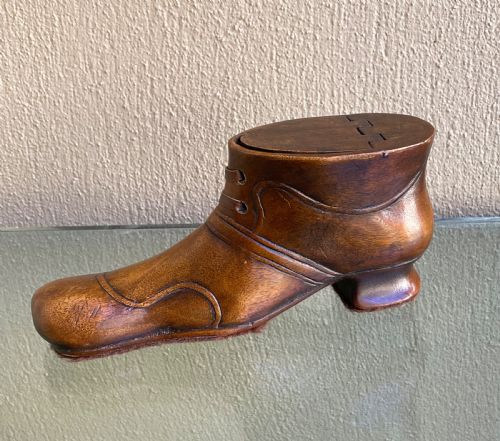
When you search for a carved wooden shoe, you encounter a specialised range of treen objects, primarily historic snuff boxes fashioned as footwear alongside functional boot jacks, benches with shoe storage, and knitting sheaths shaped like shoes. These pieces span the eighteenth, nineteenth, and early twentieth centuries, drawing on British, Irish, and Victorian folk art traditions.
The most frequent examples on this page are nineteenth century treen snuff shoes featuring double openings, inlaid brass pique work, and sliding lids, alongside walnut and oak boot jacks from the Victorian and Edwardian eras. Collectors also find occasional novelty needle cases and large hall benches designed specifically for footwear storage or display.
The materials reflect domestic timber traditions, pairing dense fruitwood, mahogany, beech, and walnut with brass mounts, glass accents, and bone inlay. Whether small table boxes or substantial hall furniture, these items preserve utilitarian craftsmanship through decorative carving.
How they were made
Decorative surface work incorporates brass pique wire, inlaid diamonds, and sliding mechanisms for snuff box compartments. Larger items utilise brass mountings and folding hinges to combine structural utility with decorative finish.
Listings feature fruitwood, mahogany, walnut, and beech timbers shaped into snuff boxes, boot jacks, and hall benches across the eighteenth and nineteenth centuries.
What varies in quality
Quality in a carved wooden shoe rests on the crispness of the hand-carved detail, particularly around toes, heels, and decorative motifs such as birds or portraits. Finer examples display deep, rich patination and precise execution in miniature elements.
The complexity of the piece influences its standing, distinguishing simple turned boot jacks from intricately decorated double snuff shoes with inlaid brass work and sliding lids. Structural integrity in folding mechanisms and original hardware also separates utilitarian items from finer decorative works.
The Carved Wooden Shoe Glossary
- Treen
- Small handmade wooden domestic objects produced from the sixteenth century onwards. These items range from snuff boxes to kitchen utensils, valued for their useful nature and tactile finish.
- Snuff box
- A small lidded container designed to hold powdered tobacco. In this category, they are carved specifically in the form of a shoe or foot.
- Pique work
- A decorative technique using tiny points of precious metal, such as brass or gold, inlaid into a solid surface to form patterns. It frequently appears on nineteenth-century treen.
- Boot jack
- A V-shaped device placed on the floor to help pull off boots without bending down. Country house versions often combine brass mounts with hardwood.
- Knitting sheath
- A small carved holder tucked into a belt to support a knitting needle while working. They sometimes take the playful shape of a shoe.
Carved Wooden Shoe: Frequently Asked Questions
What is a treen snuff shoe?
A treen snuff shoe is a small wooden box carved to resemble a shoe or slipper, used historically to store and dispense dry snuff.
These pocket or table pieces often feature sliding lids, double openings, and decorative brass inlay or carved motifs.
How were boot jacks used?
Boot jacks served as practical household aids placed by entrance doors for removing muddy riding boots after outdoor pursuits.
Users placed the heel of the boot in the notched end and stepped on the base to pull their foot free easily.
How do I date a wooden shoe box?
Dating relies on timber choice, fastening methods, and decorative styles such as Victorian folk art or Georgian mahogany carving.
Examinations of the patina, wear patterns, and hinge construction help place pieces in the eighteenth or nineteenth centuries.
Where were these items displayed?
Smaller snuff shoes sat on tables or desks as tactile conversation pieces, while boot jacks and benches belonged in hallways and boot rooms.
Collectors today place them on surfaces where their historic carving and patination remain visible.