






Carved Wooden Serving Platters
These carved wooden serving platters bring warmth and rich grain to the table, spanning multiple periods and global regional traditions.
Carved Wooden Serving Platters
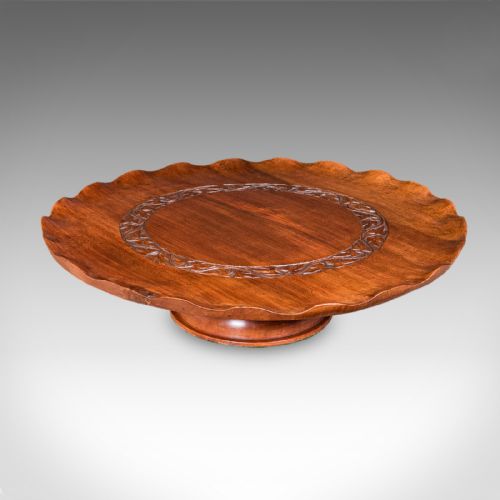
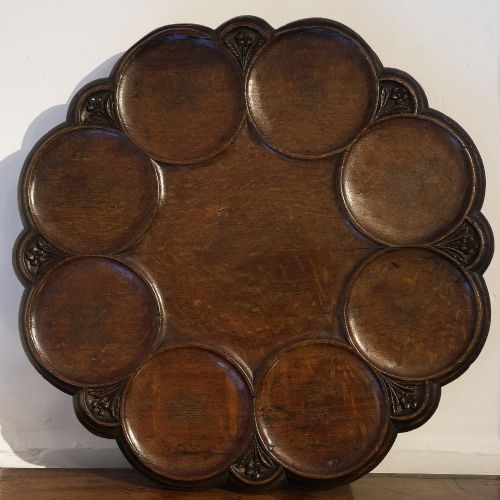
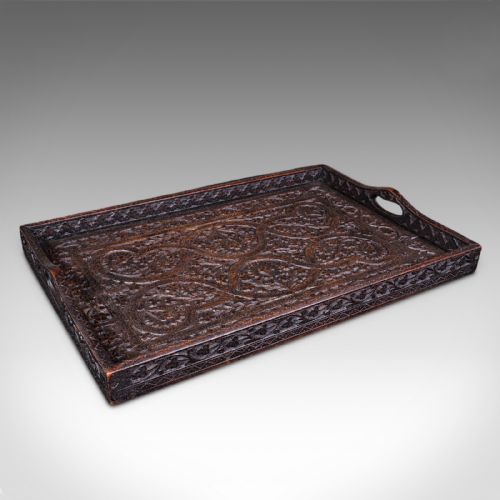
When you search for carved wooden serving platters, you encounter a diverse array of utilitarian items transformed by artisan hands. The selection on this page ranges from revolving lazy susans and afternoon tea slides to galleried oval trays and rustic trenchers.
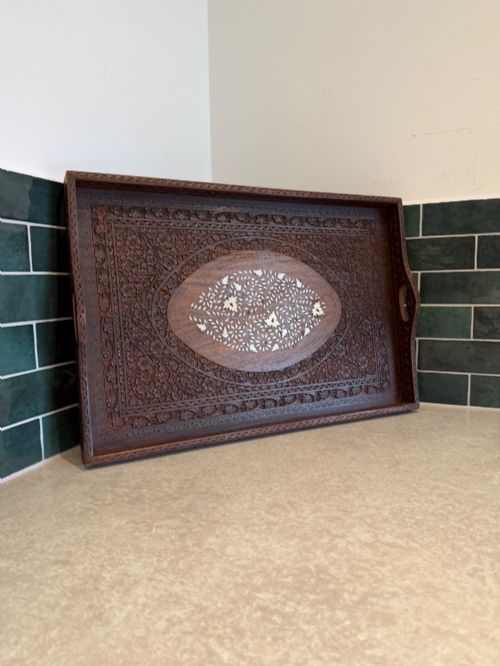
The periods represented stretch across the nineteenth and early twentieth centuries, encompassing Victorian, Edwardian, Georgian, and distinct regional aesthetics. Anglo-Indian teak items, Kashmiri walnut pieces, and Japanese Meiji tea ceremony trays sit alongside sturdy English country oak and birch examples.
How they were made
Makers utilised dense timbers such as mahogany, teak, walnut, oak, and birch, selected for their stability and capacity to hold crisp detail under chisel work. Artisans employed hand-carving techniques to shape scalloped edges, raised galleries, and intricate surface patterns.
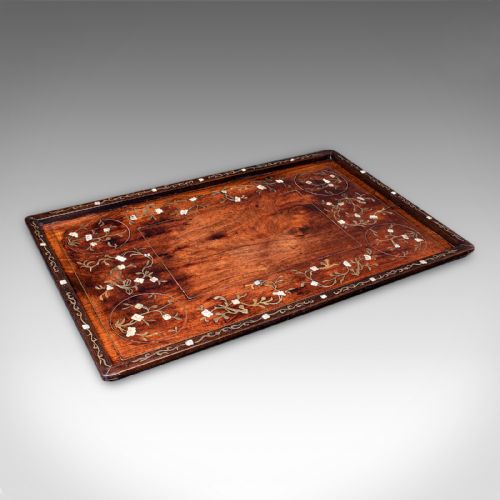
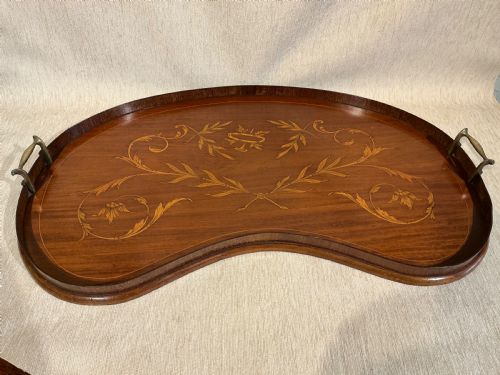
Detailing often incorporated contrasting materials, notably bone inlay or brass fittings, enhancing both the structural joints and the visual rhythm of the serving surface.
Carved Wooden Serving Platters Retail Price Guide 2026
Typical asking prices for carved wooden serving platters among the pieces listed under this phrase on Sellingantiques today, from the lower quarter to the upper quarter. They describe what is for sale here now, not the wider market.
Listings feature woods spanning mahogany, teak, walnut, oak, birch, and brass alongside bone inlay details.
What varies in quality
Quality rests primarily on the crispness of the carving and the selection of timber. Dense woods retain sharper relief work over generations, whereas softer timber results in softened contours.
The integration of secondary materials like bone inlay or brass elements distinguishes standard utility wares from finer decorative pieces. Proportional balance and the preservation of original surface patination further elevate the standing of a piece.
The Carved Wooden Serving Platters Glossary
- Lazy Susan
- A revolving tray placed on a table to assist in moving food. These rotating helpers appear in nineteenth-century oak and rotating formats.
- Galleried tray
- A serving tray featuring a raised rim or pierced gallery around the edge. This design prevents items from sliding off during transit.
- Treen
- Small handmade wooden household objects. Items range from birch platters to functional treen serving pieces.
- Afternoon tea slide
- A specialised tray or platter designed for Victorian tea service. These pieces frequently showcase Anglo-Indian teak carving.
- Sencha tray
- A Japanese carving format intended for the tea ceremony. These trays reflect Meiji period craftsmanship.
Carved Wooden Serving Platters: Frequently Asked Questions
How were lazy susans used?
These revolving wooden items sat in the centre of dining tables to pass dishes easily between diners without reaching across the board.
They appear in sturdy nineteenth-century woods designed to bear the weight of heavy serving vessels.
What is an afternoon tea slide?
Tea slides served as specialised platters for presenting cakes, sandwiches, and teapots during formal afternoon gatherings.
Many surviving examples reflect Anglo-Indian carving traditions executed in dense teak or similar colonial timbers.
How do I care for wooden platters?
Keep wooden serving pieces away from direct heat sources and excessive moisture to prevent warping and splitting.
Treat the surface occasionally with food-safe oils to nourish the grain and maintain the original timber patination.
What defines a galleried tray?
A galleried tray incorporates a distinct raised edge or pierced wooden barrier encircling the flat base.
Georgian examples often feature this decorative and practical border carved from solid mahogany.