
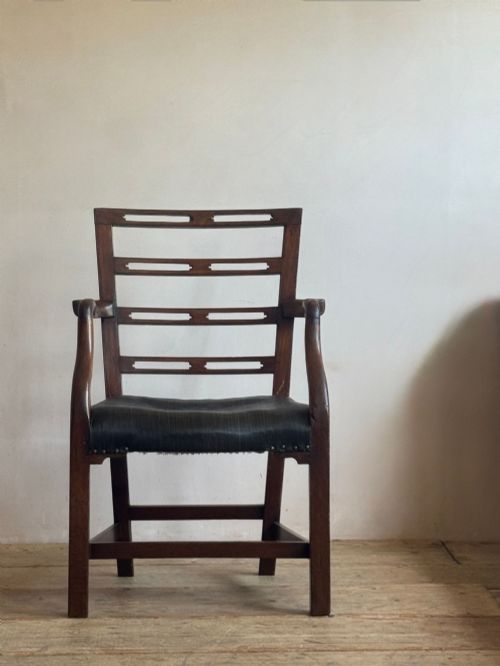
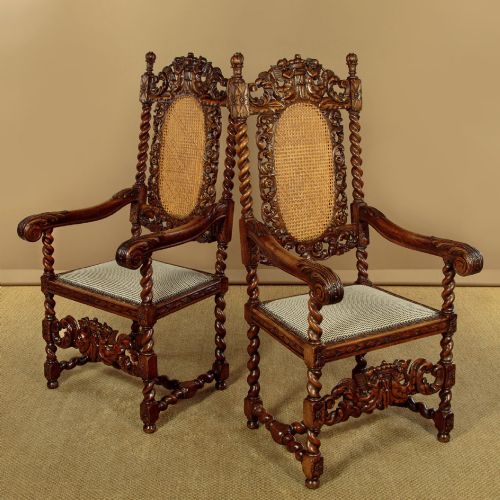
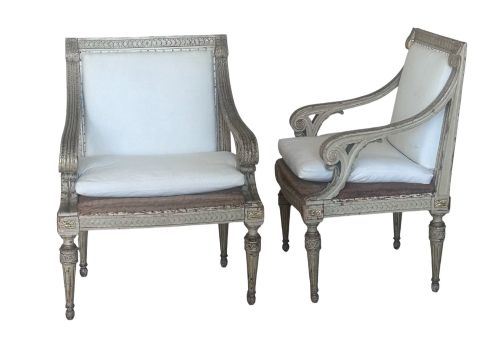
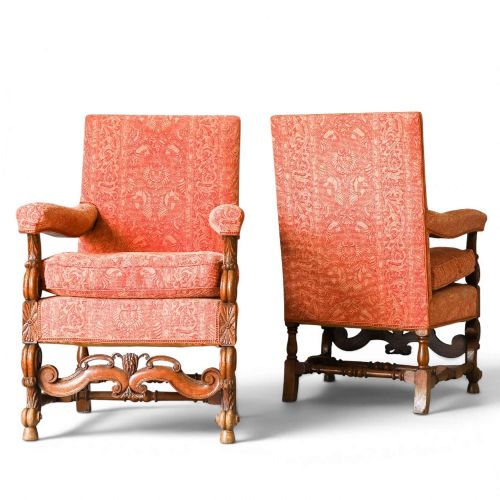
Carved Wooden Open Chair
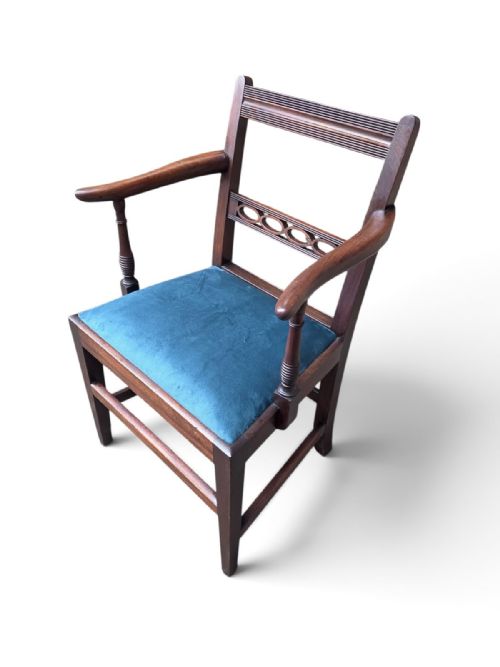
A carved wooden open chair offers a sturdy seat and exposed arms, spanning styles from Jacobean wainscot to Georgian mahogany.
Carved Wooden Open Chair
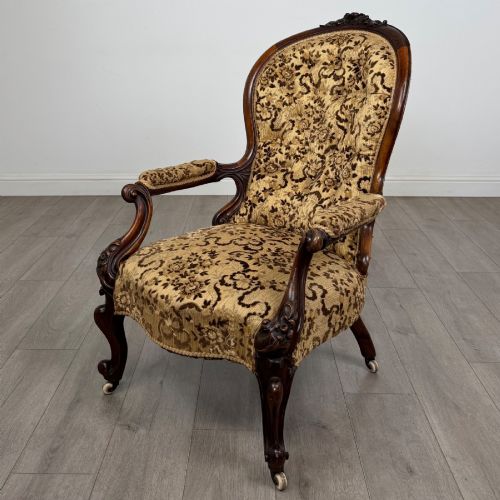
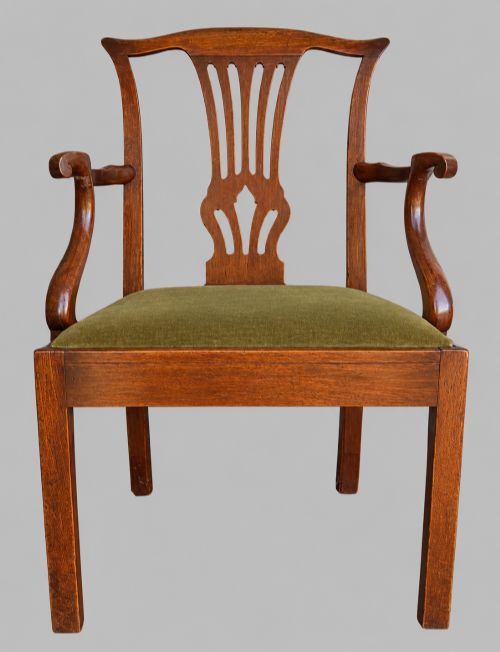
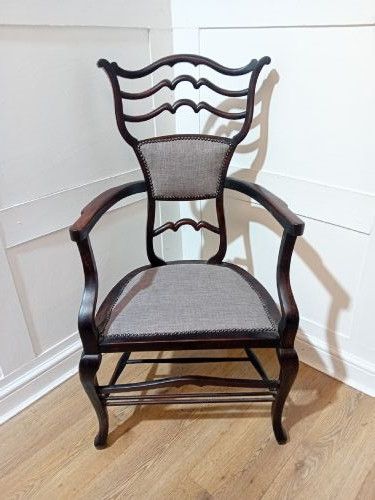
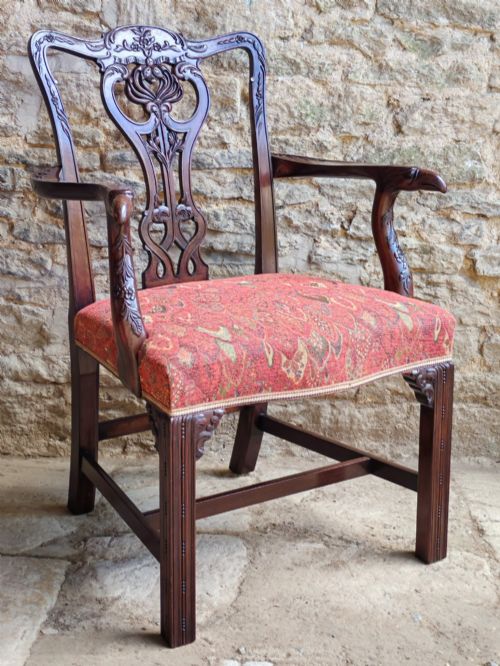
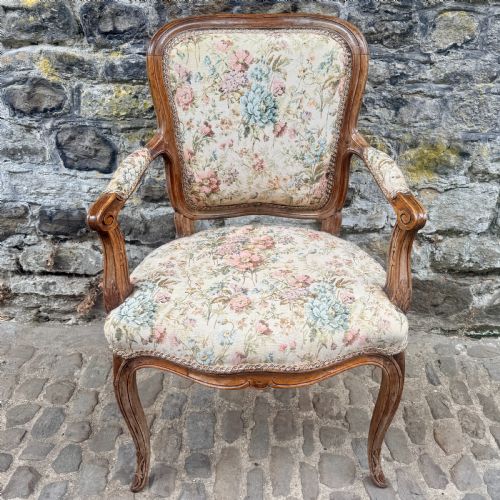
When you search for a carved wooden open chair, you encounter seating designed for formal rooms, studies and dining spaces across several centuries. The selections include armchairs, salon chairs and elbow chairs with exposed wooden frames and structural carvings.
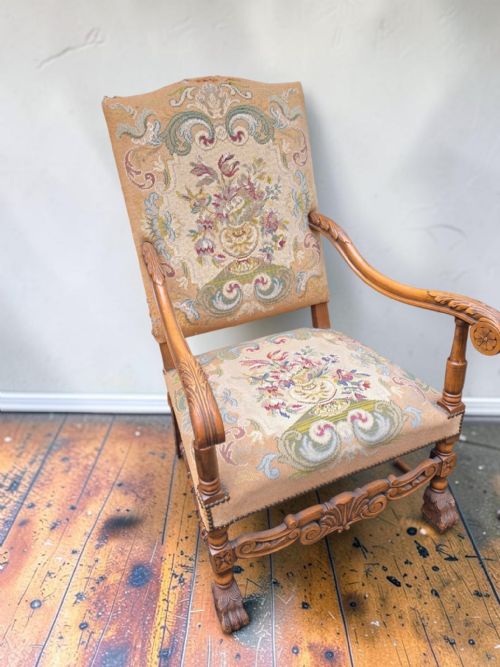
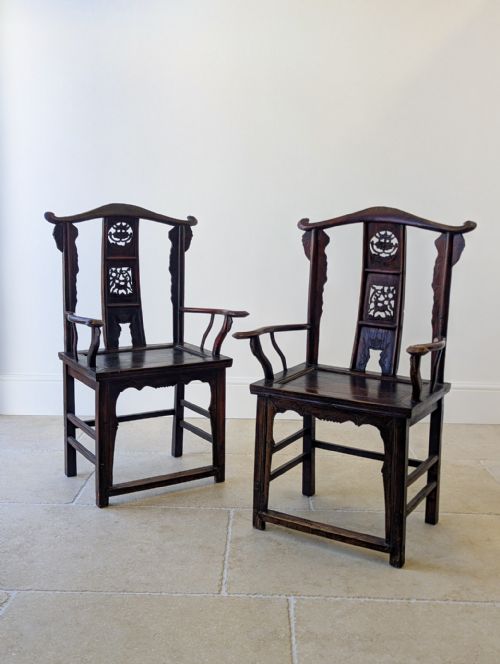
The pieces on this page originate from periods spanning the seventeenth century through to the early twentieth century. Common forms incorporate regional British models like the wainscot and ladder-back, alongside continental European designs in French, Italian and Swedish styles.
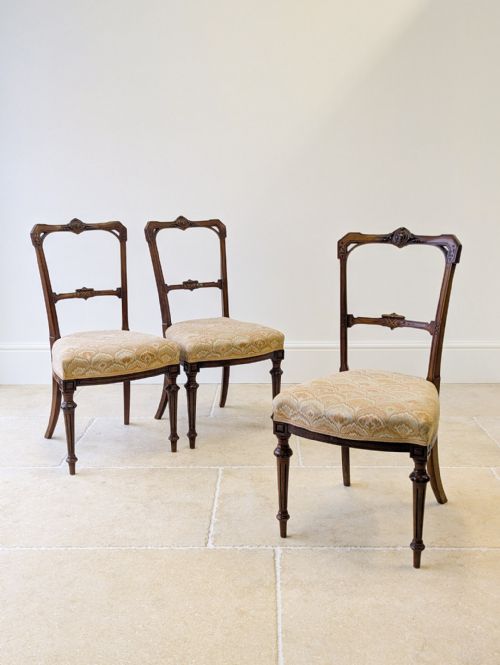
Makers and workshops constructed these seats for specific domestic functions, ranging from library desks to drawing room conversation groups. Upholstery varies from exposed timber panels to tapestry, leather and fabric coverings.
How they were made
Cabinet makers utilised dense hardwoods such as mahogany, walnut and oak to build the structural framework of each chair. These timbers allowed craftsmen to execute deep relief carvings on arm terminals, rails and back splats.
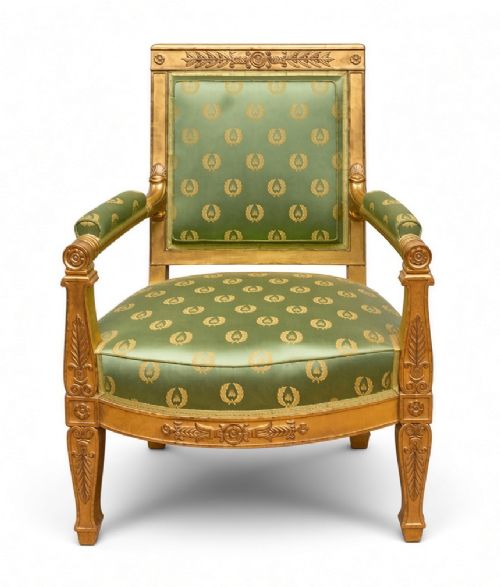
Giltwood and painted finishes appear on continental forms, where craftsmen applied gold leaf or colour to carved surfaces. Joinery techniques relied on mortise and tenon joints to secure the open arms and legs.
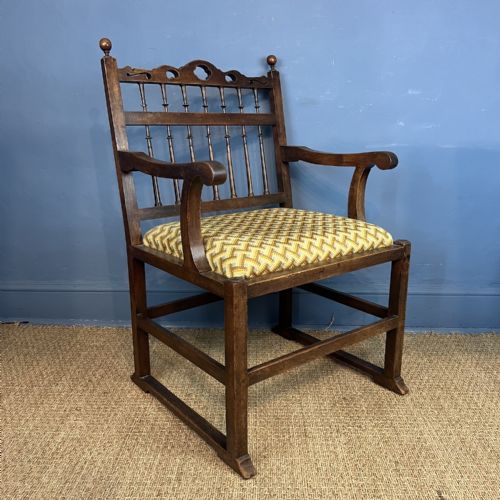
Certain historic armchairs earned the specific title of drunkards chairs, built with wider seats to accommodate eighteenth-century gentlemen after long evenings.
What varies in quality
The crispness and depth of the timber carving distinguish standard examples from exceptional ones. Sharp hand-chiselled details on scrolling arms and crest rails reflect superior workshop execution.
The choice of primary timber and the integrity of the original joints dictate structural longevity. Heavier, dense walnuts and figured mahoagANIES provide greater stability than softer secondary woods.
Howard and Sons·Jacob-Desmalter·Hindley and Sons
The Carved Wooden Open Chair Glossary
- Wainscot chair
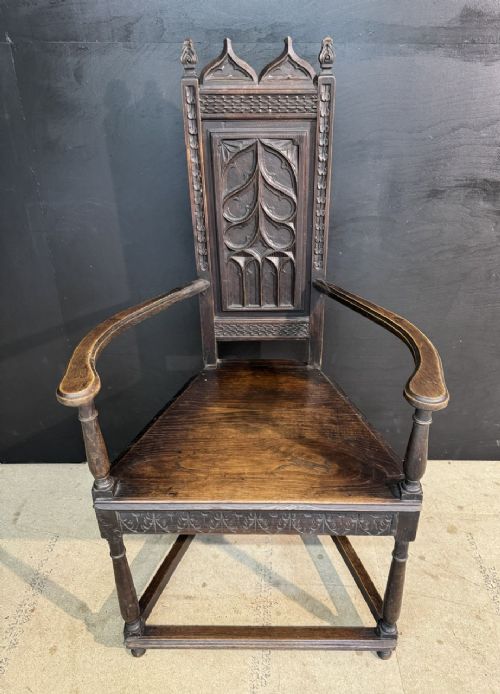
- A heavy wooden armchair from the seventeenth century constructed with panelled backs and solid wooden seats. These early forms derive their name from wainscot oak panelling.
- Carver
- An alternative term for an armchair, often used to describe a chair designed for the head of a dining table. They match smaller side chairs intended for the same set.
- Fauteuil
- An open-framed upholstered armchair originating in France, characterised by exposed wood around the armrests and back. These seats date from various eighteenth and nineteenth-century periods.
- Shield back
- A chair back shaped like a heraldic shield, popularised during the late eighteenth century by designers like Hepplewhite. The open framework typically includes carved splats.
- Giltwood
- Timber coated with a thin layer of gold leaf over a prepared ground. This finish appears frequently on continental baroque and rococo salon seating.
Carved Wooden Open Chair: Frequently Asked Questions
How do I use a carved wooden open chair at a desk?
Elbow chairs and larger carvers fit well beneath library tables and writing desks, provided the arm height clears the underside of the surface. Their open sides allow easy movement while seated.
Ensure the seat height matches your desk measurements for comfortable writing posture during daily use.
Where should I place an antique armchair in a room?
These chairs function effectively as reading seats in corners, paired by a fireplace, or positioned alongside larger sofas. Their decorative carved backs provide visual interest when viewed from behind.
Keep them away from direct heat sources and strong sunlight to protect the wood finish and any fabric upholstery.
How do I identify seventeenth-century oak chairs?
Seventeenth-century pieces, such as wainscot armchairs, rely on heavy oak construction with pegged joints and solid panelled backs. The timber develops a dark, rich colour and dry surface texture over centuries.
Carvings from this era tend to be geometric or strapwork designs rather than the flowing curves seen in later revival styles.
What is the difference between an armchair and a salon chair?
Armchairs generally offer sturdy proportions for daily seating in studies, dining rooms or libraries. They are built from robust hardwoods like oak, walnut and mahogany.
Salon chairs are lighter, often more decorative seating intended for formal drawing rooms. They frequently feature gilt finishes, elaborate upholstery or slender frames.