


Carved Wooden Hearth Box
A carved wooden hearth box organises fuel and fireside tools beside the grate, combining practical utility with traditional cabinet-making.
Carved Wooden Hearth Box
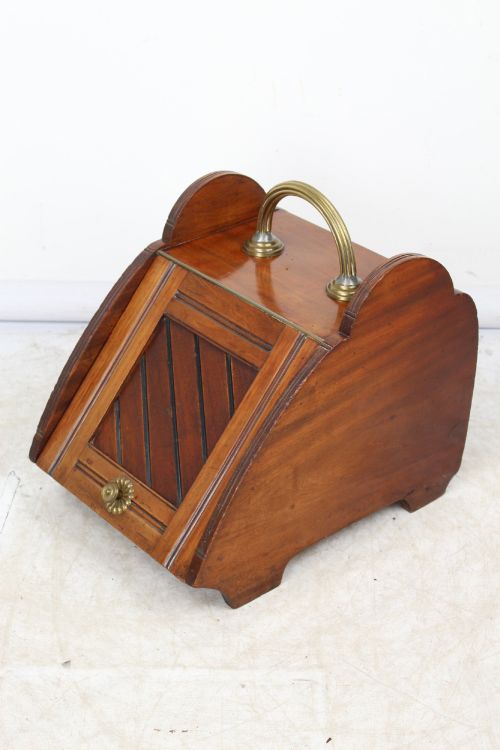
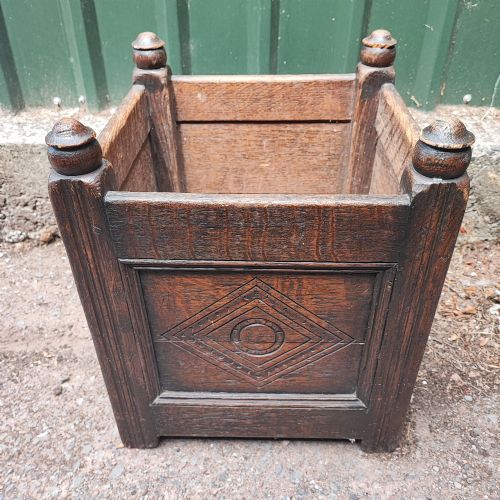
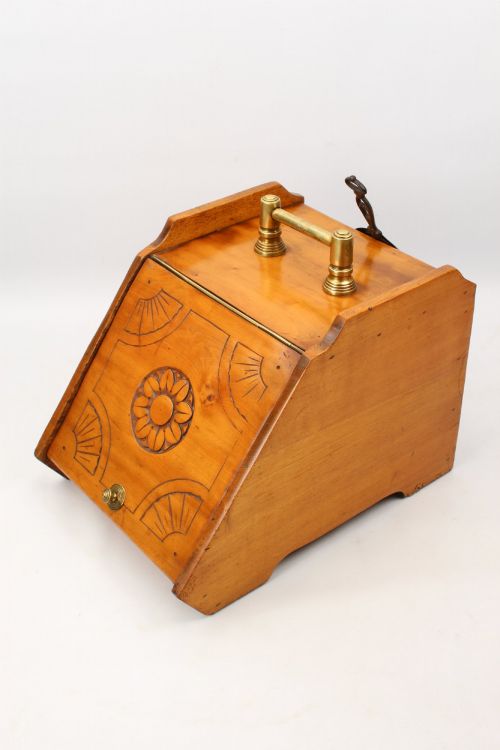
A carved wooden hearth box encompasses coal scuttles, purdoniums, log boxes, and foot warmers designed for domestic heating during the Georgian, Victorian, and Edwardian eras. These containers sit beside the fireplace to store fuel, with many examples featuring hinged lids, drop fronts, or fitted metal liners.
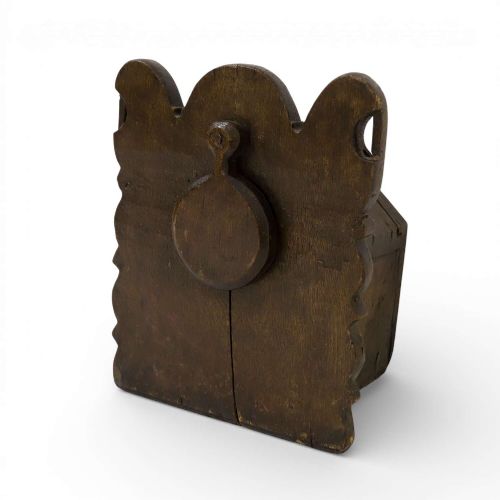
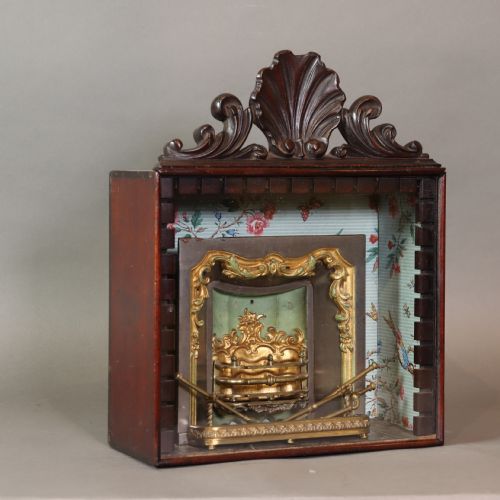
The pieces appearing on this page span vernacular treen, folk art, and rustic country styles, alongside more formal Victorian and Edwardian household storage. Oak and mahogany dominate the selections, frequently enhanced by carved decoration, brass mounts, or iron hardware.
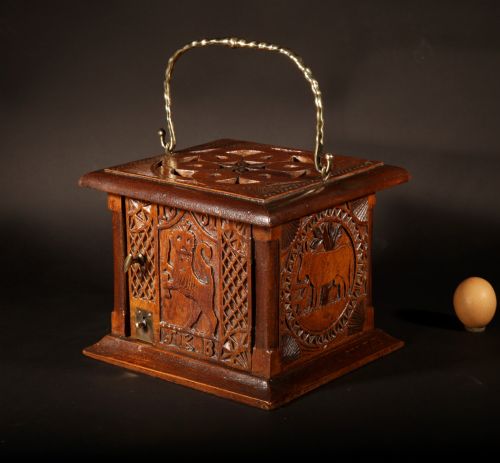
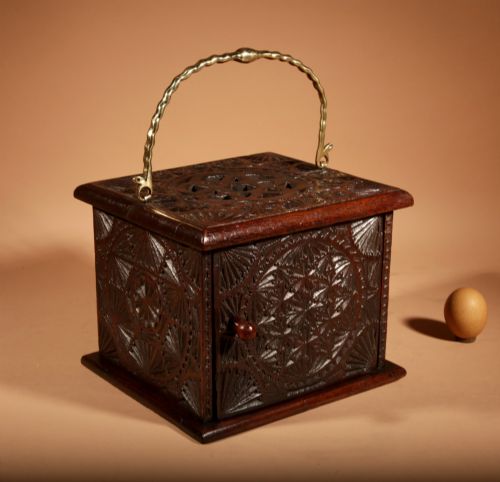
Makers ranged from village craftsmen producing chip-carved foot stoves to larger workshops turning out walnut and oak purdoniums. Earlier items include salt boxes and foot warmers, while later Victorian designs often incorporate shovels and inner liners for everyday coal handling.
Materials and construction
Cabinet-makers and rural craftsmen built these containers primarily from native hardwoods such as oak, mahogany, and walnut, often joining the panels with robust corner joints to withstand heavy fuel loads. Iron and brass feature extensively for hinges, handles, and carrying bails, providing functional durability alongside decorative contrast.
Decoration relied heavily on chip carving, relief carving, and occasional painted highlights, transforming plain fuel storage into ornamental fireside furnishings. Many surviving pieces retain original metal liners to contain moisture and debris from coal or logs.
Listings feature oak, mahogany, walnut, brass, and iron across Victorian, Edwardian, and Georgian periods.
Standards of craftsmanship
Quality rests upon the crispness of the wood carving, the integrity of the structural joinery, and the retention of original hardware such as brass handles and iron hinges. Pieces that keep their internal metal liners and matching shovels demonstrate higher levels of completeness.
Subtle details separate everyday utility items from finer examples, such as carefully matched timber grain, well-executed folk art chip carving, or sophisticated purdonium mechanisms that tilt the coal compartment smoothly forward.
The Carved Wooden Hearth Box Glossary
- Purdonium
- A specialised type of coal box featuring a sloping front door that drops forward to release fuel. This mechanism replaced the traditional open-topped scuttle in many Victorian and Edwardian drawing rooms.
- Treen
- Small handmade wooden domestic objects produced from the sixteenth century onwards. These items range from salt boxes to foot warmers and display the turning and carving skills of local woodworkers.
- Chip carving
- A primitive decorative technique where small chips are removed from a wooden surface with a knife or chisel to create geometric patterns. It appears frequently on folk art foot stoves and rustic boxes.
- Foot warmer
- A low wooden box containing a perforated metal pan designed to hold hot embers for warming feet in cold rooms. They often double as small hearth containers in vernacular collections.
- Salt box
- A wall-mounted or freestanding wooden container historically used to keep salt dry near the hearth. Early examples often exhibit pegged joints and original iron hardware.
Carved Wooden Hearth Box: Frequently Asked Questions
What is a purdonium?
A purdonium is a Victorian or Edwardian coal box designed with a hinged, sloping front door that drops forward when opened. This mechanical action allows easy access to the fuel while concealing the coal inside.
Most purdoniums include a removable metal inner liner to catch coal dust and a dedicated slot on the side or back for a small shovel.
How do I date a wooden hearth box?
Dating relies on examining the timber species, construction methods, and hardware style. Georgian and early nineteenth-century pieces often show hand-sawn boards and forged iron fittings, whereas Victorian and Edwardian examples frequently use machine-sawn timber and stamped brass mounts.
Stylistic cues also help, as heavy chip carving points towards folk art traditions, while polished mahogany purdoniums reflect formal nineteenth-century interior fashions.
Did these boxes always have metal liners?
Many coal scuttles and purdoniums were fitted with removable metal liners to protect the wood from moisture, dirt, and heavy impacts. Survival of the original liner adds significantly to an item's completeness.
Simpler log boxes and earlier eighteenth-century storage containers were typically unlined since they held dry timber or salt rather than loose coal.
How were foot warmers used?
Foot warmers were filled with hot ashes or embers taken from the main hearth fire and placed beneath the feet during cold weather. Their pierced wooden or metal lids allowed gentle heat to circulate.
Over time, many of these small stoves transitioned from active heating devices into decorative fireside accessories or general storage boxes.