
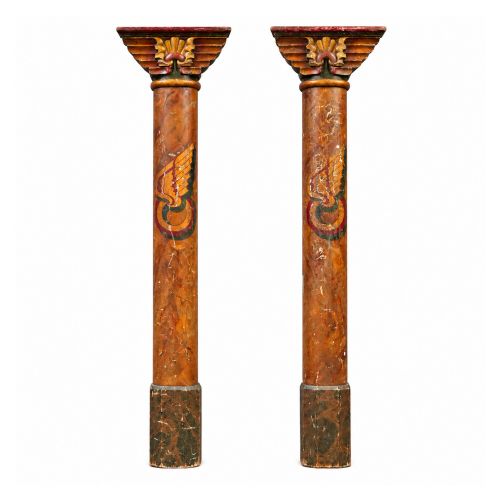
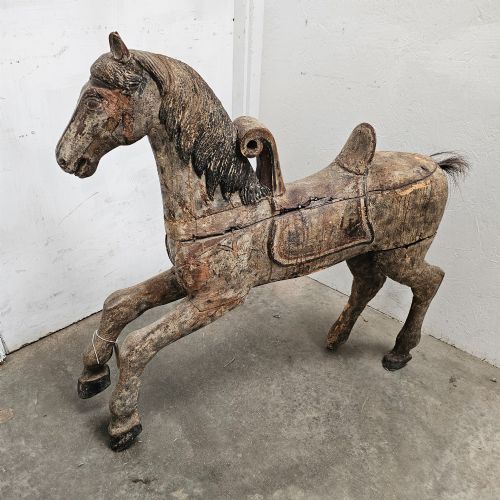
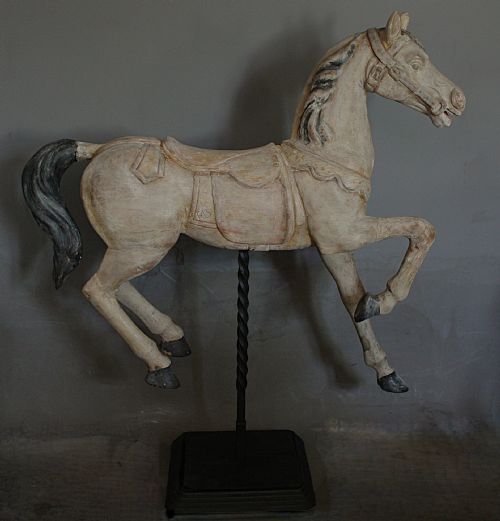


Carved Wooden Fairground Art
Carved wooden fairground art brings undeniable theatre into a room, offering the bold and colourful spirit of nineteenth and early twentieth-century fairgrounds.
Carved Wooden Fairground Art
Carved wooden fairground art comprises pieces salvaged from vintage fairground rides, carousels, organs, and shooting galleries. When you browse carved wooden fairground art, you encounter figures from English and French makers, alongside continental European examples.
How they were made
Makers shaped these items from timber, employing traditional carving techniques to form horses, panels, and architectural columns. Iron and metal components reinforced structural elements, while horsehair often finished tails and manes on carousel figures.
Surfaces received layers of polychrome paint, creating vibrant finishes designed to catch the eye under fairground lights. Over decades, this paint has weathered and worn, revealing the tactile grain of the carved wood beneath.
Materials across these listings span carved wood, iron, polychrome paint, and horsehair, originating from the nineteenth and early twentieth centuries.
What varies in quality
Quality rests upon the sculptural depth and expression within the carving, distinguishing master carvers from standard workshop production. Animals with dynamic poses and detailed harness work demand closer attention than simpler, stiffer forms.
The preservation of original polychrome paint surfaces heavily influences the character of each piece. Surviving layers of early paint show the authentic palette of the period, whereas later overpainting alters the visual impact.
Bayol·Limonaire·Gavioli
The Carved Wooden Fairground Art Glossary
- Polychrome paint
- Decoration executed in multiple colours. This traditional surface treatment defines the bright, ornamental appearance of fairground rides.
- Ride fragment
- A surviving section of a larger fairground attraction. These pieces offer concentrated decorative detail from dismantled carousels and shows.
- Architectural salvage
- Building elements rescued from structures no longer standing. In this context, columns and panels once framed fairground rides and booths.
- Folk art
- Utilitarian or decorative objects made by self-taught or traditional craftsmen. Fairground pieces sit firmly within this tradition, blending popular culture with skilled carving.
Carved Wooden Fairground Art: Frequently Asked Questions
What animals appear in fairground art?
Horses dominate the selections, alongside pigs, dragons, and figures designed for carousel rides and organs.
These subjects reflect the imaginative and theatrical themes used to attract fairgoers in the nineteenth and early twentieth centuries.
How were carousel panels used?
Panels decorated the machinery and housing of fairground rides, often positioned around the central structure or framing the moving platform.
They provided ornamental backdrops featuring carved motifs and vibrant paintwork to engage the public.
How do I date fairground carvings?
Dating relies on stylistic clues, construction methods, and the nature of the timber and paint layers present.
Nineteenth-century pieces generally show heavier wear and distinct folk styling, whereas early twentieth-century examples often display more defined continental or English workshop characteristics.
Where do ride fragments come from?
Fragments originate from dismantled carousels, target galleries, and fairground organs that could no longer be maintained in operation.
Rescued elements include columns, boards, and individual figures salvaged before the remainder of the ride was lost.