




Carved Wooden Deities
These carved wooden deities are sculptural representations of spiritual figures, sought after for their intricate craftsmanship and devotional presence.
Carved Wooden Deities
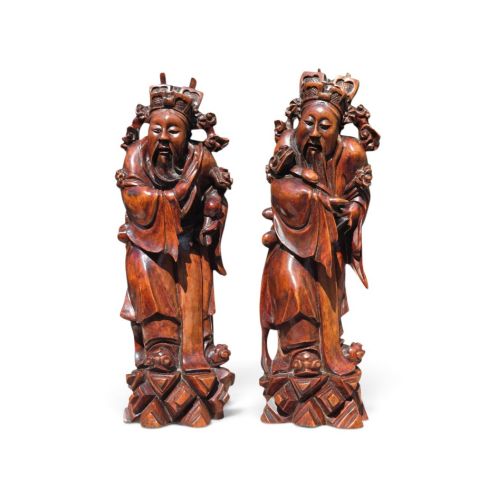
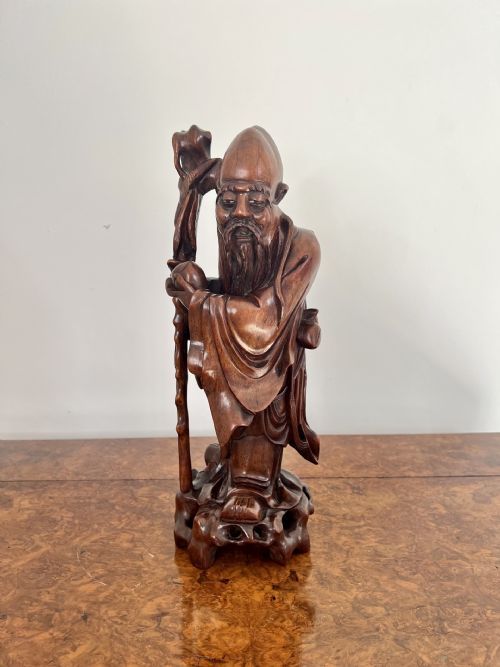
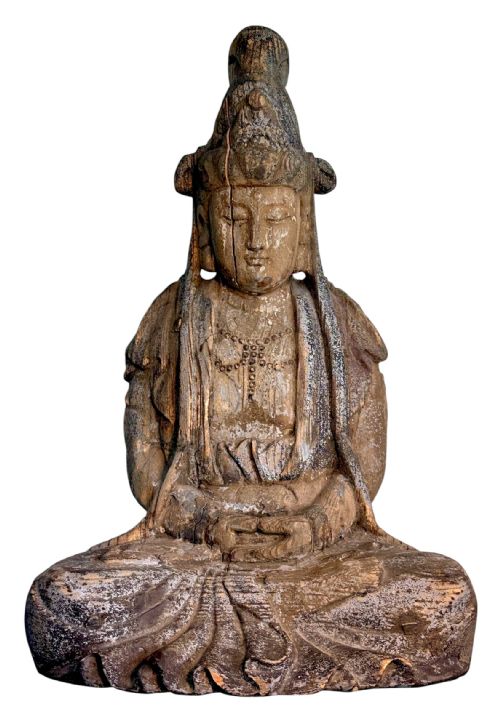
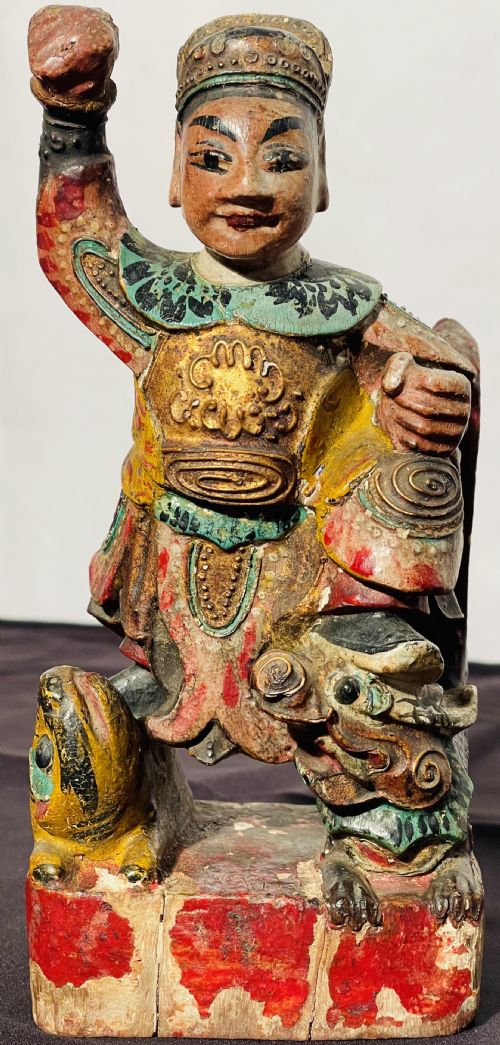
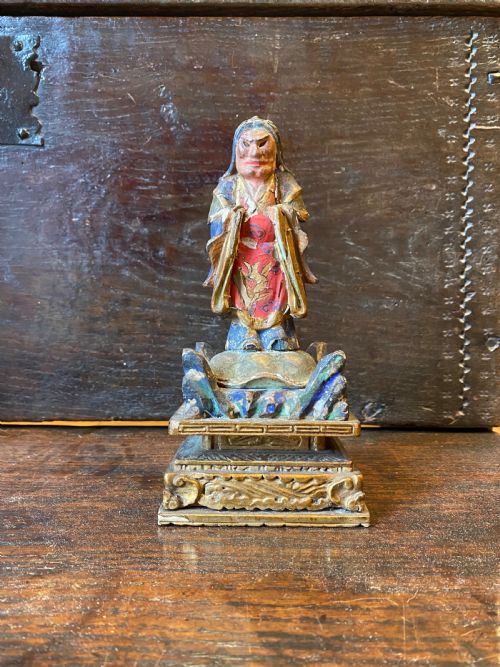
Carved wooden deities encompass spiritual figures and mythological subjects originating from Asian and European traditions. Pieces range from Chinese Daoist immortals and temple guardians to Balinese and Indian representations of gods such as Rama, Sita, and Vishnu.
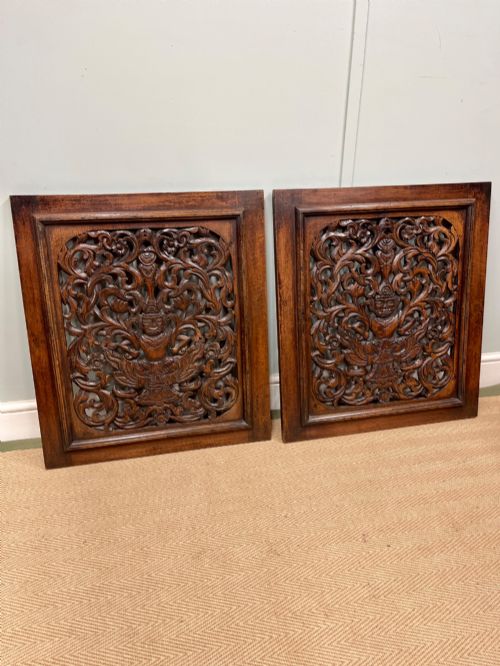
The selection includes figures dating across the eighteenth, nineteenth, and early twentieth centuries. Buyers frequently encounter hardwood sculptures, wall panels, and temple statues reflecting styles from the Qing Dynasty, Meiji period, and Southeast Asian traditions.
Forms vary from monumental matched pairs of immortals to intimate depictions of scholars and deities with children. Architectural carvings and root carvings also appear alongside conventional devotional statues.
Materials and construction methods
Artisans carved these sculptures from various woods including dense hardwoods, teak, and boxwood. Root wood was also utilised to exploit natural organic forms in the creation of figurative sculptures.
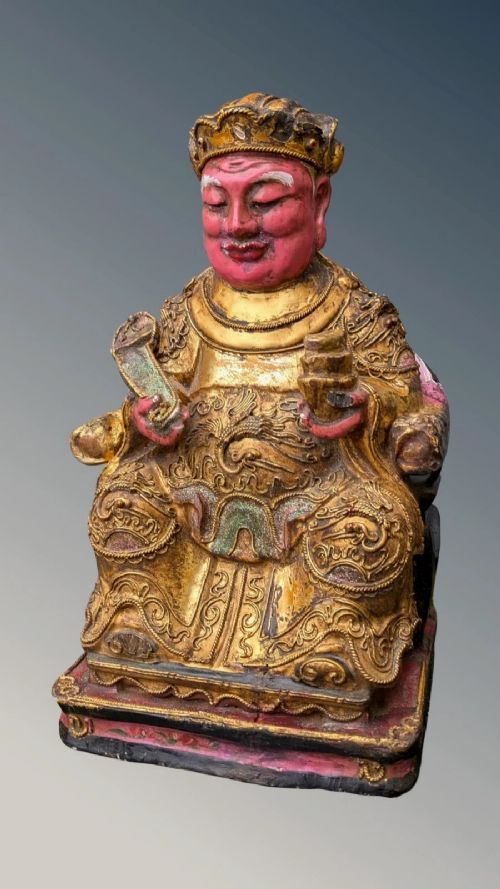
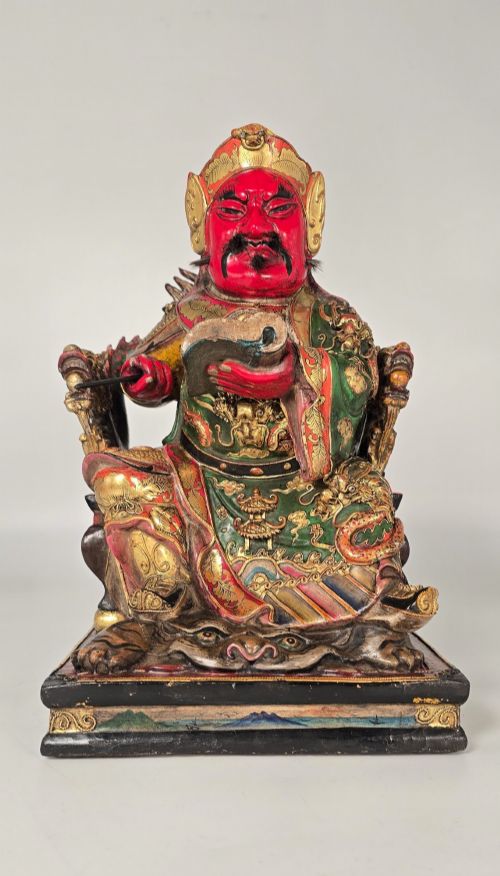
Listings feature wood, hardwood, teak, and boxwood, alongside surface treatments including gold leaf, gesso, lacquer, and polychrome paint.
Assessing craftsmanship and execution
Quality rests upon the precision of the carving and the depth of relief achieved in drapery and facial expressions. Superior examples display anatomical fluency and confident toolwork rather than mechanical repetition.
The preservation of original surface treatments, whether polychrome pigment, lacquer, or gold leaf, dictates the visual impact of the piece. Handling wear and age patination should integrate naturally with the underlying carved form.
The Carved Wooden Deities Glossary
- Hardwood
- Dense timber species such as teak or boxwood chosen for fine sculptural detail. These woods resist warping and allow crisp chisel work.
- Gilt Wood
- Timber coated with a thin layer of gold leaf over a gesso base. It provides a luminous finish associated with sacred figures.
- Okimono
- Japanese decorative sculpture designed for display on a tabletop or shelf. These carvings often portray deities, scholars, or folklore subjects.
- Lacquer
- A durable resin finish applied in multiple coats and polished to a smooth sheen. It protects the wood while adding depth to the surface colour.
Carved Wooden Deities: Frequently Asked Questions
How old are these carved wooden deities?
The pieces span from the mid-eighteenth century through to the early twentieth century. Many originate from the nineteenth century during the Qing Dynasty and Meiji period.
Specific dates are determined through stylistic analysis, timber characteristics, and the ageing of surface finishes like polychrome paint and gold leaf.
Where were these wooden sculptures made?
Origins include China, Japan, India, Bali, and Tibet, reflecting diverse cultural and religious traditions. European pieces inspired by Grand Tour travels also appear.
Regional carving techniques and iconography help identify the specific geographical source of each deity.
How should I display them at home?
These sculptures suit stable environments away from direct sunlight and dramatic humidity changes. Wall panels require secure mounting, while statues benefit from dedicated tabletop or cabinet placement.
Positioning them at eye level allows the intricate details of the carving and surface decoration to be fully appreciated.
What materials are used besides wood?
Many examples feature applied gesso beneath layers of gold leaf, lacquer, or polychrome paint. These finishes were utilised to enhance the sacred or decorative nature of the figures.
The underlying material is predominantly solid wood or dense hardwood suited to detailed carving.